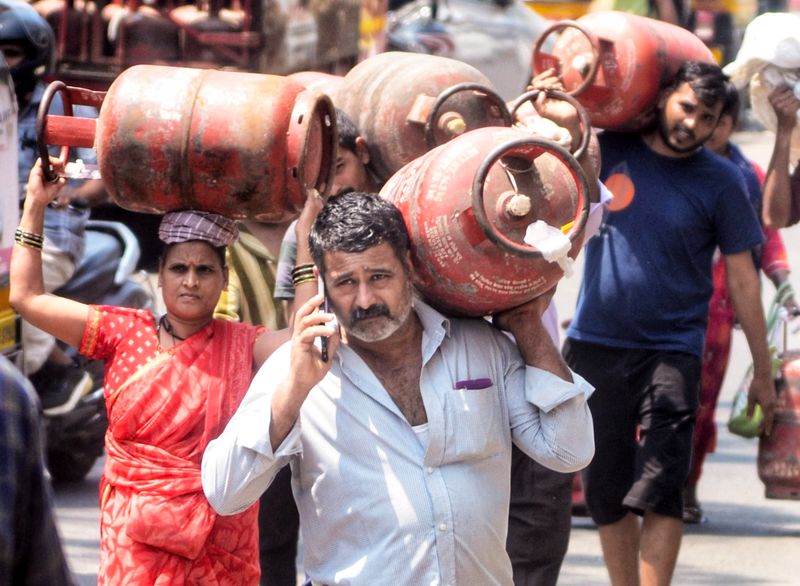

Amid a nationwide LPG crisis due to the West Asia conflict, the government has decided to accelerate piped natural gas (PNG) network expansion across urban India and ensure uninterrupted delivery of essential services.Since the conflict began, over 2.9 lakh PNG connections, including domestic and commercial users, have been provided across the country in March to reduce dependence on LPG. The government has directed city gas distributors to prioritise PNG connections for restaurants, hotels and community kitchens.At a roundtable review meeting held in this regard in the national capital, a detailed presentation by the Ministry of Petroleum and Natural Gas (MoPNG) outlined the current status of PNG rollout, emphasising its advantages over LPG in terms of safety, reliability, affordability and environmental sustainability.The meeting, attended by Union ministers Hardeep Singh Puri, Manohar Lal Khattar and Pralhad Joshi, also mulled a proposal of providing 50 lakh new PNG connections in the country.The stakeholders, however, pointed out key challenges like delays in municipal permissions, RoW (right-of-way) approvals and high restoration charges, which continue to impede timely network expansion. They also stressed the need for rationalisation or temporary waiver of such charges and adoption of single-window and time-bound clearance systems.Deliberations also highlighted several best practices, including fast-tracking of road-cutting permissions and adoption of deemed approval mechanisms to expedite project implementation.Minister for Housing and Urban Affairs Khattar called for mission-mode implementation to accelerate PNG expansion, institutionalisation of single-window approvals, integration of PNG infrastructure into urban planning, facilitation of last-mile connectivity and convergence with ongoing urban development initiatives.Addressing the gathering, Minister for Petroleum and Natural Gas Puri encouraged states and Urban Local Bodies (ULBs) to actively promote PNG adoption, particularly in areas where infrastructure is already available.Minister for Consumer Affairs, Food and Public Distribution Joshi advised states to strengthen monitoring and vigilance mechanisms, and encourage consumers to transition from LPG to PNG wherever feasible, with priority given to public institutions such as schools and colleges.“There was a broad consensus on facilitating a phased and structured transition from LPG to PNG in areas with existing infrastructure, supported by adequate consumer awareness and safeguards to prevent disruption of essential services. States and urban local bodies agreed to streamline approval processes, rationalise RoW charges and designate nodal officers for effective coordination,” the Ministry of Housing and Urban Affairs (MoHUA) said in a release.“City gas distribution entities and municipal commissioners committed to closer collaboration to resolve operational challenges and enhance service delivery,” it added.Officials said refineries were operating at high capacity with adequate crude stock, and fuel outlets were functioning normally nationwide, despite isolated instances of panic buying triggered by rumours.LPG distribution remains stable, with over 55 lakh cylinders delivered on Saturday and no reports of shortages. Commercial supplies have been restored to about 70 per cent of pre-crisis levels.Petroleum Secretary Neeraj Mittal said around 6,000 PNG consumers had voluntarily surrendered LPG connections, helping improve availability for others.On the maritime front, officials said all Indian seafarers in the region were safe, and port operations across the country remain normal.