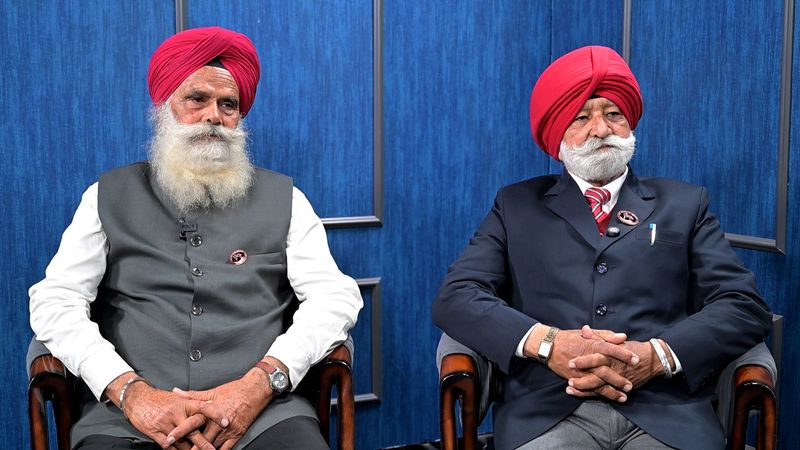
Even as the recently launched ‘Border 2’ is making waves across the country, a controversy linked to the Bollywood film’s 1997 prequel ‘Border’, based on the epic Battle of Longewala, refuses to die down. Two veterans who fought the 1971 India-Pakistan war say the film “wrongly portrayed them as martyrs”.They have written to top government functionaries, flagging “factual inconsistencies” in ‘Border’ and seeking “due recognition for their heroics”. “The film showed all of us as having been martyred. The reality is different,” says Naik Jagdev Singh, a resident of Punjab’s Ferozepur who fought at Longewala, during a visit to The Tribune office on Tuesday.Also read: As Sunny Deol’s Border-2 sweeps box-office, those who fought real battle of Laungewala ‘want to tell the true story’“Gallantry awardees are honoured on the Republic Day and other important occasions, but no one ever bothered to ascertain the whereabouts or wellbeing of those shown martyred,” he complains.Jagdev was 19 when he joined the Army in 1971 and went to war with 23 Punjab after just four-and-a-half-month basic training. Now 74, he left the Army after 17 years of service due to family reasons and later worked with a bank.“We want the true story of the battle to be told as it actually unfolded so that future generations are inspired by the gallantry of the soldiers. Because of the incorrect narrative in the film, people often make fun that we are dead and forgotten…. We have written to the Governors of Rajasthan and Punjab and other senior officers,” he says.Havildar Mukhtiar Singh (81) from Kurali, who was then 26 with about eight years of service, says Alpha-Company of 23 Punjab manning the Longewala post with less than 100 troops had suffered only three casualties and held back a heavy enemy assault backed by tanks, in which the Air Force played a critical role. Only about 20-odd personnel who had participated in the battle are alive.“We were promised five acres of land by the Punjab Government and one muraba by Rajasthan, which we haven’t received to date…. We fought for the country and not for any land. But if the government had promised something, they should have kept their word,” asserts Mukhtiar.Both veterans say they haven’t watched ‘Border 2’ as they are disappointed the way war movies are made with “scant research and disregard for presenting facts”.A few other veterans, however, point out that since commercial films are made from the entertainment point of view, inconsistencies and errors do creep in to dramatise events or make scenes more captivating for the audience. Some production houses now engage retired military personnel as consultants to ensure correct projection of events.Launched in January this year, ‘Border 2’ depicts actions across multiple fronts during the 1971 war, featuring operations by the Army, Air Force and the Navy. ‘Border’, which too was a blockbuster, is based only on the Battle of Longewala, which was among the most notable operations on the western front. Fought on December 5-6 at the remote border outpost in the Jaisalmer sector, it was one of the first major engagements between India and Pakistan in the west.Touted as one of the biggest setbacks for Pakistan in this theatre, it goes down in the history of warfare as a classic example of human resolve and motivation in the face of extremely heavy odds, where an infantry company held back an assaulting enemy brigade of over 2,800 troops supported by 65 tanks.“We were given a choice. To stay put and defend the position or go in for a tactical retreat,” Brig (then Major) KS Chandpuri, who was commanding the company and was decorated with the Maha Vir Chakra, had told The Tribune in an earlier conversation. He passed away in 2018.The first attack by Pakistani troops at night was stalled through anti-tank weapons. Reserve fuel drums kept atop tanks were exploded, throwing enough light for our gunners positioned on high ground, while their own smoke blinded their troops. “Though we were outnumbered and surrounded, Pakistani infantry was unable to advance. We held them till dawn when the IAF came in,” he had said. When the operation ended, 22 Pakistani tanks had been destroyed.