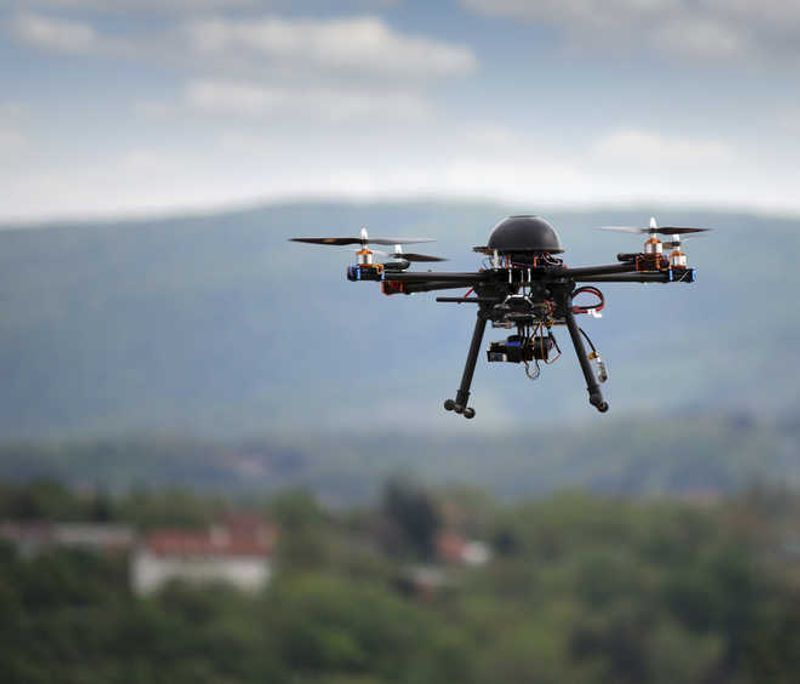
Country’s civilian drone ecosystem has expanded to 38,475 registered unmanned aerial vehicle, with the National Capital Region (NCR) accounting for a significant share in the northern belt, according to data till January 31 recently placed in Parliament.The figures reflect a widening footprint of regulated drone operations across states, including border and hill regions, under the Centre’s evolving aviation framework.Data tabled in the Lok Sabha reveals that in north India, Delhi has 3,070 registered drones, followed by Haryana with 2,179, Punjab (285), Jammu and Kashmir (201) and Himachal Pradesh (146), indicating a sharper concentration in and around the NCR than in neighbouring agrarian and mountainous states.The Union Territory of Chandigarh has 56 registered drones, while Ladakh has reported zero registrations so far. The numbers, as on January 31, 2026, are based on Unique Identification Numbers (UINs) issued by the Directorate General of Civil Aviation (DGCA).Nationally, Maharashtra leads with 8,210 registrations, followed by Tamil Nadu (5,878), Telangana (3,657), Karnataka (3,258) and Gujarat (2,305). Meanwhile, Uttar Pradesh has 1,167 drones, Rajasthan 670 and Uttarakhand 460.Responding to a parliamentary query on the promotion of civilian drones, Minister of State for Civil Aviation Murlidhar Mohol said the government had implemented a regulatory roadmap to promote drone use in healthcare delivery, agriculture, disaster response and infrastructure mapping, particularly in rural and remote areas.He informed the House that the Drone Rules, 2021, notified on August 25, 2021, were aimed at simplifying compliance, while ensuring safe and secure operations. Amendments issued on September 27, 2023, and August 21, 2024, removed the mandatory passport requirement for obtaining a remote pilot certificate and eased registration and transfer procedures.Nearly 90 per cent of Indian airspace has been designated as green zones, allowing drone operations without prior permission in these areas, while operations in red and yellow zones require regulatory clearance.The rules mandate type certification, a valid remote pilot certificate, training through DGCA-authorised remote pilot training organisations, and compulsory issuance of a Unique Identification Number for tracking. Carriage of arms, ammunition, explosives or other dangerous goods is prohibited, and violations can lead to suspension or cancellation of approvals.