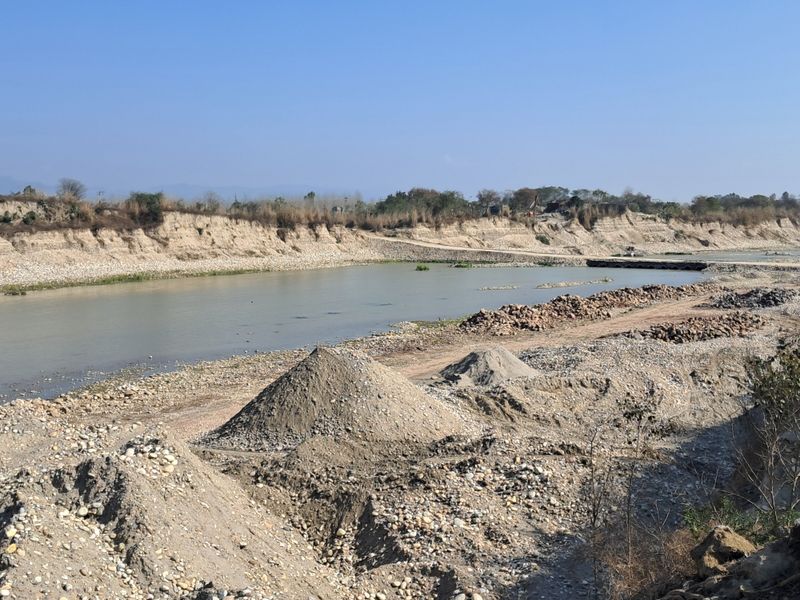

A study by Punjab Engineering College (PEC), conducted under the directions of the National Green Tribunal (NGT), has revealed large-scale illegal sand mining around the Swan bridge in Nangal subdivision, with an estimated 3.41 million cubic metre material extracted over the past two decades.The findings, based on satellite imagery and digital elevation models, form a key part of the NGT’s proceedings in a case related to illegal mining. Field verification has also confirmed active mining and crushing operations in the area, corroborating remote sensing data.According to the study, the scale of extraction has increased sharply over time. Annual extraction was estimated around 57,000 cubic metre between 2000 and 2013. This rose more than fourfold to about 2,42,000 cubic metre per year between 2013 and 2024.In cumulative terms, about 3.41 million cubic metres of sand and gravel have been removed from a 1-km stretch upstream and downstream of the bridge. Experts say this represents “extraction-equivalent” volume derived from measurable changes in riverbed elevation.The report also flags serious environmental and structural risks. It notes that the riverbed has lowered by up to 40 metres in certain sections, which could affect the stability of the bridge. Such changes can increase water flow velocity during floods, intensify scouring around bridge piers and shift the river channel, raising the risk of structural failure.The study also found asymmetric extraction patterns, with the right bank experiencing higher removal, possibly due to easier access.Based on prevailing market rates of Rs 800 to Rs 1,500 per cubic metre, the total value of extracted material is estimated between Rs 2,700 crore and Rs 5,100 crore, indicating significant revenue losses to the state exchequer.During the last Assembly elections, AAP leaders had claimed the state could earn Rs 20,000 crore from mining. The PEC study suggests this estimate could hold true if illegal mining is effectively checked. The NGT has expressed concern over the scale of illegal mining and warned that similar patterns may also exist in other parts of Punjab.The NGT has impleaded the Chief Secretary of Punjab as an additional respondent in the case and directed the state to file a detailed response affidavit. The tribunal also pulled up local authorities for lack of representation during the hearing.The PEC study stands as a stark reminder of how unchecked resource extraction can not only destabilise ecosystems, but also endanger critical infrastructure, demanding urgent regulatory and enforcement action.Key findings3.41 million cubic metre material extracted in the area over the past two decadesThe total value of the extracted material is estimated between Rs 2,700 crore and Rs 5,100 crore, indicating huge revenue losses to the state