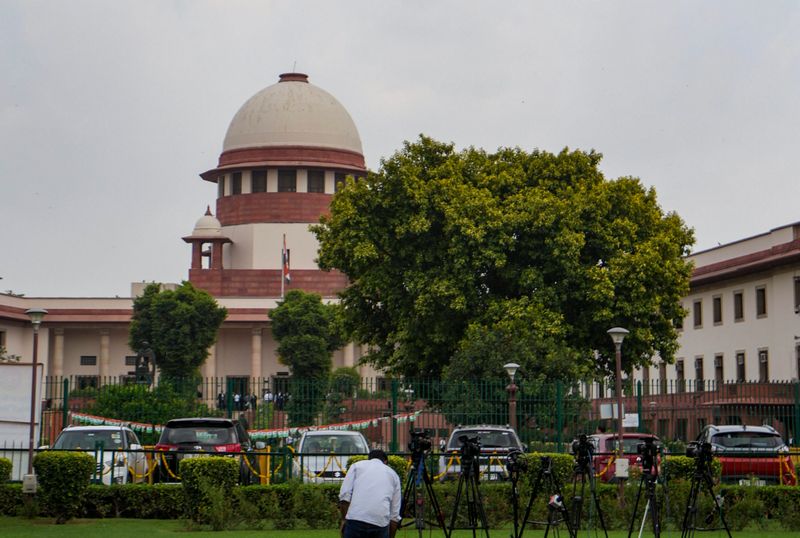
More than six years after hundreds of petitions challenged the validity of the Citizenship (Amendment) Act, 2019, the Supreme Court on Thursday said it will take them up for final hearing on May 5.A Bench of Chief Justice of India Surya Kant, Justice Joymalya Bagchi, and Justice Vipul M Pancholi said the petitioners will be heard on May 5 and half the day on May 6, while the respondents (the Centre and others) will be heard on the second half of May 6 and on May 7. Rejoinder submissions by the parties will be heard on May 12, it added.Issues relating to the rest of India can be taken up first, followed by petitions pertaining to Assam and Tripura, the CJI said.Passed by Parliament on December 11, 2019, the CAA was notified on January 10. It relaxes norms for the grant of Indian citizenship by naturalization to Hindu, Sikh, Christian, Buddhist, and Jain and Parsi victims of religious persecution from Pakistan, Afghanistan, and Bangladesh who came to India before December 31, 2014.Last year, the Union Ministry of Home Affairs extended the cut-off date for applying for Indian citizenship under the CAA to December 31, 2024.On December 18, 2019, the top court issued notice to the Centre on the petitions challenging the CAA. However, on January 22, 2020, it refused to stay the operation of the CAA and the National Population Register (NPR) and said that ultimately a five-judge Bench might have to decide these issues.Acting on a transfer petition by the Central Government, it had restrained all high courts from passing any orders on the CAA.The Central Government had, on March 11, 2024, notified the Citizenship (Amendment) Rules, 2024, to enable the persons eligible under the Citizenship (Amendment) Act, 2019, to apply for the grant of Indian citizenship. As many as 243 petitions challenging the amendment have been hanging fire in the top court since December 2019.The Supreme Court had, on March 19, 2024, asked the Centre to respond to the petitioners’ applications seeking a stay on the implementation of the Citizenship (Amendment) Act, 2019.The petitioners included Trinamool Congress MP Mahua Moitra, Congress leader and former Union minister Jairam Ramesh, AIMIM leader Asaduddin Owaisi, the Indian Union Muslim League (IUML), the Kerala Government NGOs Rihai Manch and Citizens Against Hate, Assam Advocates’ Association, and several law students.Asserting that the CAA did not impinge upon any existing rights of citizens, the Centre had in March 2020 defended the law, saying there was no question of it violating constitutional morality, which is not an “unruly horse”.In an affidavit filed in the top court, the Centre had said it would not affect the legal, democratic, or secular rights of citizens and requested the court to dismiss petitions challenging it.”CAA does not impinge upon any existing right that may have existed before the enactment of the amendment, and further, in no manner whatsoever, seeks to affect the legal, democratic, or secular rights of any of the Indian citizens. The existing regime for obtaining citizenship of India by foreigners of any country is untouched by the CAA and remains the same,” it had said.