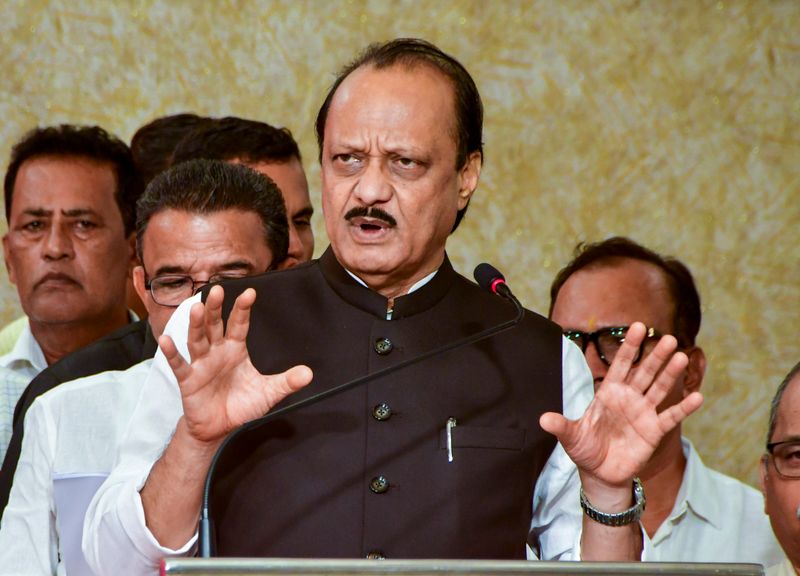
Ajit Anantrao Pawar’s political journey was defined by authority, ambition and an unending struggle to step out of a formidable shadow.His passing marks the end of one of Maharashtra’s longest, most turbulent and consequential political careers, spanning more than three decades. A master of numbers in the legislature and a feared organiser on the ground, Pawar, known as “Dada” to supporters, rose to become the state’s most-frequent Deputy Chief Minister even as controversy followed him as closely as power did.The nephew of Sharad Pawar, the founder of the Nationalist Congress Party (NCP) and one of India’s most-enduring political figures, Ajit Pawar spent almost his entire public life measuring up against his uncle’s legacy. Admired for his administrative grip and criticised for his hard-edged politics, he remained a central figure in Maharashtra’s power structure until the very end.Born in 1959, Pawar was forced to grow up early. The death of his father, Anantrao Pawar, when Ajit was just 18, pushed him into responsibility at a young age. Like much of Maratha politics, his apprenticeship began in the cooperative movement. His election to the board of a sugar cooperative in 1982 gave him entry into a system where economic control translated directly into political influence.By 1991, he had become chairman of the Pune District Cooperative Bank, a post he held for 16 years, cementing his dominance across western Maharashtra.That year, he also entered electoral politics, winning the Lok Sabha seat from Baramati. He later resigned to make way for Sharad Pawar, who had joined the Union Cabinet.Ajit Pawar’s long legislative career truly began in 1995, when he was elected to the Maharashtra Assembly from Baramati, a constituency he would represent uninterruptedly for decades, often winning by large margins and building an unassailable local base.Over the years, Pawar handled heavyweight portfolios including irrigation, agriculture, water resources, rural development, finance and planning. His repeated appointments as Deputy Chief Minister, under Chief Ministers cutting across political divides, reflected both his negotiating power and administrative relevance. No leader in Maharashtra occupied the post as many times or as continuously as he did.Inseparable from controversyYet his career was inseparable from controversy. Allegations of large-scale irregularities in irrigation projects haunted him for years, with opponents pegging the figure at Rs 70,000 crore. These charges were publicly invoked by BJP leaders, including Prime Minister Narendra Modi, when Pawar was in the Opposition, but faded after he split the NCP and aligned with the NDA.Another major controversy involved allegations that his son Parth acquired protected Mahar Vatan land in Pune at a fraction of its market value, raising questions about misuse of privilege. Though no conviction followed, the accusations shaped Pawar’s public image.Ajit Pawar ruled the party organisation with a firm hand and brooked little dissent. His relationship with Sharad Pawar oscillated between loyalty and rebellion. The dramatic break came in July 2023 when he split the NCP and joined the BJP-led alliance. The move secured him power and a renewed political lease, but it also underlined how deeply his career had been shaped by the need to assert independence.Despite electoral success and unmatched administrative longevity, Ajit Pawar never commanded the emotional following enjoyed by his uncle. His legacy is that of a relentless operator who mastered the mechanics of power, but spent a lifetime trying, and only partly succeeding, to escape the shadow he was born into.