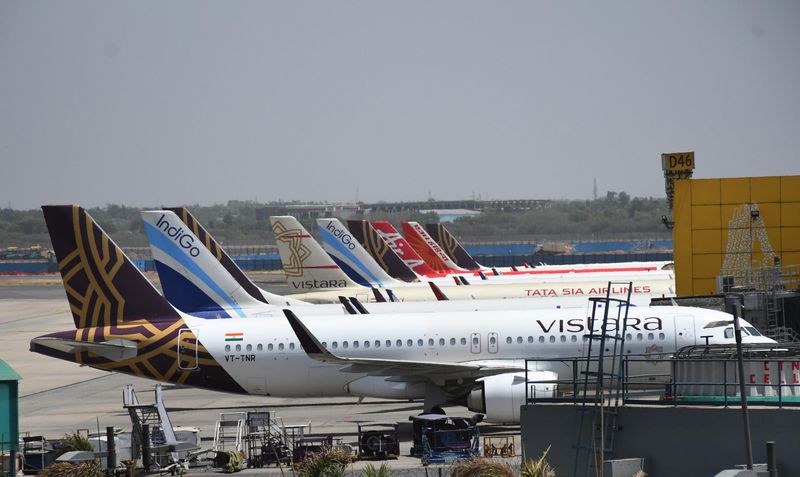
India emerged as the world’s third-largest domestic aviation market, with rapid expansion in airports, passenger traffic, cargo handling and policy reforms placing the sector on a sustained growth path, the Economic Survey 2025-26, tabled by Finance Minister Nirmala Sitharaman, in Parliament on Thursday said.The survey noted that India’s airport network had expanded sharply over the past decade, with the number of airports rising from 74 in 2014 to 164 in 2025. This infrastructure push had supported a steady rise in passenger volumes. In FY25, Indian airports handled 412 million passengers, and this figure was projected to increase significantly to 665 million by FY31, reflecting strong underlying demand for air travel.Passenger traffic data for the current fiscal also shows continued momentum. Between April and December FY25, total passenger traffic across all airports stood at 303.63 million, increasing to 310.36 million during the same period of FY26.According to the survey, “overall air passenger traffic increased by 9.4 per cent, reaching 411.8 million passengers” in FY25, driven by demand from both domestic and international travellers.However, the survey also noted a moderation in growth during April-November 2025, when overall passenger traffic rose by 3.5 per cent year-on-year. It said this reflected “flight disruptions and short-term demand adjustments in the domestic passenger segment”. During this period, domestic passenger traffic growth slowed to 2.6 per cent, while international passenger traffic recorded a stronger increase of 7.3 per cent, despite subdued foreign tourist arrivals.As per survey, a similar pattern was observed in the air cargo segment. It said that air cargo volumes have grown steadily over the long term, increasing from 2.53 million metric tonnes in FY15 to 3.72 million metric tonnes in FY25. Year-wise data shows cargo handling at 3.15 million metric tonnes in FY23, rising to 3.37 million metric tonnes in FY24, before reaching 3.72 million metric tonnes in FY25. In FY26, Indian airports handled 2.95 million metric tonnes of cargo up to December.The survey said air cargo growth moderated to about 5 per cent during April-November 2025, after recording a robust growth of 10.5 per cent in FY25. Industry assessments cited in the report attribute this moderation to higher operating costs, capacity constraints, geopolitical uncertainties affecting international routes, and a normalisation of demand after strong growth in the previous year.Policy support has played a central role in the sector’s expansion. Under the Regional Connectivity Scheme, Ude Desh ka Aam Nagrik (UDAN), 657 routes connecting 93 airports, including heliports and water aerodromes, have been operationalised, improving access to remote and aspirational regions and making air travel more affordable. The modified UDAN scheme aims to enhance regional connectivity by adding 120 new destinations and catering to four crore passengers over the next 10 years.Capacity creation has also been driven by the Greenfield Airports Policy. The survey noted that in-principle approval has been granted for 24 greenfield airports, of which 13 are already operational, including Navi Mumbai International Airport. Alongside this, airport modernisation and expansion projects since FY20 have raised the combined passenger-handling capacity of operational airports to approximately 575 million passengers per annum.Digital and technological initiatives continue to reshape the sector. The survey pointed to the expansion of Digi Yatra, liberalised drone regulations, Production Linked Incentive support for drone manufacturing, and a growing focus on Advanced Air Mobility. Legislative reforms were also flagged as critical enablers. The Bharatiya Vayuyan Vidheyak, 2024, which replaces the Aircraft Act, 1934, seeks to modernise the aviation framework by enhancing safety, innovation, growth and global compliance. In addition, the Protection of Interests in Aircraft Objects Act, 2025 aims to align India’s aviation leasing laws with global standards and reduce leasing costs.The survey also underlined the strengthening of the aviation ecosystem beyond airports and airlines. Expansion in maintenance, repair and overhaul services, leasing activities and specialised financial services is reducing external dependence. It noted that specialised financial services now include 33 aircraft lessors managing 303 aviation assets, addressing India’s leased fleet dependency. The transfer of CSIR-NAL technology for commercial production of the indigenously designed HANSA-3 NG trainer aircraft was described as a milestone, marking the first time a homegrown civil aircraft platform is moving to commercial manufacturing.On sustainability, the survey referred to global experiences with emissions trading systems as countries seek to reduce greenhouse gas emissions. It noted that the EU Emissions Trading System, launched in 2005, is a cap-and-trade system with a progressively tightening emissions cap, and that early oversupply of offset credits diluted emission prices. The EU ETS, now in its fourth phase, is complex and includes the domestic aviation sector.Looking ahead, the survey said India’s civil aviation sector remains sensitive to global economic cycles and the need for continuous capacity upgrades, but current passenger volumes represent only a fraction of the country’s potential. With just 0.11 airports per million people, compared to 0.39 in China and 47.35 in the US, the report said there is substantial headroom for growth.It said that Indian airports can aspire to become global aviation hubs by promoting layovers, improving the transit experience for international passengers, and strengthening global branding in source markets to boost tourism demand.