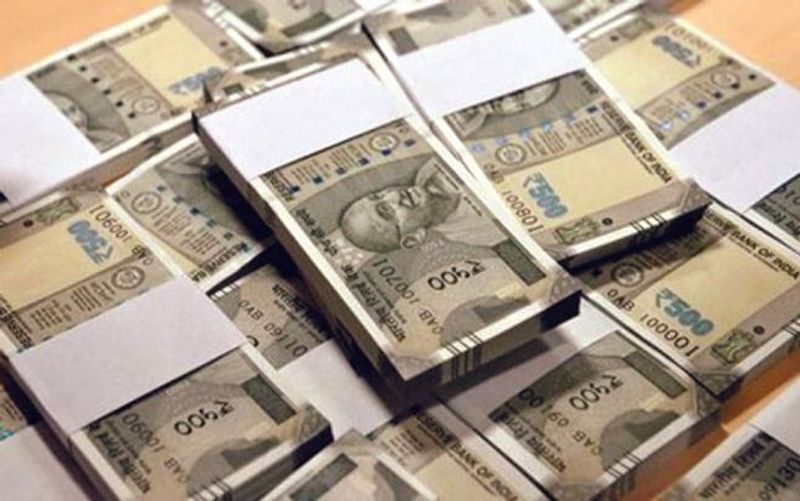

As unconditional cash transfers become a norm across states, the Economic Survey on Thursday red-flagged their risks and advised caution.”Unconditional cash transfers (UCTs) provide immediate income support, but their growing scale risks increase expenditure rigidity and crowd out resources for capital investments, including human capital,” the survey said on the back of several states offering such benefits, mainly with women at the core.Chief Economic Adviser V Anantha Nageswaran too struck a note of caution saying such transfers are “very useful as a short-term loan but sustaining growth will require a careful re-prioritisation”. The survey raises concerns over fiscal populism, crowding out of capital expenditure by cash transfers and rising revenue deficits in states.It flags a deeper risk of such transfers to India’s sovereign borrowing costs.“India’s fiscal credibility today rests on a deliberate shift toward capital formation and human capital investment, facilitated by strong revenue mobilisation and expenditure quality reforms. While the Centre has achieved consolidation alongside record public investment, rising revenue deficits and unconditional cash transfers in several states pose emerging risks by crowding out growth-enhancing spending. With Indian government bonds now globally indexed and investors increasingly assessing general-government finances, weak fiscal discipline at the state level can no longer be treated as locally contained–it increasingly affects the cost of sovereign borrowing,” it says.India’s 10-year bond yield is 6.7 per cent, while Indonesia’s is 6.3 per cent, even though both countries have the same credit rating of BBB. “States’ fiscal priorities, perhaps, are casting a shadow on the sovereign borrowing cost, as investors focus on the fiscal parameters of the general government rather than just those of the Union government. More importantly, the economic costs of the insidious impact that unconditional fiscal transfers have on the incentives for self-improvement, upskilling and employability may be more significant in the long term,” the survey says.Between FY19 and FY25, 18 states saw a deterioration in revenue balance, of which 10 slipped into revenue deficit from revenue surplus, five worsened their revenue deficit and three states managed to stay in revenue surplus despite a deterioration.“Aggregate spending on UCT programmes, particularly for women, is estimated at approximately Rs 1.7 lakh crore for FY26. The number of states implementing them increased more than five-fold between FY23 and FY26, with around half of these states estimated to be in revenue deficit,” the survey notes.Citing experts, it says such transfers are assessed to be in the range of 0.19 per cent to 1.25 per cent of GSDP and 0.68 per cent to 8.26 per cent of the total budgetary expenditures.“Due to cash transfers, the combined gross fiscal deficit of states rose from 2.6 per cent of GDP in FY22 to 3.2 per cent in FY25PA, while the combined revenue deficit increased from 0.4 per cent to 0.7 per cent of GDP, indicating continued borrowing to finance revenue expenditure…. Outstanding liabilities of states stood at about 28.1 per cent of GDP in FY25,” it said, adding that committed expenditures of states such as salaries, pensions, subsidies, absorbed about 62 per cent of states’ revenue receipts in FY24, leaving limited fiscal room.“In this context, higher allocations to UCTs involve clear trade-offs. Unless deficits widen further, additional spending will crowd out resources for critical social and physical infrastructure. But deficits cannot widen any further without causing further deterioration in the overall financial health of the state. These trade-offs are reinforced by programme design: many schemes lack sunset clauses or periodic reviews, increasing rigidity in revenue expenditure. As a result, capital expenditure, whose growth impact is stronger and more durable, often becomes the casualty when fiscal pressures intensify, with adverse implications for medium-term growth,” the survey points out.