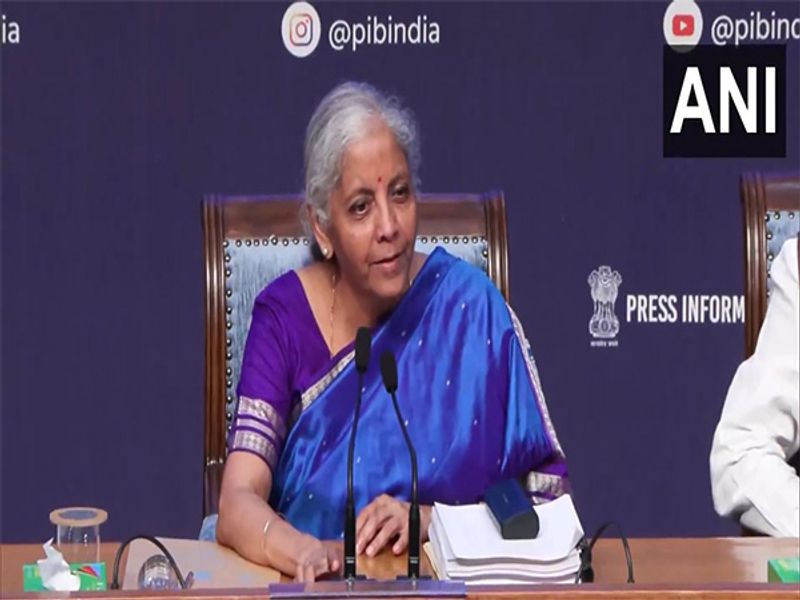

All set to present her record ninth consecutive Union Budget, Finance Minister Nirmala Sitharaman is expected to launch provisions to boost economic growth, alleviate poverty, power investments, manufacturing and jobs.Taking a cue from the Economic Survey 2025-26, which has advised caution instead of pessimism amid global headwinds, the FM is likely to focus on reforms, infrastructure, manufacturing and pro-poor schemes.What remains to be seen is whether she also turns her attention to elderly care as India ages. The LDF-led Kerala Government showed the way two days ago by presenting India’s first dedicated “Elderly Budget” as a separate document to the state Budget. The document acknowledges the growing importance of the care economy.From the Union Budget too, there is a strong expectation, if not hope, of provisions for senior citizens. These could be in the form of tax concessions, pension benefits and duty cuts on elderly care equipment such as assistive technology, walkers, wheelchairs, custom-made personal care aids and monitoring tools that enhance freedom, safety and health.Geriatric care experts say it is time India began investing in the elderly, and demographic researchers agree.Projections by the Indian Institute of Population Studies are that India’s demographic dividend will peak around 2041 when the share of its working age population (20 to 59 years) will hit 59 per cent.These projections had invited a dedicated chapter on India’s transitioning society in the Economic Survey of 2018-2019, which recorded alarming demographic trends and noted that the share of India’s young (0 to 19 years) in the overall population had begun to decline and was projected to drop from 41 per cent in 2011 to 25 per cent in 2041.The Survey also said the share of the elderly (60 years and above) in the population will rise rapidly from 8.6 per cent in 2011 to 16 per cent by 2041.Why invest in elderly?Only 5 states have TFR (children per woman) above replacement level 2.1: Bihar, Manipur, Meghalaya, Jharkhand and UPRecognising the major implications of these changes, the 2018-19 Economic Survey recommended raising the current retirement age and merging schools on grounds that there would be less children in the future.“As the demographic composition of states changes and fertility continues to decline, India’s age structure by 2041 will resemble that of China and Thailand in the current decade,” the Survey had noted.Public health data supports the advocates of investment in the elderly.The National Family Health Survey-5 2021, the latest health survey of the government, puts the national total fertility rate (TFR) at 1.6, down from 2.2 in 2016.The NFHS noted declining fertility levels in states and UTs like Punjab (TFR 1.6), Goa (1.3), Delhi (1.6), Himachal Pradesh (1.7), Sikkim (1.1), West Bengal (1.6), Maharashtra (1.7), Andaman and Nicobar Islands (1.3), and Chandigarh (1.4) where the TFR has already fallen below the replacement level of 2.1.Budget on a SundayThe first time Union Budget was presented on a Sunday was on February 27, 1999, by Finance Minister Yashwant Sinha. This was also the first time since Independence that India discarded the British practice of presenting the Budget at 5 pm and chose the 11 am presentation time instead. FM Sitharaman will again present a Budget on Sunday.These states where the TFR has dipped below replacement level will lead the demographic transition to an ageing society. The IIPS projections add that the school-going cohort will also steeply fall in Punjab, Himachal Pradesh, Uttarakhand, Maharashtra, Andhra Pradesh and Karnataka by 2041 on account of a sharp slowdown in population growth.States in demographic transition will see a decline in population growth rates, which could near zero rates by 2031-41, experts say, adding that the government would do well to prepare ahead for the ageing population and the Union Budget would do well to make that beginning.