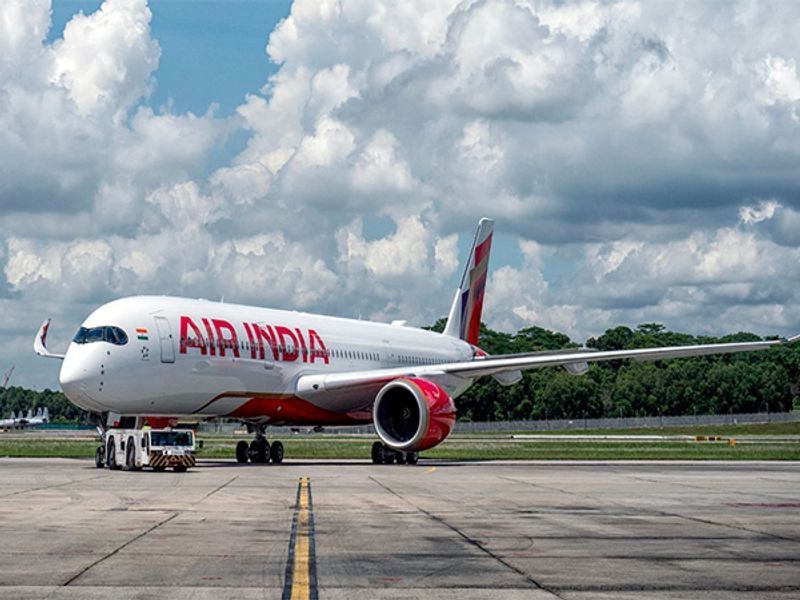
Air India will replace and send the impacted fuel control switch (FCS) module from its Boeing 787 aircraft operating flight AI132 to Boeing for detailed inspection, even as fresh disclosures show the component had completed less than 20 per cent of its certified service life, sources said on Tuesday, adding that over half of Air India’s 787 fleet had been inspected and nothing suspicious was found.Sources said the component in question had logged only 3,440 hours against a total certified life of 20,000 hours when the defect was reported. “The issue is with a specific component, not the aircraft. The component will be changed on the aircraft and sent to the OEM for further checks,” they said.The development comes a day after Air India grounded the aircraft and reported the matter to the Directorate General of Civil Aviation (DGCA), following concerns flagged by a pilot over the fuel control switch, a critical engine control, on a Boeing 787 operating the London-Bengaluru sector.In an internal memo to pilots operating Boeing 787 aircraft, Air India’s senior vice-president for flight operations Manish Uppal said they had escalated the matter to Boeing for “priority evaluation” and had initiated precautionary fleet-wide re-inspection of the fuel control switch latch.“In the interim, while we await Boeing’s response, our engineers — out of abundance of caution — have initiated precautionary fleet-wide re-inspection of the fuel control switch (FCS) latch to verify normal operations. To date, no adverse findings have been reported on the aircraft for which this re-inspection is completed,” Uppal said, according to the memo accessed by The Tribune.The DGCA, in a detailed account of the incident, said the issue was observed on February 1, 2026, when Air India’s Boeing 787-8 aircraft VT-ANX operated flight AI132 from London to Bengaluru. During engine start at London, the crew noticed on two occasions that the fuel control switch did not remain positively latched in the RUN position when light vertical pressure was applied.On the third attempt, the switch latched correctly and remained stable. The crew then carried out a physical verification to ensure the switch was fully and positively latched in the RUN position before continuing with the checklist.“No abnormal engine parameters, cautions, warnings, or related system messages were observed during engine start or at any time thereafter,” the DGCA said, adding that the operating crew was briefed, unnecessary contact with the switch was avoided, and engine indications and alerting systems were closely monitored for the remainder of the flight, which was completed without incident.After landing in Bengaluru, the crew reported the defect in the post-flight defect report (PDR), following which Air India referred the matter to Boeing for guidance.Based on Boeing-recommended checks carried out by Air India Engineering, both left and right fuel control switches were found satisfactory, with the locking tooth fully seated and not slipping from RUN to CUTOFF when force was applied correctly.However, engineers observed that applying external force in an incorrect direction could cause the switch to move easily from RUN to CUTOFF. This was attributed to the angular base plate design, which allows slippage if pressed improperly with a finger or thumb.The DGCA said further checks were carried out on the pull-to-unlock force of the fuel control switch, using Boeing’s recommended procedure, on the affected switch, the replacement unit and a switch from another aircraft. In all cases, the pull-to-unlock force was found to be within prescribed limits. These inspections were conducted in the presence of DGCA officers.The regulator also addressed a video circulating on social media, stating that the procedure shown in the clip was incorrect when assessed against Boeing’s approved method. The airline has been advised to circulate Boeing’s recommended operating procedure for the fuel cut-off switch to all crew members.