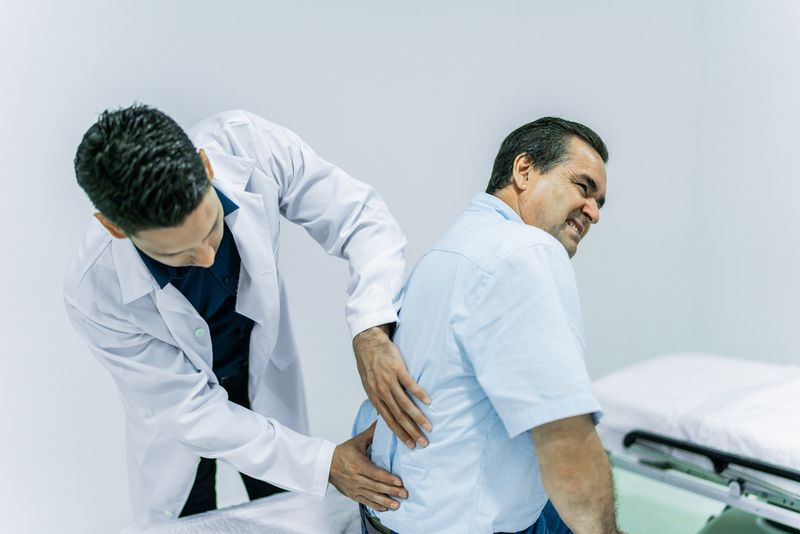

A Delhi-based woman (57) suffered acute backache radiating to right lower limb. She was unable to walk/stand, and the pain intensified with coughing/sneezing. Her MRI showed a L5-S1 prolapsed intervertebral disc (PIVD), commonly called slip disc. She was advised spine surgery. She came to Chandigarh for a second opinion. Her clinical examination and MRI conformed acute PIVD. I prescribed pain medicines for two weeks, and tapered steroids. She responded well to the treatment and was completely cured in two months. She now leads an active life, gymming, dancing, etc.Another woman (63), after left knee replacement, had been facing severe pain for two years on the operated knee and leg while walking. She could not stand/walk for more than 10 minutes. Her doctor even gave steroid injections in the knee, but to no relief. Her MRI showed L4-L5 disc (left) pressing over a left nerve root. A nerve root block injection to the affected nerve provided relief.A young man (20) got sudden severe pain in the back radiating to both legs. He was unable to stand/walk. Clinical examination and MRI showed he had L5-S1 PIVD, and was put on conservative treatment, including epidural injection, oral medicines and rest. After two days, his symptoms worsened and he was unable to pass urine. He underwent spine surgery with a total recovery.An intervertebral disc is a cushion-like structure that has an outer hard ring of collagen fibres that encases a gel-like inner core made of approximately 80 per cent water which acts like a shock absorber for the spine.Our spine has a total of 23 discs: 6 in the cervical spine (C2-C3 to C7-T1), 12 discs in upper back ( T1-T2 to T12-L1) and 5 discs in lower back or the lumbar spine ( L1-L2 to L5-S1). Each level disc lies over a specific level nerve root that allows sensations of touch/ pain and power to specific muscles. Any undue pressure by a particular disc on the corresponding nerve root causes pain/symptoms only in the areas affected by that particular nerve root.Prolapsed intervertebral disc, commonly known as a slipped or herniated disc, occurs when the soft, gel-like centre of an intervertebral disc protrudes through a tear in its tough outer ring. This displaced disc material often compresses or irritates the nearby spinal nerves, resulting in severe localised pain. Symptoms could be numbness, tingling, and radiating pain such as sciatica down the limbs. In the lower back, if the prolapsed disc material compresses the nerves related to urine/ stools, patient can face difficulty in passing urine or in bowel movement.Common causes of PIVD include age-related degeneration, heavy lifting, poor posture and obesity (extra weight can put excessive pressure on the spine).PIVD diagnosis is primarily clinical, based on the patient’s history and physical examination. MRI is recommended for greater certainty. Hence, both are necessary for an accurate diagnosis.Clinical correlation is important for correct diagnosis. Symptoms such as radicular pain, loss of sensation, or muscle weakness pertaining to specific nerve root must corroborate with the level of prolapsed disc seen in the MRI to establish clinical significance. A mismatch between MRI findings and symptoms suggests that the disc prolapse seen in MRI may be not of any significance.Overreliance on MRI findings can lead to over diagnosis, patient anxiety, and unnecessary interventions.Nowadays, patients often share MRI reports on WhatsApp showing disc lesions and seek advice digitally. Such advice can be counterproductive as a physical examination is a must for any diagnosis.PIVD treatment is based on severity of symptoms, neurological involvement, and the patient’s functional status. In 90 to 95 per cent of cases, treatment is conservative, as a large number of patients improve without surgery.Conservative treatment involves brief periods of rest, modification of daily activities, and avoidance of movements that worsen symptoms. As the prolapsed disc material has a gel-like consistency, it gradually decreases in size over time due to natural resorption. Rest allows healing of the peripheral tear, preventing further extrusion of disc material.Usually, NSAIDs (non-steroidal anti-inflammatory drugs), analgesics, and muscle relaxants are prescribed to relieve pain and muscle spasms. Neuropathic pain medications/steroids may be used when radicular pain is significant.Physiotherapy is crucial, focusing on pain relief, posture correction, core strengthening, stretching exercises, and education regarding proper body mechanics.If pain persists despite conservative care, interventional procedures such as epidural steroid injections or selective nerve root blocks may be considered. These help reduce inflammation and provide temporary to long-term pain relief, facilitating rehabilitation.Surgical intervention (microdiscectomy) is reserved for severe cases where conservative treatment fails after 6–8 weeks, or when neurological symptoms like muscle weakness or urine dysfunction progress. While surgery provides fast short-term relief, long-term studies show that most patients achieve similar outcomes through consistent rehabilitation and lifestyle changes, such as weight management and regular low-impact exercise.— The writer is Chairman, Orthopaedics, Paras Hospital, PanchkulaSymptoms to watch out forMost herniated discs occur in the lower back, but they also can occur in other areas.— Pain in the neck/arm or lower back/leg, radiating to hand or foot. Coughing, sneezing or any strain can intensify this sharp or burning pain.— Radiating numbness or tingling in the body part attached to the affected nerves, pressed by the slip disc(s).— Muscles attached to the affected nerves can weaken, causing stumbling or inability to lift/hold items.Factcheck: Slip or herniated disc cases in India are rising, affecting approximately 2% of the population, with high prevalence in urban areas among individuals over 35. Due to sedentary lifestyles, over 54% of urban Indians lack adequate physical activity, leading to 10-15% younger adults (20-35 years) being affected with slip disc. Extended sitting hours, lack of exercise, incorrect lifting techniques, poor workstation setup, prolonged screen time, obesity, smoking, etc, are the primary factors leading to weak core muscles that provide inadequate support to spine.