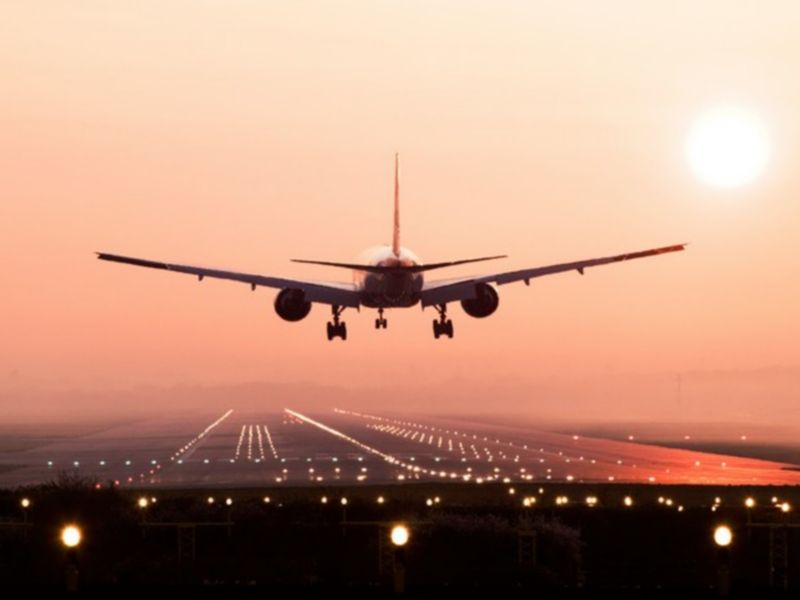
Nearly 33,000 domestic flights operated by scheduled airlines were cancelled over the last two years, the government has informed Parliament, even as concerns persist over steep ticket cancellation charges imposed on passengers.Responding to a question in the Rajya Sabha, Minister of State for Civil Aviation Murlidhar Mohol said that 14,978 flights, accounting for 1.3 per cent of total operations, were cancelled in 2024. The figure rose to 18,349 flights in 2025, representing 1.6 per cent of all scheduled domestic services.The ministry, however, did not specify how many passengers were informed at least two hours before the scheduled departure time, a key requirement under passenger protection norms.The disclosure came in response to a query raised by AAP MP Sandeep Kumar Pathak, who also flagged complaints of airlines charging as much as 90 per cent or more of the ticket fare as cancellation charges, leaving passengers with minimal refunds.Addressing the issue of refunds and cancellation fees, the minister said the Directorate General of Civil Aviation has already put in place passenger-centric regulations under the Civil Aviation Requirement, Section 3, Series ‘M’, Part II, which deals with the refund of airline tickets.As per these norms, airlines are mandated to clearly and unambiguously inform passengers, at the time of booking, about the refund amount admissible in case of ticket cancellation. The rules further stipulate that under no circumstances can an airline or its agent levy cancellation charges exceeding the basic fare plus the fuel surcharge.Mohol said that while airlines were required to adhere to these provisions, they were allowed a degree of autonomy in determining cancellation charges.In line with global practices, he added, such charges may vary depending on how close the cancellation is to the scheduled departure time of the flight.The government maintained that the existing regulatory framework is aimed at balancing passenger interests with operational flexibility for airlines. However, the data placed before Parliament is likely to renew scrutiny over the frequency of flight cancellations and the financial burden placed on passengers who cancel tickets or are affected by disrupted services.