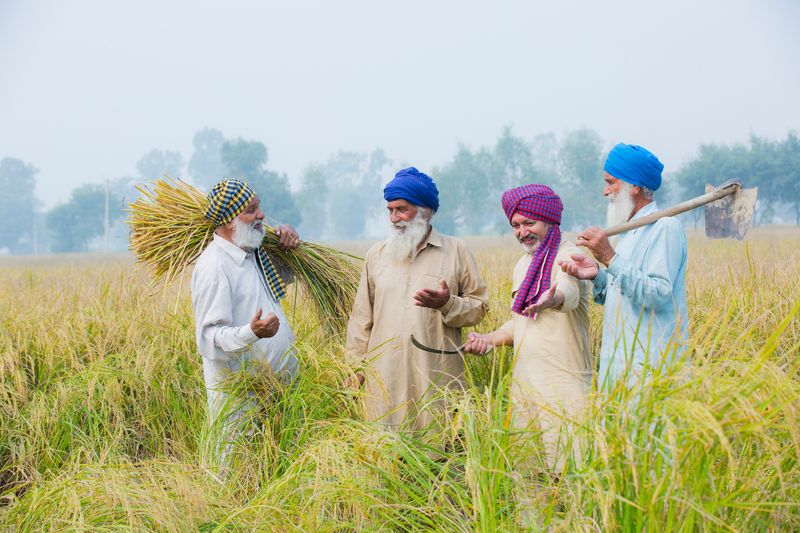

Farmer bodies have vehemently opposed the India-US trade agreement, especially any attempt to bring the agriculture and dairy sectors within its ambit.”India’s dairy sector deserves the highest level of protection. India is the world’s largest producer of milk not because of corporate dairy farming, but because the sector is based on a decentralised, household-driven model run by small and marginal farmers. Around 150 million families are directly or indirectly dependent on dairy production. Imports of heavily subsidised dairy products from the US would severely impact domestic milk prices and pose a serious threat to rural livelihoods,” BKU-A national spokesperson Dharmendra Malik told The Tribune.”This proposed agreement also raises serious cultural and ethical concerns. In the US, dairy animals are fed animal-based and non-vegetarian feed and supplements, which are completely contrary to Indian traditions and values. In India, the cow is revered as Gau Mata, and milk production is closely linked to faith, culture and ethics. In such a context, it is natural to question whether dairy products from cows raised on non-vegetarian feed would be acceptable to Indian consumers and whether such imports respect Indian sentiments,” he added.The India-US joint statement said India’s agriculture market had been ring-fenced, and that the country had granted no duty concessions on what it calls “sensitive” farm and dairy products.Agriculture policy analysts and economists, however, rue that the government had failed to detail the broad contours of the deal following which farmers are anxious and confused.”What was feared has come true. The joint statement on the Indo-US trade deal has made it clear that, for the first time, Indian agriculture is being brought under an international trade agreement. Import duties on certain agricultural products have been reduced to zero, products like maize and soy are entering through the back door, and the conditions are likely to be further relaxed in the future,” eminent psephologist and activist Yogendra Yadav said in a social media post.”There is no room for confusion now — it’s time to face reality. Farmers and farmers’ organizations across the country will have to brace themselves and unite against this attack,” he added.Economist Akash Chopra said allowing the import of crops such as maize for ethanol production would lead to a sharp fall in domestic prices.”Indian maize farmers are already struggling to recover their costs due to rising input expenses. In such a situation, promoting imports will further deepen the agricultural crisis and push farmers toward debt and losses,” he said.”Trade agreements are not merely economic documents. Agriculture and dairy are linked to livelihoods, food security, rural stability, and cultural values. Any agreement that harms farmers and creates unequal competition through subsidized foreign products cannot be accepted,” he added.Food policy analyst Devinder Sharma quoted the example of France where a similar entry of a foreign player killed the indigenous dairy industry.”In France, dairy farming stopped making profits which led to its complete shutdown around three years ago. The reason was opening up of markets and the farmers could not compete with the imports. But a huge movement took birth in the country to safeguard the interests of its dairy farmers. Consumers agreed to pay 6 pence extra to revive the industry. Today, dairy farming is the second most profitable business in France,” he said.The analyst urged the Indian consumers not to get carried away by the price drop and think about the farmers before they purchase the agricultural products once the deal kicks in.Sharma also claimed that 14 agricultural unions and associations in the US, had in the past, tried to pressure their trade representatives to urge India to open up its agricultural markets to them.”They had also raised the demand of curtailing MSP (minimum support price) of Indian crops after a permissible limit. Indian has always resented against the suggestion, in the World Trade Organisation (WTO). The US even went ahead and suggested that India stop providing ration to the poor from public stock holdings. Now with Donald Trump running the show, it has become ‘one man WTO,” he added.A member of Bharatiya Krishak Samaj, who wished not to be named, presented three main demands of farmers from the government.”Completely exclude agriculture and dairy sectors from the India-US FTA; conduct transparent and meaningful consultations with farmers before entering into any trade agreement; and ensure protection of farmers’ incomes, rural economy, food sovereignty, and cultural values. Farmers will not accept any compromise on farmers’ interests, the dignity of Indian agriculture, and the future of rural India,” he added.