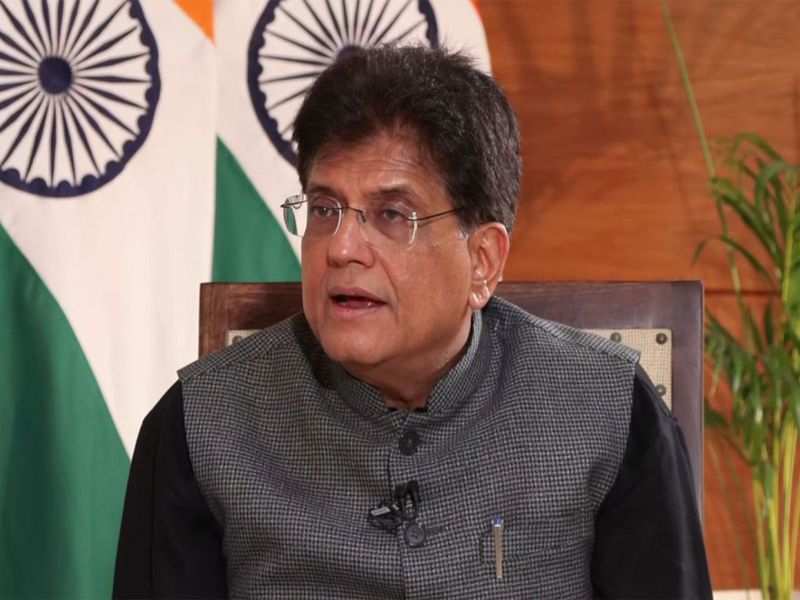

A day after India and the US issued a joint statement on the framework for the interim trade deal between the two nations, Union Commerce and Industries Minister Piyush Goyal spoke to The Tribune about the deal’s nuances. Goyal took questions on a range of issues, from concerns around the opening up of the Indian apple market for US imports to the potential benefits the deal brings to the table. Excerpts from the interview:Q. The India-US interim trade deal framework is a comprehensive document. What are the top takeaways for India?A. I think in any trade negotiation, you are trying to balance the interests of both countries and come up with a fair, equitable, and balanced agreement. This trade deal respects the sensitivities of both countries. We have sensitivities to certain farm products. They have sensitivities about which they are very concerned, as well as about certain farm products or other thingsWe have both been able to bring that balance, respecting each other’s sensitivities so it does not cause any problem in your own geography, yet opening up a large number of opportunities for businesses, for the people of both countries. In our case, being an economy where the per capita income is only $3000 per person, obviously, we are more interested in labour-intensive sectors and in farm sectors.On the American side, they are largely a technology-based and innovation-based country. Their interest is more in certain products where they have exportable services, and also their interest is in certain farm products. So, we have been able to bring a very fine balance and create a win-win situation for both countries.Q. How does India benefit?A. All our products will now enjoy a reciprocal tariff that is lower than our competition. Ultimately, trade is about comparative advantage, and our reciprocal tariff is now less than that of all other emerging markets or developing countries that are our competitors. So, A, being lower than them, we have an edge. Nearly half of our exports continue to be at zero reciprocal tariff. Some of them are under Section 232. We have been given an exemption, so pharmaceuticals will continue to be at zero.Smartphones have been determined to be at zero. So, there are many products where we continue to get the advantage of being a zero-tariff nation, and on many products, we have also been able to get a zero tariff. Even after the reciprocal tariff falls to 18 in most products, for example, in the farm sector, we have many products where the tariff will now be zero.Q. What is in this deal for the Indian farmer?A. Our farmers can see new opportunities to export both in the 18% tariff bracket and in the zero percent tariff segment. We now have zero duty on all spices, tea, coffee, copra, coconut and coconut oil, vegetable bags, nuts like areca nuts, brazil nuts, chestnuts, cashew nuts, many fruits and vegetables like avocados, bananas, where we produce large quantities, guava, mango, kiwi, papaya, pineapple, and for the hill regions, shiitake mushrooms.Many vegetable plating materials, vegetable sap, vegetable, and certain roots like taro, bambara beans, cereals like barley, canary seeds, are all getting down to zero reciprocal tariffs. Sesame seeds, poppy seeds, bakery products, coca products, processed foods like banana pulp, citrus juices, guava and mango paste, pineapple jam, these will also become zero reciprocal tariffs. So, in a way, there are a lot of opportunities for our farm sector.Q. What does the Indian industry get?A. There are a lot of opportunities for labour intensive sectors like leather, textiles, handicrafts, gem and jewellery, gem and diamonds, which will be at zero duty, gem and jewellery which will get a lower 18% reciprocal tariff now, on sportswear, home decor, so electrical where we have a lot of competitive edge, auto components, aircraft parts are also becoming zero duty. So, in a way, this has opened up a plethora of opportunities while protecting the interests of our farmers in all the sensitive areas.Q. There have been major concerns around the opening up of the agricultural segment?A. Our opening has been very carefully crafted. We have excluded all sensitive items which cover meat, poultry, all dairy products, cereals like rice and wheat, sugar, GM foods are not given any opening, soya meal, maize, makka, and there is no duty concession.Millets like jawar, bajra, ragi, kodo, amaranth, fruits like bananas, strawberries, cherries, citrus fruits, some pulses like green pea, kabuli chana and moong where we are self-sufficient, oilseeds, certain animal feed, groundnut, honey, malt and its extracts, non-alcoholic beverages, flour and meals, starch, essential oils, ethanol for fuel which we make in large quantity, tobacco, all of these and amongst others have been given no duty concession. So, all the primary interests of our farmers have been 100% protected.Q. But some agricultural sectors have been opened to US imports, such as apples and extra-long staple cotton.A. Yes, we have a shortage of extra-long staple cotton in India. In fact, we don’t make beyond a certain size, and for exports to increase, we need a certain special cotton, which we need to get from Egypt or the US. We have given a calibrated opening for this. It is not an unlimited opening.This opening will give a big boost to exports, and once that happens, other cotton-based textiles will also get a big boost. So, overall, when exports go up, the domestic cotton also has a larger market. So, the idea is give a thrust to international markets. EU, all Indian textile exports should be zero duty from day one. In the US, we will have a competitive advantage. New textile markets are opening up for us in Australia, New Zealand, Oman, the UK, the UAE, and the four EFTA countries. Now, even Japan has started buying Indian textiles. So, cotton farmers need not worry. We should, in fact, expand our cotton production.We should look at better productivity. I think ICAR is working to increase the productivity and income of our cotton farmers.Q. Are US apples allowed into India?A. We produce 20-21 lakh tons of apples, but are still importing five and a half lakh tons, including from the US, because of shortages. Our demand is more than the supply, and the demand is growing because, as you are aware, prosperity is growing. People’s taste and palate are looking for better products.Q. What we have opened for the US is less than what we are currently importing. What we are importing is less than that. It is a quota.On top of it, we have kept a minimum import price. Now, the normal minimum import price is Rs 50 and 50 percent duty, so Rs 25. So, the floor below, which you cannot get goods into the country, and apples into the country, is Rs 75 at the port, and then other costs are added. In the quota, we have kept Rs 80 as the minimum import price and Rs 20 duty on that. So, it is still Rs 100, 33 percent more than the current floor price.Q. But some apple growers may argue they are producing high-quality apples, having invested in root stock.A. Yes, but demand is also rising, and the five and a half lakh tons that we import is 25 percent of our production.Q. So, you are saying the local and US exports can coexist?A. Of course, both will coexist, and both have very different markets. So, my own experience is that our apple farmers’ incomes will go up as the demand for apple increases and any help that they require, the government stands committed to supporting them.Q. How much will this deal do to boost India’s third-largest economy goal?A. Certainly, it will speed up our journey to become the third-largest economy. My own sense is that in two and a half years, we will become the world’s third-largest economy. More importantly, we want to see the Indian economy grow eight times to a 30 trillion dollar plus economy, and I am very confident that trading arrangements with developed nations, which we have done, cover 38 countries in the nine free trade agreements we have done.Q. What are the strategic goals this deal with will power?A. As the country integrates with the global economy, technology is going to play a very important role. The world is now moving away from technologies that didn’t exist 10 years ago. In Data centres, for example, there is huge investment potential in the country.We have even given support to data centre investments with a tax rebate right up to 2047 in the budget. Now, that will attract investments not only in the data centre and in the infrastructure that is required for the data centre or the ecosystem around it, but also for our renewable energy. Our target is to double renewable energy from the current 250 to 500 gigawatt by 2030. Data centres need a huge amount of energy, and usually they like to have clean energy. So, effectively, this will also give a boost to our investments and demand for renewable energy.So, our thinking is very holistic, but all of this is possible only when we get the equipment for the data centre. We need to get ICT products, we need to get data centre equipment, and we need to get AI and quantum computing machines. So, effectively, we are preparing the groundwork so that the availability of all of these is smooth and continuous.Q. How much investment and energy potential is there in data centres?A. I sense that over the next five years, we can easily look for an investment of about 150 billion dollars, creating about 10 gigawatt of data centre capacity. And remember, in a data centre, they like to have two levels of redundancy, also which India has. So, 10 gigawatt will mean we need 30 gigawatt of power capacity, and already India has a huge amount of redundancy and a national grid, which brings grid stability — a prerequisite to invest in a data centre.Q. What about concerns that the US has made the withdrawal of 25 % punitive tariffs on India conditional on our not buying Russian oil, and also opposition charges that this deal is unequal?A. I think the MEA would be the right ministry to respond to the oil issue because I don’t handle it. It’s not part of the treaty. On the unequal part, I think they really are ill-informed. They should study the information we have put out in the public domain carefully, and they will realize how this is a wonderful agreement in the interest of the people of India, in the interest of businesses in India. It will promote the growth story of India. It will empower Indians with more jobs and more business opportunities. Our startups will get a fillip.Our foreign exchange reserves will get a fillip because of investments flowing into the country. In every respect, this agreement will serve 140 crore Indians as consumers, will serve businesses across sectors in the country, across the country and will help India become a developed nation by 2047.Q. The India-EU free trade agreement was called the mother of all deals. What would you call this one with the USA. If I were to put a one-liner to this deal, I would say “Kisan Surakshit, Bharat Viksit.”Q. Will you be open to the opposition’s demand for a parliamentary debate on the deal with the US?A. That is for the Lok Sabha Speaker and the Rajya Sabha chairman to decide. In the past, though, trade deals have not been discussed in Parliament. I’m surprised they (the opposition) are behaving so immaturely. The cabinet goes into the trade deal in great detail. There are a lot of stakeholder consultations across the country, a lot of discussions with line ministries and states,, and a very robust agreement has been finalised.Q. When will this deal finally roll?A. We have to convert it into legal documentation. It will take another month, month and a half. So, it’s a little premature to talk about any parliamentary discussion.Q. Any concerns around no concessions on steel, aluminium, copper?A. Not really. I talked to our steel industry, and incidentally, our demand for steel is growing so fast in India that we are a net importer of steel. We need more steel in the country. So, they are not unduly perturbed. And the same duty applies to everybody, without discrimination.Q. Within the deal, is there any provision for mid-term review or correction if there is a need for the country?A. Every agreement always puts this in. So, I’m sure when we come up with the final documents, we’ll be putting in this clause.Q. What took the deal so long to come through?A. See, this is the world’s largest economy, a $30 trillion economy. We are still $4 trillion. We will become a $30 trillion economy by 2047. And our people’s needs are different. Our population is four times the size of the US. Our area is small. So, we have to look at our small farmers’ interests, the MSMEs’ interests.We have to really do a lot of stakeholder consultation. And our government, Prime Minister Narendra Modi’s government, never makes decisions in a rush. We do a lot of stakeholder consultations to get the best deal for the country. And therefore, if you look at it, this deal has been done; we started discussions in March. PM met President Donald Trump in February. We started discussions in March. So, it’s actually happened in nearly just 10, 10 and a half months.So, to that extent, it’s not taken that long. And I would say that it’s a very robust deal, a very, very strong sustaining deal, which will work for many years. It’s very balanced, fair for both countries, opportunities for both countries in different areas. And it will certainly power the prosperity of 1.75 billion people.Q. Is India’s commitment to make $500 billion worth of purchases from the US over five years ambitious or achievable?A. Very much achievable. When we look at energy needs, LPG, LNG, crude oil, or aircraft, we already have $50 billion of plane orders on Boeing and probably $80 billion with engines plus spare parts. And I’m told they want to place more orders, so it’ll become close to $100 billion.We need those in India. It’s not as if we’re adding any new imports. Our steel capacity will double. We will need more coking coal. We already import $17 billion a year. We will need ICT products and data centres. So, there’s no choice but to import. And even today, we import $300 billion worth of these products from the US and other places. So, we are already importing $300 billion a year. We will need to import energy products from somebody or the other.We will need to import coking coal. As many partners, as many countries we import from, there’ll be more competition. We’ll get better prices, and the Indian consumer will benefit. So, I think this is a win-win for us. We estimate that in the next five years, we need to import $2 trillion worth of technology, energy, airplanes, and such products in the next five years. So if $2 trillion products have to be imported, then clearly $500 billion coming from the world’s largest economy is not impossible. Certainly, they’ll have to compete with good prices and good quality. I can place orders for planes, but Boeing has to supply those orders.