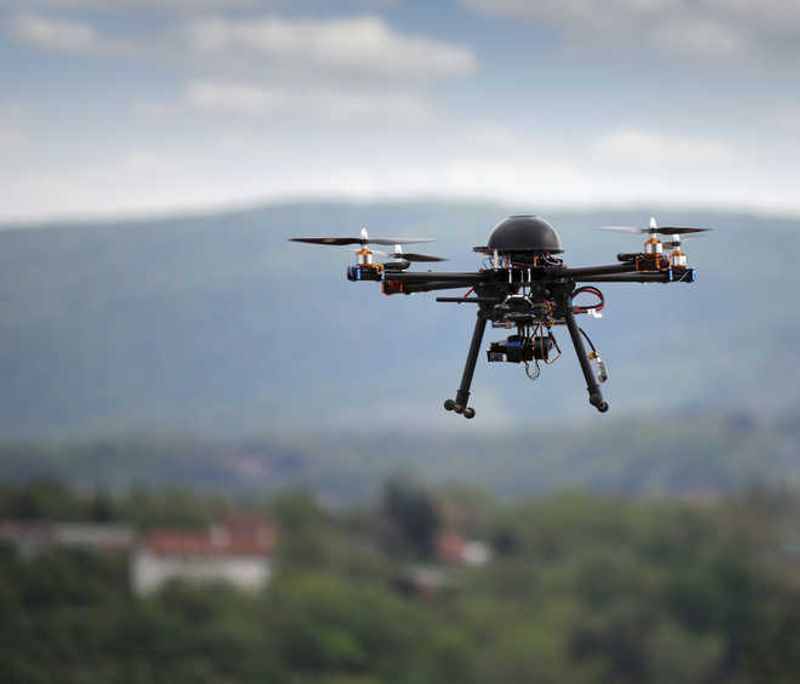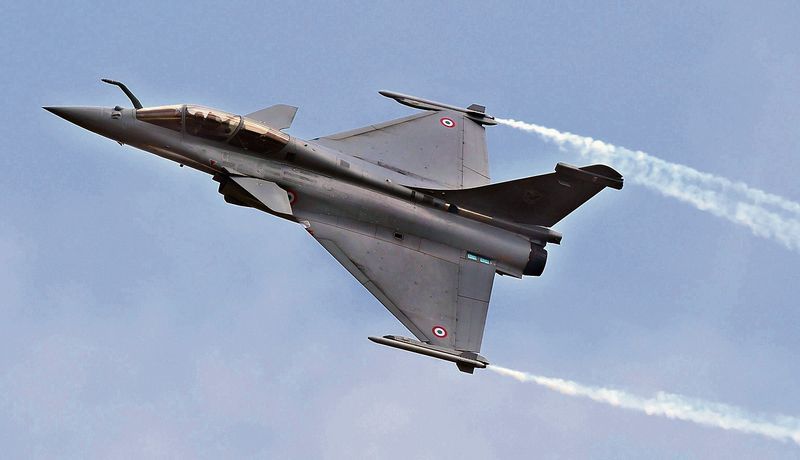
The Defence Acquisition Council (DAC) today approved a major acquisition — the purchase of 114 Rafale jets, an additional six US-made Boeing P8-I surveillance planes for the Navy, Scalp missiles, and the new-technology High Altitude Pseudo Satellite (HAPS). DAC, the apex decision-making body of the Ministry of Defence (MoD), chaired by Defence Minister Rajnath Singh, met today and accorded ‘Acceptance of Necessity’ (AoN) for proposals for services at an estimated value of about Rs 3.60 lakh crore (approx USD 39 billion). The payment schedule will be spread across several financial years, and AoN is the first step towards the acquisition process.The Rafale purchase will now go to Cabinet Committee on Security, chaired by Prime Minister Narendra Modi, which is expected to give a final nod. India and France are looking to seal the deal for the jets when Modi and French President Emmanuel Macron meet in India from February 17-19.The Indian Air Force (IAF) had moved a formal proposal in September last year to MoD seeking 114 more Rafale fighter jets as part of its multi-pronged plan to add more aircraft. IAF already flies 36 Rafale jets, while the Navy has ordered 26 marine variants of the same jet. Increasing numbers would reduce maintenance costs. A Rafale flight training and Maintenance, Repair, and Overhaul (MRO) facility is operational at the IAF base in Ambala.IAF has the capacity — space, spares, tooling, and trained manpower — to immediately take in two squadrons (some 36-38 planes). The jets will be acquired under a ‘Make in India’ scheme, with Dassault Aviation — the maker of the Rafale — partnering with an Indian firm. The French plane maker will integrate Indian weapons, missiles, and ammunition on all 114 jets and will also provide secure data links to allow digital integration of the jets with Indian radars and sensors, sending imagery to ground-based controllers. The French plane maker will be providing transfer of technology (ToT) for making airframes.Its suppliers, like engine maker Safran and avionics provider Thales, will be part of the ToT. The indigenous content is expected to be between 55 and 60 per cent once ToT for airframes, engines, and avionics is done.India is also seeking six additional Boeing P8I long-range maritime surveillance planes. “The acquisition of P8I aircraft will significantly boost the Navy’s combat and war-fighting capability of long-range anti-submarine warfare, maritime surveillance, and maritime strike capability,” MoD said. The Navy already has 12 of these planes in its fleet. They were used extensively during Operation Sindoor with Pakistan (May 7-10). During the military stand-off in Eastern Ladakh, the planes were often over the Himalayas, keeping an eye on Chinese military movement across the Line of Actual Control (LAC).DAC also approved HAPS — high-end version of an unmanned aerial vehicle (UAV) that can operate in the stratosphere for long durations for surveillance and reconnaissance. A HAPS can operate at an altitude of about 20 km, much higher than the flightpaths of commercial planes. It is considered much cheaper to deploy and operate than satellites. A launch vehicle or rocket is not needed to launch it.HAPS will be utilised for carrying out persistent Intelligence, Surveillance, and Reconnaissance, Electronic Intelligence, telecommunication, and remote sensing for military purposes, MoD said. The Scalp combat missiles will enhance the stand-off ground attack capability with deep strike power and very high accuracy.DAC also approved the procurement of Anti-Tank Mines and overhaul of T-72 Tanks and Infantry Combat Vehicles (BMP-II).