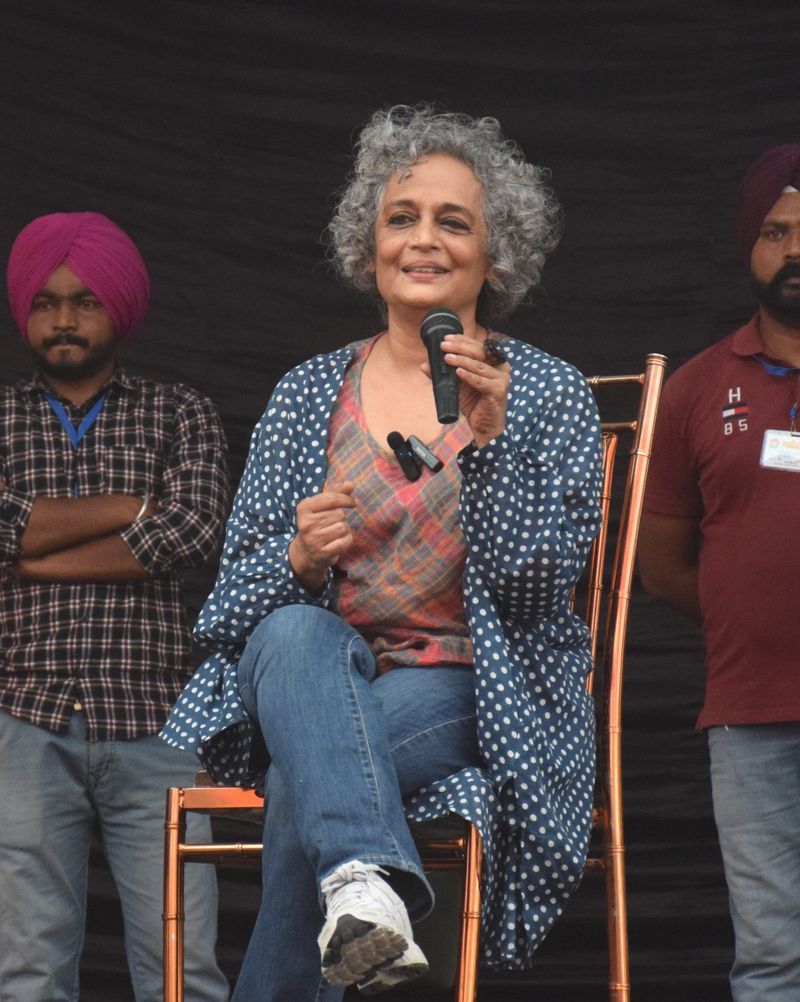
Thirty-six years after it was made, Booker Prize-winning author and activist Arundhati Roy’s film “In Which Annie Gives It Those Ones” was set to head to the prestigious Berlinale 2026 for a world premiere, digitally restored by the Film Heritage Foundation. Roy wrote the film, which was directed by her husband, Pradip Krishen. However, she has withdrawn from the festival following remarks made by German filmmaker and international jury member Wim Wenders.Wenders drew mixed reactions when, in response to a question about German support for Israel during the Gaza war, he said: “We have to stay out of politics because if we made movies that are deliberately political, we enter the field of politics. We are the counterweight to politics.”In a statement shared with a news portal, Roy said: “Although I have been profoundly disturbed by the positions taken by the German government and various German cultural institutions on Palestine, I have always received political solidarity when I have spoken to German audiences about my views on the genocide in Gaza. This is what made it possible for me to think of attending the screening of Annie at the Berlinale.This morning, like millions of people across the world, I heard the unconscionable statements made by members of the jury of the Berlin Film Festival when they were asked to comment about the genocide in Gaza. To hear them say that art should not be political is jaw-dropping. It is a way of shutting down a conversation about a crime against humanity even as it unfolds before us in real time — when artists, writers, and filmmakers should be doing everything in their power to stop it.”She added: “If the greatest filmmakers and artists of our time cannot stand up and say so, they should know that history will judge them. I am shocked and disgusted. With deep regret, I must say that I will not be attending the Berlinale.”Her statement, like Wenders’, has drawn varied responses.Filmmaker Anup Singh, director of “Qissa”, called it “a moment to mourn, but also to question, when a filmmaker like Wim Wenders, whose cinema has constantly opened us to a wide, expansive universe, asks younger filmmakers and even colleagues to slash off a part of their view”.“It’s a moment to mourn because he has broken trust, broken faith with his own cinema. It’s a moment to query because one wonders what kind of pressure could make such a passionate lover of cinema bend and betray not only his colleagues and the larger audience, but also himself. One can only imagine the heartbreak with which Arundhati Roy must have made her decision not to attend Berlinale. This heartbreak, I’m sure, is something she and many other filmmakers will transform, as artists always do, to push open our view to the boundlessness that cinema is,” he said.Punjabi filmmaker Rajeev Kumar, known for making socially-conscious films like “Nabar” and “Chamm”, said he feels “it is an artist’s duty to make political statements at any available platform”.However, Ajitpal Singh, director of the award-winning series “Tabbar”, differed. He said there is “some truth” in what Wenders stated.“An artist should tell the stories of people living in an era. It’s the stories of people that matter, not the political messaging or stands against this or that ideology. An artist can have a political ideology, but in their stories, people should be front and centre, not what the writer wants to say about the era. It is through the lives of the characters that we understand the politics. Writers and artists who put their political ideology and create characters to serve their messaging are taking shortcuts,” he said.