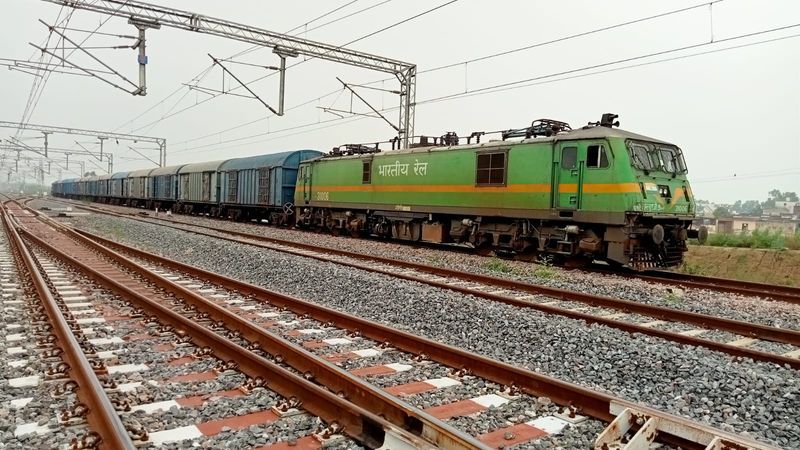
The Cabinet Committee on Economic Affairs, chaired by Prime Minister Narendra Modi, on FRiday approved three major projects of the Ministry of Railways with a total cost of Rs 18,509 crore.These projects include: Kasara–Manmad 3rd and 4th line, Delhi–Ambala 3rd and 4th line, and Bellary–Hosapete 3rd and 4th line.The Delhi-Ambala 194 km project would cost Rs 5,983 crore and is being billed as significant for passenger and troop movement.Information and Broadcasting Minister Ashwani Vaishnaw on Saturday said that the project was strategically important for the movement of troops from Delhi to Jammu via Sonepat, Panipat, Kurukshetra and other Haryana districts and would boost passenger comfort on the Delhi to Chandigarh and onward to Jammu routes.The project would be completed in four years and won’t require major land acquisition.Vaishnaw said it would require the building of one major bridge and 28 others, plus the rehabilitation of old bridges en route.The minister added that it would save 43 crore kg of carbon dioxide annually and generate 132 lakh man-days of employment.The project was among those cleared by the last cabinet meeting chaired by PM Modi at the South Block office before the government vacated the colonial-era complexes and moved to Seva Teerth and Kartavya Bhavan.”The increased line capacity will significantly enhance mobility, resulting in improved operational efficiency and service reliability for Indian Railways. These multi-tracking proposals are poised to streamline operations and alleviate congestion. The three projects, covering 12 districts across the states of Delhi, Haryana, Maharashtra and Karnataka, would increase the existing network of Indian Railways by about 389 km,” a cabinet note said.The special cabinet on Friday also adopted a resolution noting that the North and South blocks were built by the British as symbols of India’s slavery and that governments post-independence continued to work from here.The resolution noted with happiness that the PMO moved out of South Block yesterday and the entire government too vacated the imperial buildings to move to modern-age office complexes that are designed to enhance employee productivity.