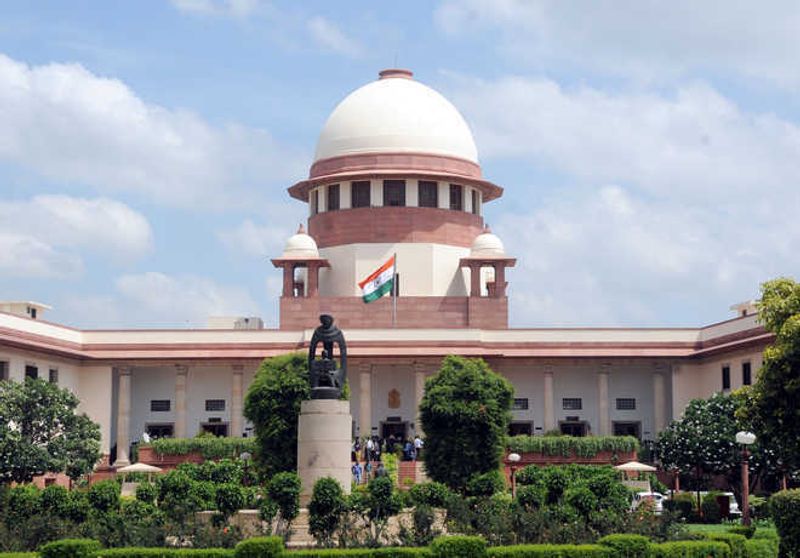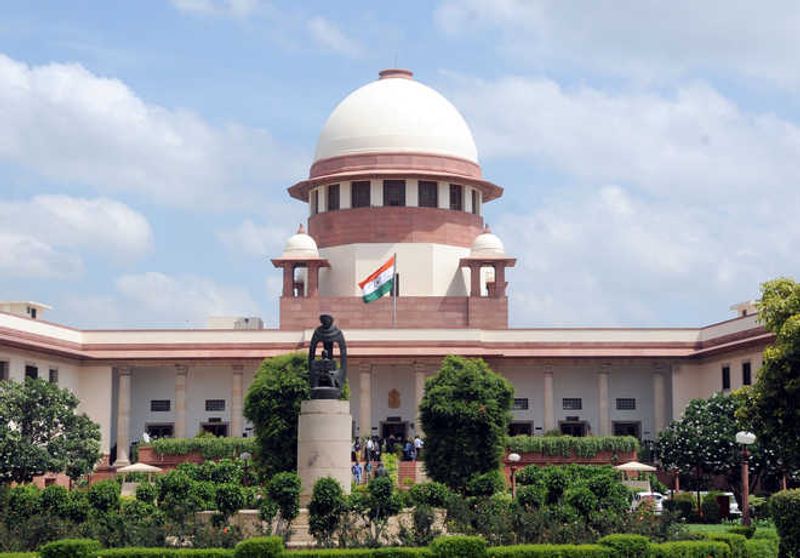
A nine-judge Constitution Bench will on April 7 commence final hearing on petitions relating to alleged discrimination against women in various religions and at religious places, including the famous Lord Ayyappa temple at Sabarimala hilltop in Kerala.A Bench of Chief Justice of India Surya Kant, Justice Joymalya Bagchi and Justice Vipul M Pancholi on Monday said the CJI will constitute the nine-judge Bench.On behalf of the Centre, Solicitor General Tushar Mehta said he supported the petitions seeking review of the Sabarimala verdict that allowed entry of women of all age groups in the sacred hill-top shrine in Kerala. Senior Advocate CS Vaidyanathan, representing Kerala Kshetra Samrakshana Samithi and Sabarimala Aiyappa Seva Samajam, also supported the review petitions.“There are some unforeseen bridges which we may have to cross when we are hearing the case,” the top court said.Asking the parties to file their written submissions on or before March 14, the Bench said the hearing would likely conclude on April 22.The review petitioners or the party supporting them shall be heard from April 7 to April 9 while those opposing the review shall be heard on April 14 to April 16, the Bench said.Rejoinder submissions will be heard on April 21, 2026, followed by the final and concluding submissions by the amicus curiae, it said, requesting the parties to adhere to the schedule.The Bench appointed senior advocate K Parameshwar and Shivam Singh as amicus curiae to assist it. It appointed advocate Krishna Kumar Singh as the nodal counsel for parties supporting the review of the Sabarimala verdict and Shashwati Pari as the nodal counsel for those opposing the review petitions.On behalf of the Centre, Solicitor General Tushar Mehta said he supported the petitions for review of the Sabarimala verdict that allowed entry of women of all age groups in the sacred hill-top shrine in Kerala.By a 4:1 verdict, a five-judge Constitution Bench led by then-CJI Dipak Misra had on September 28, 2018, allowed entry of women, irrespective of their age, into the Lord Ayyappa’s temple at Sabarimala, overturning the age-old tradition that restricted the entry of women in the age group of 10 to 50 years.Justice Indu Malhotra, the lone woman judge on the Bench, had delivered a dissenting verdict and supported the practice.The verdict led to massive protests by Lord Ayyappa’s devotees—particularly after the entry of two women into the temple. The devotees believed the age-old tradition of the shrine should be respected as the deity was an eternal celibate.The ruling led to the filing of a large number of review petitions by various individuals and organizations. On November 14, 2019, the Supreme Court delivered its verdict on the review petitions which didn’t decide the issues involved.Enlarging the scope of the Sabarimala temple entry restrictions issue, it referred to a seven-judge Bench the issue of discriminatory practices in other religions as well for laying down constitutional principles for determination of such issues.By a majority verdict of 3:2, a five-judge Bench headed by then-CJI Ranjan Gogoi framed seven issues for consideration of the seven-judge Bench for enunciating constitutional principles to be followed in dealing with such issues in any religion. Now, these issues will be considered by a nine-judge Bench.Issues to be considered by nine-judge Bench•What is the ambit of interplay between freedom of religion under Articles 25 and 26 and other fundamental rights, particularly right to equality under Article 14?•What is the sweep of expression “public order, morality and health” Article 25(1)?•What is the meaning of “morality”? Is it over arching morality in reference to preamble or limited to religious beliefs?•How far can courts inquire into a particular practice being an integral part of a religion/religious denomination? Should it be left exclusively to be determined by the religious group’s head?•What is the meaning of “sections of Hindus” appearing in Article 25(2)(b)?•Whether “essential religious practices” of a religious denomination or a section thereof are protected under Article 26?•What’s the permissible extent of judicial recognition to PILs challenging religious practices by persons not belonging to such religious denominations?