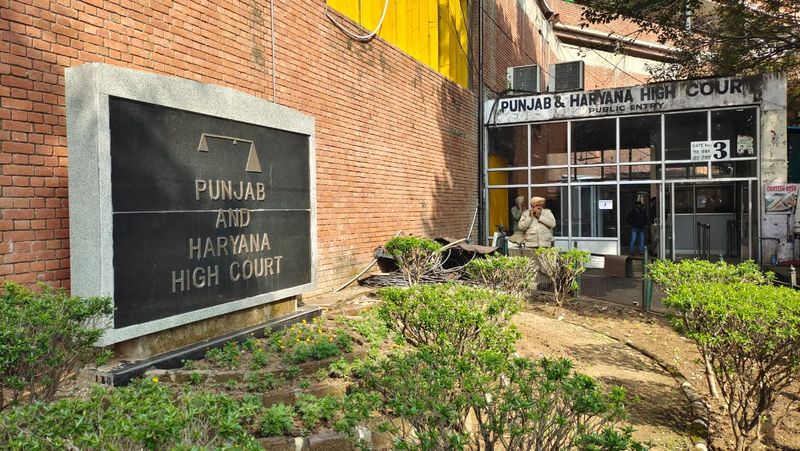
The Punjab and Haryana High Court has held that an employer, who keeps a resignation pending, cannot deny salary and service benefits for that period.Making it clear that an employment relationship subsists in law until resignation is formally accepted, Justice Sandeep Moudgil has directed the Union of India and other respondents to release the petitioner-teacher’s salary and admissible allowances from February 14, 2024, till January 7, 2025 — the date of formal acceptance. The amount was directed to be released within four weeks.The ruling came in the case of a Trained Graduate Teacher (TGT) working with the Navodaya Vidyalaya Samiti (NVS).Justice Moudgil’s Bench was told that she served at various Jawahar Navodaya Vidyalayas and discharged her duties diligently. But she was subjected to a hostile work environment, including discriminatory allocation of duties and denial of basic service-related entitlements, during her tenure “particularly at JNV Butana and JNV Karnal”.“Owing to prolonged mental stress, deterioration of health, and continued hostile conditions at the workplace, the petitioner took a conscious and voluntary decision to sever her employment.Accordingly, she tendered her resignation dated February 14, 2024, to the Deputy Commissioner, NVS Regional Office, Jaipur, and the Commissioner, NVS, Noida,” the Bench was told.It was alleged that the respondents declined to accept the petitioner’s resignation on the ground that it was “conditional” and in the nature of a representation merely because it contained a factual narration of the circumstances leading to her resignation.The petitioner was thereafter repeatedly directed to submit a “simple and unconditional” resignation, which effectively sought to compel her to suppress the factual background underlying her decision to resign.Justice Moudgil observed that an employer “who retains control over the employee’s resignation cannot simultaneously deny the incidents of service for the period during which such resignation remained unaccepted.”Relying on the Supreme Court’s ruling, Justice Moudgil reiterated that resignation became effective only upon acceptance by the competent authority, unless rules provide otherwise. The court added that administrative delay in acceptance of resignation could not operate to the prejudice of the employee.The Bench observed that the respondents claimed the petitioner did not report for duty, while they kept her resignation under consideration for nearly eleven months. During the period, neither disciplinary proceedings were initiated nor was she declared to have abandoned service. The court held this amounted to a conscious election to keep the employment relationship alive.Justice Moudgil added “a party could not be permitted to ‘blow hot-blow cold’, ‘fast and loose’ or ‘approbate and reprobate’.” Retrospective acceptance of resignation could not be employed as a “legal fiction to extinguish accrued service benefits,” particularly where the delay was entirely attributable to the employer.Accordingly, it held the petitioner entitled to salary and allowances for the period between tendering and formal acceptance of resignation, subject to statutory deductions.