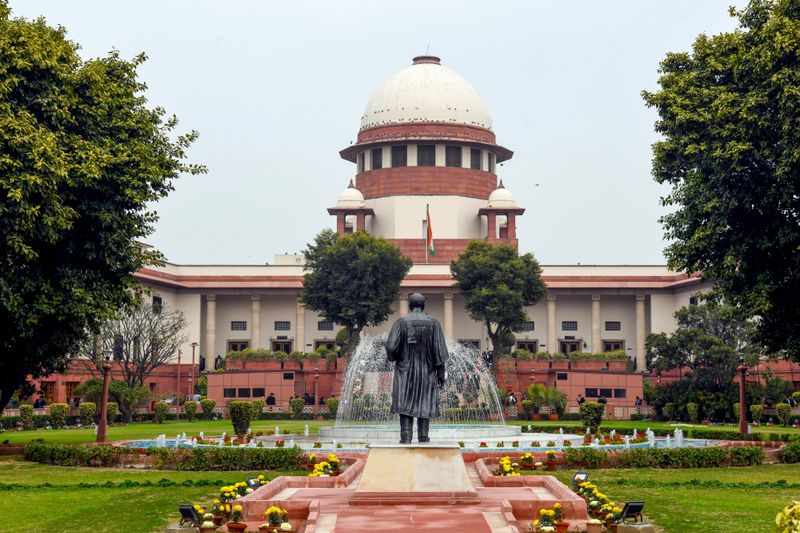
Terming it “patently erroneous”, the Supreme Court has set aside the Allahabad High Court’s controversial judgment that said allegations of grabbing a minor’s breasts and pulling her pyjama string didn’t amount to an attempt to rape.A three-judge Bench led by Chief Justice of India Surya Kant restored the summons issued to the accused by the Special Judge under Section 376 of the IPC, read with Section 18 of the Protection of Children from Sexual Offences Act, holding that the alleged act was not “preparation” but “attempt” to commit rape.In 2021, accused Pawan and Akash allegedly attacked an 11-year-old girl in Kasganj, Uttar Pradesh, and grabbed her breasts, snapped her pyjama string and tried to drag her under a culvert after offering to drop her on their bike while she was walking with her mother. The accused managed to flee when passersby rushed to rescue the minor after hearing her screams.They were summoned by the trial court to face charges of assault or “use of criminal force with intent to disrobe” and aggravated sexual assault under the Protection of Children from Sexual Offences (POCSO) Act, 2012.However, the Allahabad High Court in March 2025 diluted the charge of attempt to rape and other charges under the POCSO Act against the accused to charges of assault or “use of criminal force with intent to disrobe”, inviting severe criticism for the “insensitive” judgment.The SC Bench, which also included Justice Joymalya Bagchi and Justice NV Anjaria, set aside the impugned order for “patently erroneous application of the settled principles of criminal jurisprudence”.“The facts alleged being so, we cannot agree with the finding of the High Court that the allegations only amount to preparation, but not an attempt, towards the commission of the offence of rape. The attempt made by the accused inevitably leads us to conclude that, prima facie, a case for invoking the provisions of attempt to commit rape has been made out by the complainant and the prosecution,” the top court said in its February 10 order.“The impugned judgment, thus, is liable to be set aside on account of the patently erroneous application of the settled principles of criminal jurisprudence,” it said.Writing the judgment for the Bench, CJI Kant said: “No judge or judgment of any court can be expected to do complete justice when it is inconsiderate towards the factual realities of a litigant and the vulnerabilities which they may be facing in approaching a court of law. Our decisions as participants in the legal process, from laying down the procedure that shall have to be faced by common citizens to the final judgment passed in any given case, must reflect the ethos of compassion, humanity, and understanding, which are essential for creating a fair and effective justice system.”The Bench said, “The judicial system, as a cohesive framework, is designed to deliver justice and satisfaction to citizens who seek redressal of their grievances before it. To meet such an objective, our efforts must not only be grounded in the sound application of constitutional and legal principles but also foster an environment of compassion and empathy. The absence of either of these cornerstones would prevent judicial institutions from properly performing their critical duties.”Terming the HC as “totally insensitive” and “inhuman”, the Supreme Court had on March 26, 2025 stayed the high court’s controversial verdict. Taking suo motu cognisance of the matter on the basis of a letter addressed to the CJI by an NGO “We the Women of India” – the top court had said that “It was totally insensitive on the part of the learned (HC) judge to make such observations.”“A bare perusal of these allegations leaves no modicum of doubt that the case sought to be made out is that the accused persons proceeded with a pre-determined intent to commit an offence (of rape) under Section 376 of the IPC on her,” the top court concluded.