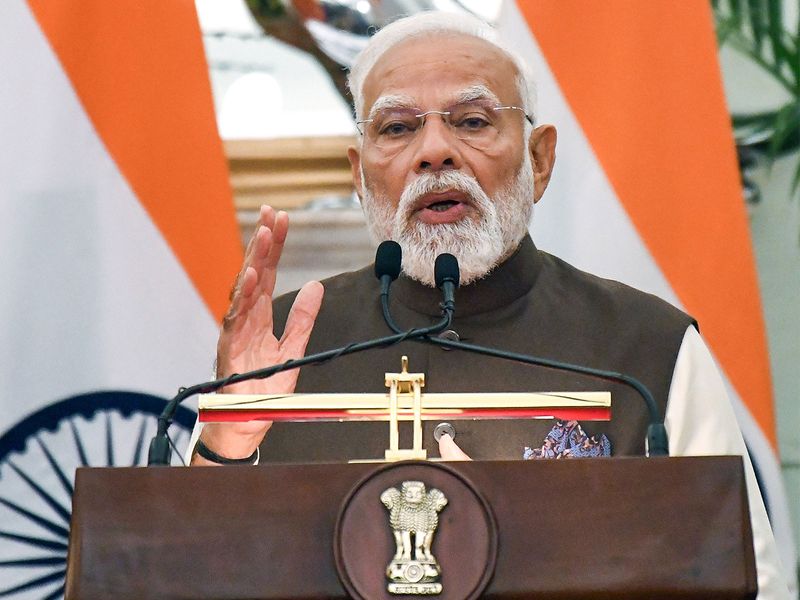
Lauding India’s role in shaping global conversations on emerging technologies, United Nations Secretary-General António Guterres on Thursday said the future of artificial intelligence must not be dictated by a few powerful countries or corporations and called for inclusive governance led by the Global South.Delivering opening remarks at AI Impact Summit 2026 in New Delhi, Guterres congratulated Prime Minister Narendra Modi for hosting what he described as the first major AI summit anchored in the Global South, saying holding the discussions in India “brings the conversation closer to the realities shaping much of the world”.“Meeting in India has special meaning. It brings this conversation closer to the realities shaping much of the world. Because the future of AI cannot be decided by a handful of countries – or left to the whims of a few billionaires,” Gutteres said.He announced that the UN-mandated Independent International Scientific Panel on AI — comprising 40 experts — had been formally appointed to bridge knowledge gaps and ensure evidence-based policymaking. The UN is also launching a Global Dialogue on AI Governance, with its first session scheduled in Geneva in July, aimed at aligning regulations, safeguarding human rights and establishing safety standards.Highlighting the development dimension, the Secretary-General proposed a USD 3-billion Global Fund for AI to build capacities in developing countries, including skills, data access and affordable computing power, warning that many nations risk being “logged out of the AI age” without investment.He noted that artificial intelligence could accelerate progress on the United Nations Sustainable Development Goals — from healthcare breakthroughs and education access to food security and climate preparedness — but cautioned it could also deepen inequality and amplify bias if left unchecked.Guterres stressed the need for clean-energy powered data infrastructure, worker reskilling and safeguards against misuse, adding that no child should be exposed to unregulated AI systems.“Real impact means technology that improves lives and protects the planet,” he said, urging countries to build AI “for everyone — with dignity as the default setting”.