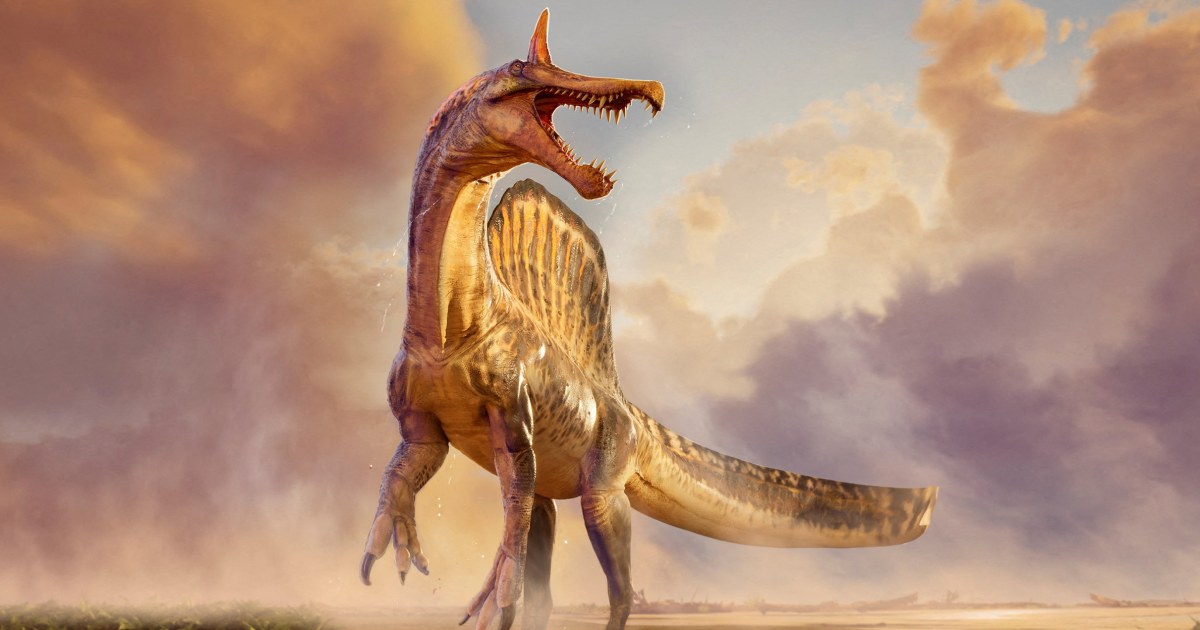
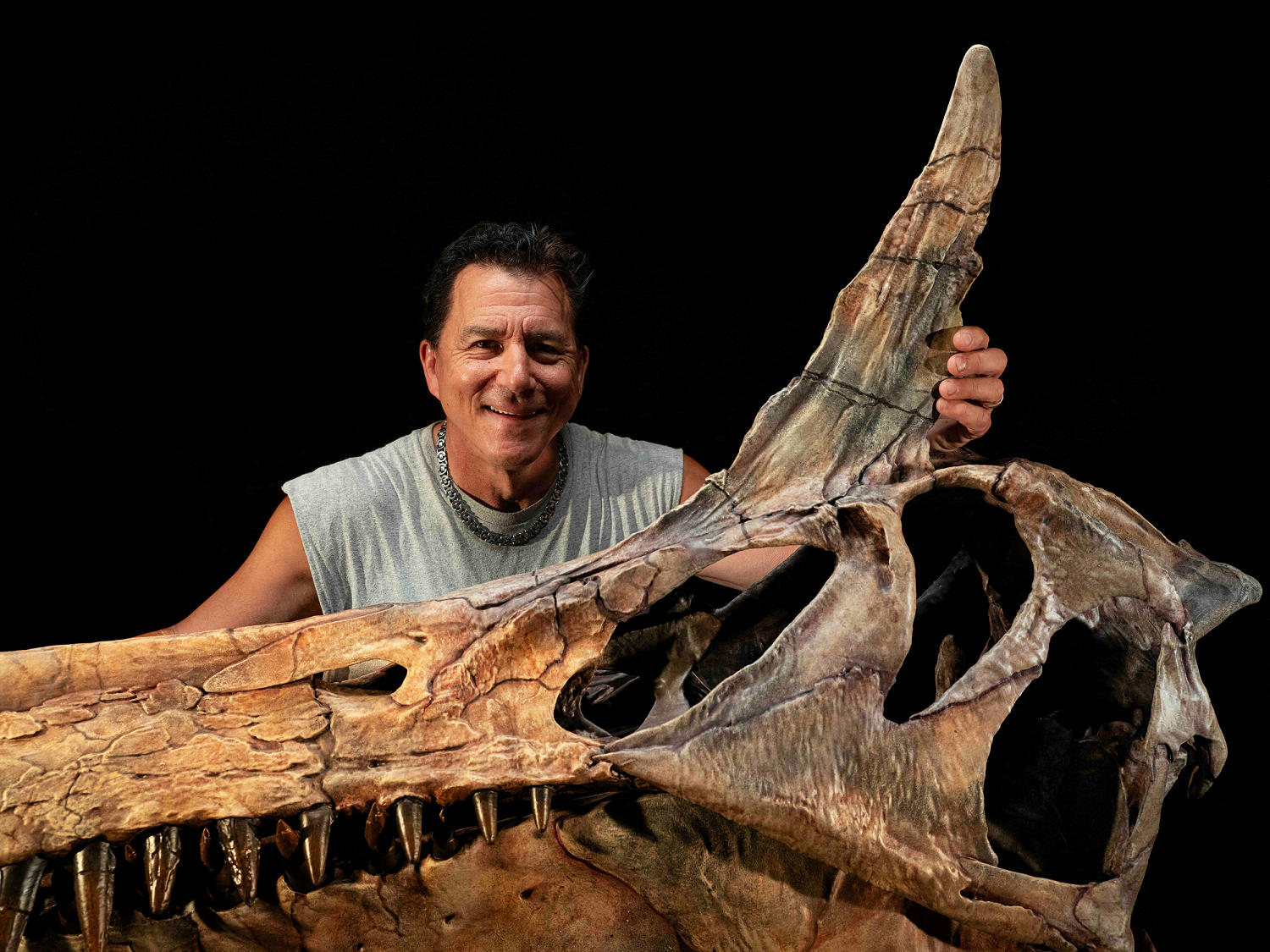
The researchers said its crest likely was for display, since it appears too fragile to have been used as a weapon, even though it was solid bone without the air sacs present in some other dinosaur crests. The crest, probably sheathed in keratin like a bull’s horns, may have been vividly colored and instrumental in sexual or territorial competition or recognition between individuals.“It’s about love and life — attracting a mate, defending your hot feeding shallows,” said University of Chicago paleontologist Paul Sereno, lead author of the research published on Thursday in the journal Science. “What else could be more important?”The retracted location of its nostrils, farther back than usual, let it submerge most of its snout under water to stalk swimming prey for as long as necessary while breathing normally. In addition, its upper and lower rows of teeth fit neatly together during a bite, called interdigitation.“Their large conical teeth without serrations that interdigitate form a ‘fish trap’ that is very good at piercing and trapping slippery fish in the jaws, preventing them from sliding,” said paleontologist and study co-author Daniel Vidal of the University of Chicago and Universidad Nacional de Educación a Distancia in Spain.“Spinosaurus mirabilis has some of the most extreme piscivorous adaptations of any dinosaur, so we know it was better at preying upon fish than it would have been at preying upon other dinosaurs,” Vidal said.Fossils of Spinosaurus aegyptiacus come from sites in Egypt and Morocco near the Cretaceous coastline of the Tethys Sea, predecessor to today’s Mediterranean Sea and Indian Ocean. That fact, plus certain skeletal traits, led some scientists to hypothesize Spinosaurus was fully aquatic, an open-water swimmer and diving pursuit predator in a marine setting.But the Spinosaurus mirabilis fossils were found far inland, roughly 300-600 miles from the nearest ocean shoreline. That fact, coupled with aspects of the animal’s anatomy, instead point to Spinosaurus as a shallow-water predator and not fully aquatic, the researchers said.Sereno called the Spinosaurus mirabilis discovery “the coup de grâce for the aquatic hpothesis.”Jenguebi, where the fossils were discovered, is a remote Sahara locality, with fossil-rich sandstone outcrops surrounded by sand dunes. For their 2022 expedition, the researchers set out from the city of Agadez in a convoy and drove off-road through desert terrain for almost three days, often getting stuck in the sand.The journey paid off, as they discovered parts of three Spinosaurus mirabilis skulls and other bones, along with fossils of other creatures.Long overshadowed in the public imagination by T. rex, Spinosaurus is now having its time in the spotlight.“It’s a dino-happening,” Sereno said.