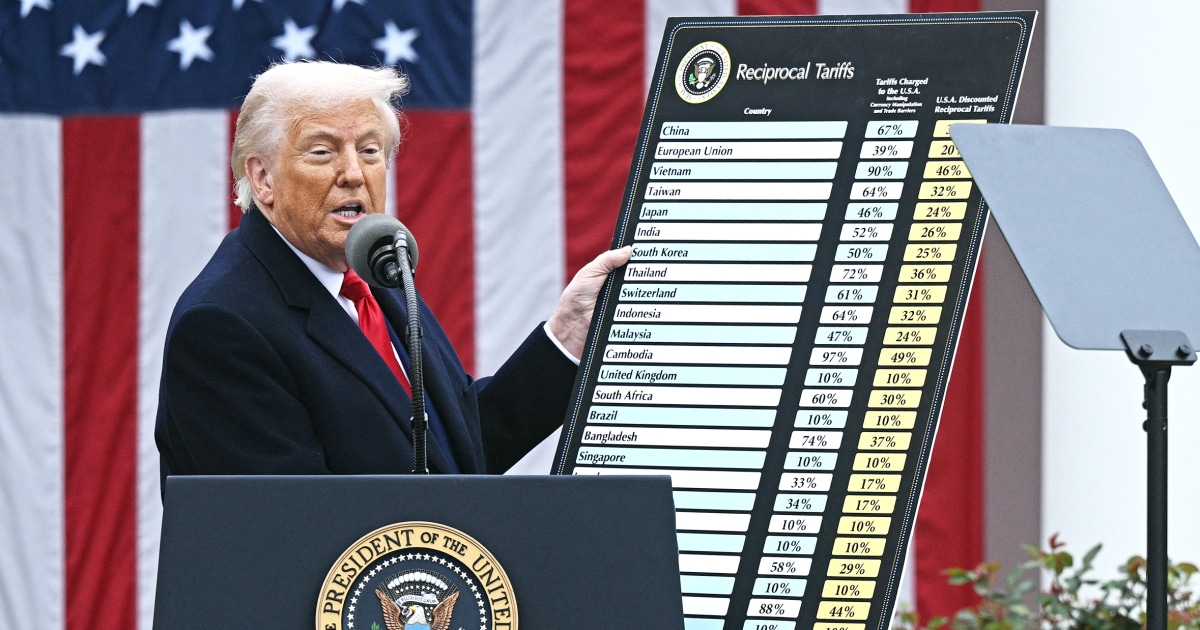
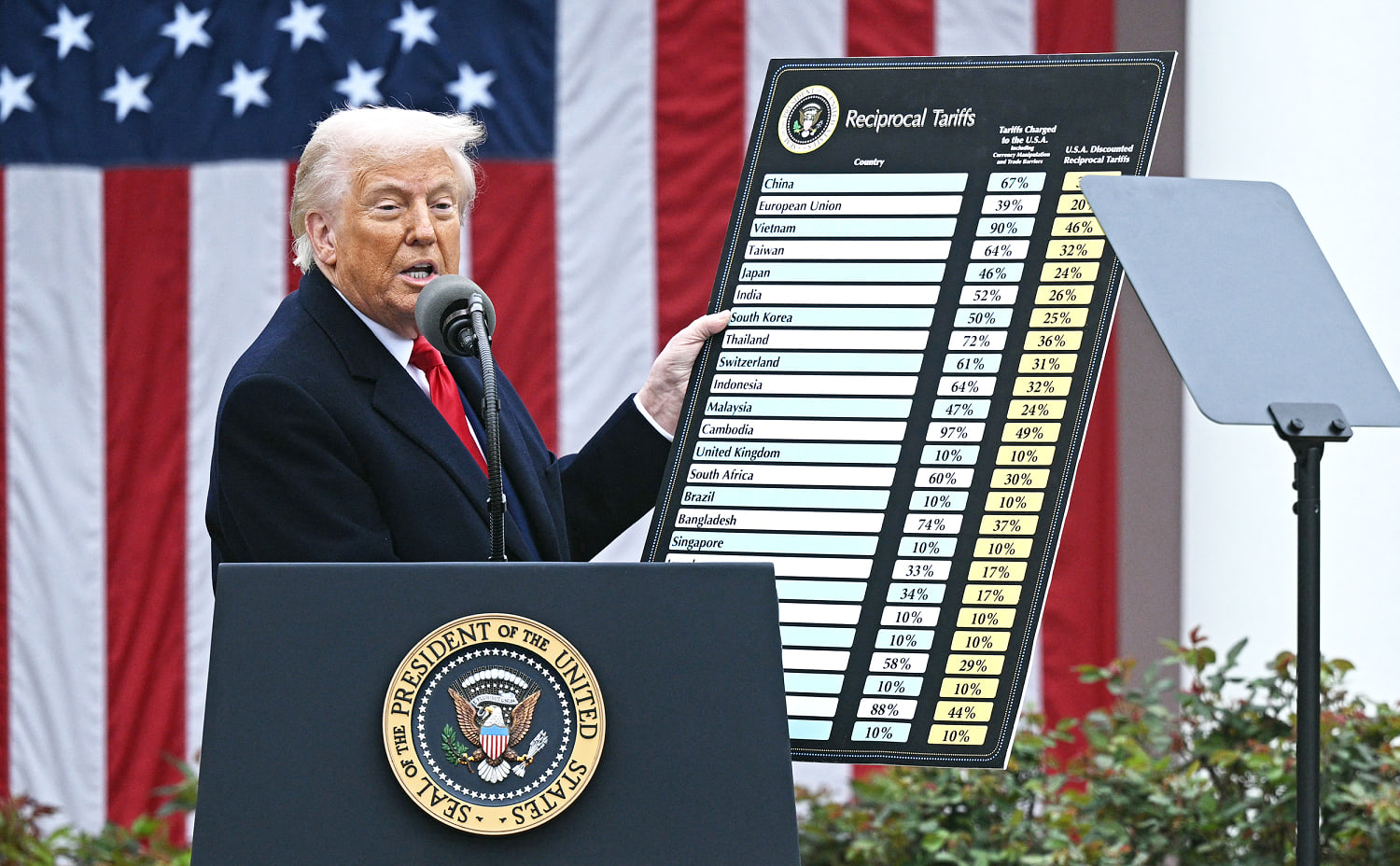
WASHINGTON — The Supreme Court delivered a major blow to President Donald Trump, ruling Friday that he exceeded his authority when imposing sweeping tariffs using a law reserved for a national emergency.The justices, divided 6-3, held that Trump’s aggressive approach to tariffs on products entering the United States from across the world was not permitted under a 1977 law called the International Emergency Economic Powers Act (IEEPA).The ruling invalidates many, but not all, of Trump’s tariffs. Follow along for live updatesSpeaking at the White House, Trump harshly criticized the Supreme Court majority, describing the decision as a “disgrace to our” nation and the justices in the majority as “very unpatriotic and disloyal to the Constitution,” while suggesting they were “swayed by foreign interests.”Trump’s ability to impose tariffs using other laws is not affected by the ruling, and Trump said he plans to use those authorities to impose new duties on a global basis. He said he will soon implement a 10% global tariff, which would be a reduction for nearly all foreign nations.Despite Trump’s rhetoric about the tariffs benefiting the economy, stocks rallied on news of the ruling.The ruling was authored by Chief Justice John Roberts, who was joined by three liberal justices and two fellow conservatives, Justices Neil Gorsuch and Amy Coney Barrett, in the majority.”The president asserts the extraordinary power to unilaterally impose tariffs of unlimited amount, duration and scope,” Roberts wrote. But the Trump administration “points to no statute” in which Congress has previously said that the language in IEEPA could apply to tariffs, he added.As such, “we hold that IEEPA does not authorize the president to impose tariffs,” Roberts wrote.Justices Clarence Thomas, Brett Kavanaugh and Samuel Alito dissented.It is a rare setback for the administration at the Supreme Court, which has a 6-3 conservative majority, since Trump began his second term in January.Business owners who had to pay the tariffs and challenged them in court expressed relief at the ruling.”These new tariffs were arbitrary, unpredictable, and bad business,” Victor Schwartz, who runs New York-based wine and spirits importer VOS Selections, said in a statement.”Thankfully, courts at every level recognized these duties for what they were: unconstitutional government overreach,” he added.The decision does not affect all of Trump’s tariffs, leaving in place ones he imposed on steel and aluminum using different laws, for example. But it upends his tariffs in two categories. One is country-by-country or “reciprocal” tariffs, which range from 34% for China to a 10% baseline for the rest of the world. The other is a 25% tariff Trump imposed on some goods from Canada, China and Mexico for what the administration said was their failure to curb the flow of fentanyl.Companies that had to pay the tariffs may be able to seek a refund from the Treasury Department. Hundreds have already sued.The court did not directly address that issue, but Kavanaugh, in dissent, said the effect on the U.S. Treasury could be significant.”The Court says nothing today about whether, and if so how, the Government should go about returning the billions of dollars that it has collected from importers,” he wrote.Kavanaugh also noted that the ruling “is not likely to greatly restrict Presidential tariff authority going forward,” outside of the IEEPA context. We Pay the Tariffs, a group of small businesses that oppose Trump’s tariffs, immediately called for a “full, fast and automatic” refund process.”Small businesses cannot afford to wait months or years while bureaucratic delays play out, nor can they afford expensive litigation just to recover money that was unlawfully collected from them in the first place,” Dan Anthony, the group’s executive director, said in a statement.The Constitution says the power to set tariffs is assigned to Congress. But Trump used IEEPA, which does not specifically mention tariffs but allows the president to “regulate” imports and exports when he deems there to be an emergency due to an “unusual and extraordinary threat” to the nation.Before Trump, no president had ever used that law to tariff imports. Lower courts ruled against the Trump administration in two related cases that were consolidated, with both sides asking the Supreme Court to issue a definitive ruling.The high-stakes case put the spotlight on a court that was skeptical of President Joe Biden’s unilateral use of executive power, including his attempt to forgive billions of dollars in student loan debt. The court blocked that proposal, citing what has been called the “major questions doctrine,” which holds that Congress must explicitly authorize policies that have a major nationwide impact.In Friday’s ruling, Roberts cited the doctrine, although that part of his decision did not garner a majority. The three liberal justices, who previously dissented when the court ruled against Biden on those grounds, said the tariffs were barred for other reasons.In addition to VOS, multiple businesses sued over the tariffs, including Plastic Services and Products, a pipe and fittings company, and two companies that sell educational toys. A coalition of states led by Oregon also sued.As of the middle of December, IEEPA tariffs had raised about $130 billion, according to the latest data available from U.S. Customs and Border Protection. Trump has touted much higher numbers, up to $3 trillion, taking into account trade deals his administration has negotiated.