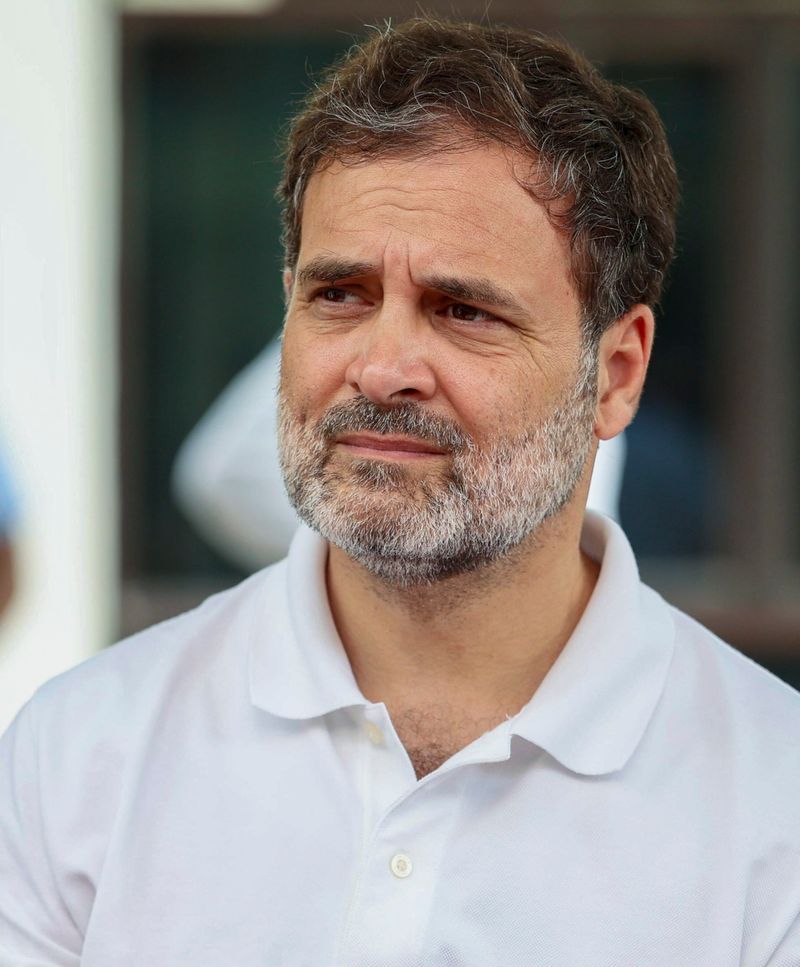
Leader of Opposition in Lok Sabha Rahul Gandhi on Friday intensified his criticism of the interim trade deal with the United States. He alleged Prime Minister Narendra Modi had conceded more than India gained in the US trade deal, owing to external pressure.In a post on X, which was accompanied by a video message, Gandhi repeated his charge that the deal reflected a one-sided arrangement. “Why were our farmers sacrificed to please the Americans? Why was India’s energy security compromised by allowing the US to dictate our oil supplies,” he asked.He further questioned the reported increase in imports from the US without a “matching commitment” in return. “Why agree to increase US imports by $100 billion a year without a reciprocal promise? Why would Modi agree to a deal where India gives so much and appears to get so little? The answer to this abject surrender lies in the “grips” and “chokes” placed on the PM,” Gandhi said in his post.Expanding on the analogy in his video, Gandhi said the concept of “grips” and “chokes” from Jiu-Jitsu was meant to illustrate invisible pressures in politics. According to him, such constraints are not immediately visible but shape decisions at the highest level. He suggested that the PM was operating under multiple pressures that influenced the agreement.The Congress leader linked these alleged pressures to a range of international and domestic developments. He referred to legal proceedings in the US involving businessman Gautam Adani and also alluded to controversies surrounding undisclosed files connected to the Epstein case.Gandhi claimed that several Indian names, including those of Union Minister Hardeep Singh Puri and industrialist Anil Ambani, feature in those records, while asserting that the Prime Minister’s position was being shaped by such factors.He also mentioned China’s presence along the border and referred to the unpublished account by former Army Chief MM Naravane. Gandhi argued that the government was caught between competing global forces, which, he claimed, had weakened India’s negotiating stance.According to Gandhi, the most significant concern was the potential impact on India’s economic sectors and data sovereignty. He warned that farmers and the textile industry could face adverse consequences due to increased imports. He also raised concerns about data sharing provisions, alleging that sensitive data could be handed over to American companies at minimal cost.The Congress leader asserted that the roots of the issue lied in the “carefully constructed public image” of the PM, which was now limiting his ability to act independently. He claimed that this perceived image, built with substantial resources, had created vulnerabilities that foreign powers could exploit.