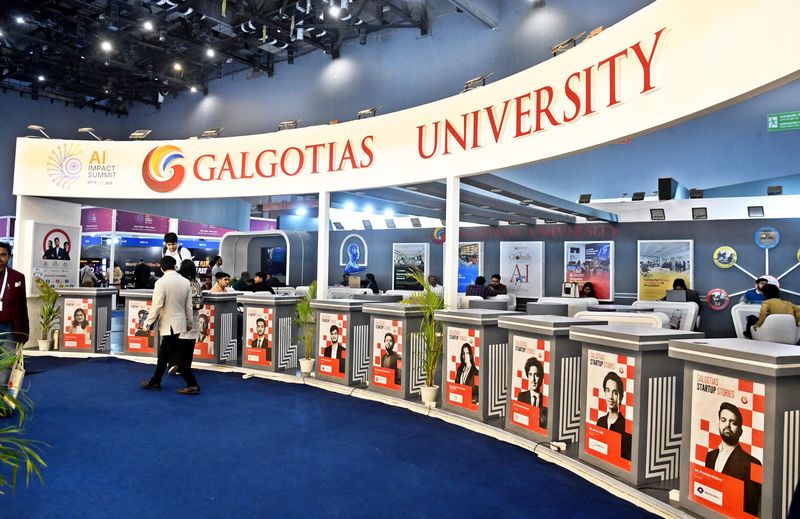
Days after the robodog controversy put Galgotias University in the spotlight at the AI summit, questions are now being raised over the size of its exhibition pavilion compared to leading public institutions.At the summit venue in Hall 6, the university was allotted a 155 sq m pavilion, larger than the combined 130 sq m space allocated to a group of IITs and a research foundation. The allocation details show IIT-Bombay and IIT-Madras received 35 sq m each, IIT-Kharagpur 24 sq m, IIT-Gandhinagar 18 sq m and Airawat Research Foundation (IIT-Kanpur) 18 sq m, together totalling about 130 sq m.The issue has drawn attention amid heightened scrutiny of the private university following its removal from the exhibition floor after it displayed a Chinese-made robotic dog as its own innovation. Though unrelated to the stall size, the episode amplified public and political focus on Galgotias’ participation at the summit.Organisers have clarified that exhibition space was allotted on a first-come, first-served basis. Pavilion leases were handled according to demand at the time of booking rather than through a merit-based evaluation of institutions. There was no official prioritisation for IITs or public research bodies.As per norms issued by the Software Technology Parks of India (STPI), which managed the expo logistics under the Ministry of Electronics and Information Technology (MeitY), participants secured floor space by booking early. Officials indicated that later applicants were allotted from the remaining available area after earlier reservations had been made.Exhibitors were charged a uniform rate of Rs 9,000 per square metre. At this rate, Galgotias University’s 155 sq m pavilion would have cost approximately Rs 14 lakh, excluding taxes, utilities and additional setup expenses. There is no indication that the university received any subsidy or preferential pricing.Government officials have maintained that there was no deviation from established procedures in allocating space. However, critics argue that a strictly first-come policy may unintentionally favour institutions with quicker administrative processes, while larger public institutions could face internal delays before confirming participation.