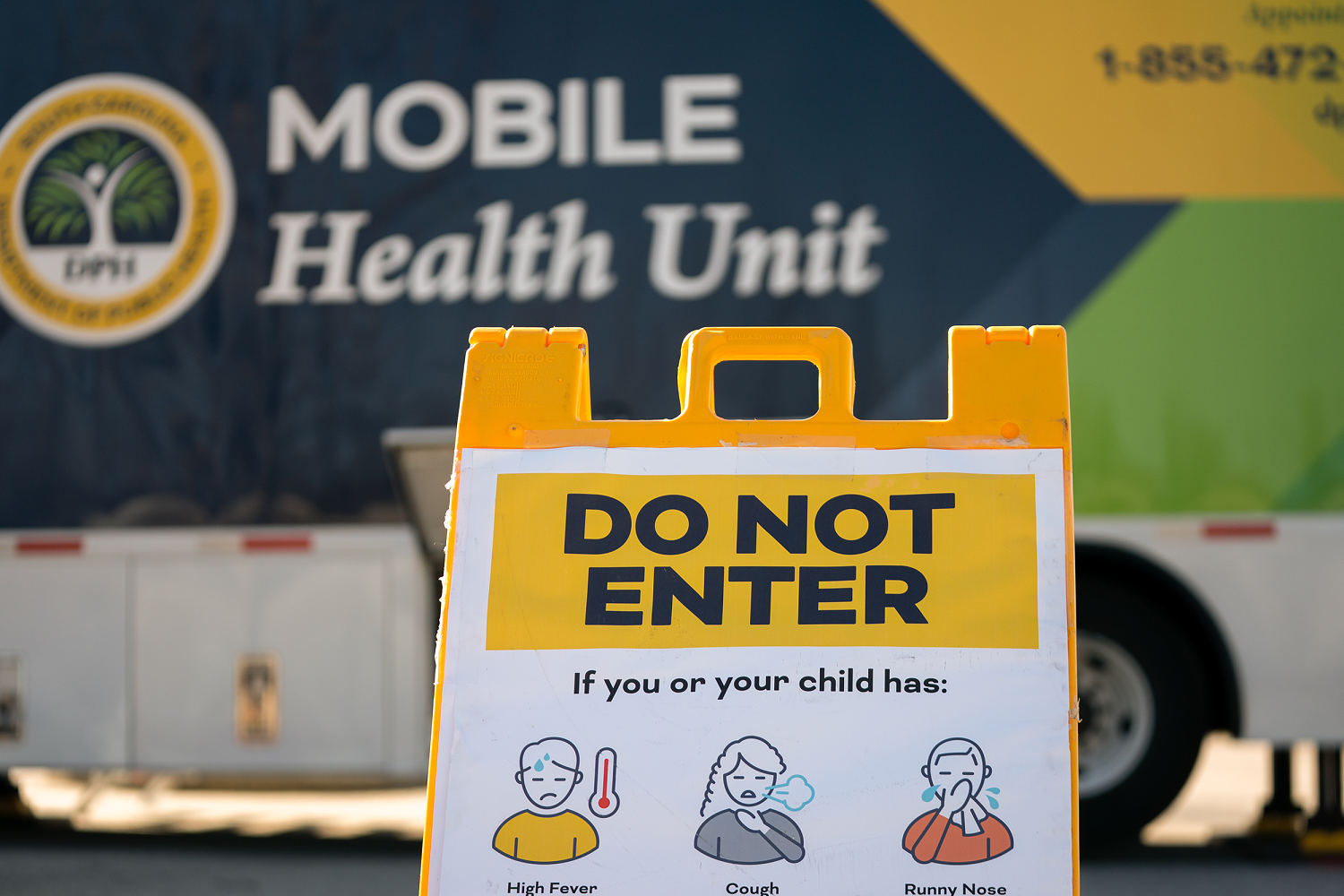
The U.S. has officially logged 982 measles cases in 2026, the Centers for Disease Control and Prevention said Friday. It’s more than four times the number of cases as this time last year, when a large outbreak was just beginning in West Texas. Twenty-six states have reported cases so far this year. Large outbreaks continue to grow in Utah, Arizona and, most notably, South Carolina, where the virus has been spreading since the fall. As of Friday, the state had reported nearly 800 cases since January, bringing the outbreak’s total to 973.It’s the largest single measles outbreak the U.S. has seen in a generation. South Carolina state epidemiologist Dr. Linda Bell said that at least 20 people had been hospitalized.“These hospitalizations involve both adults and children,” Bell said during a call with reporters on Wednesday. “Additional cases required medical care for measles but were not hospitalized.”A mobile health clinic offering free measles vaccinations in Spartanburg, S.C. earlier this month. The state’s is the largest single measles outbreak the U.S. has seen in a generation. Sean Rayford / Getty ImagesAccording to the CDC, more than 1 in 10 measles cases in 2025 resulted in hospitalization. Most of those were children and teenagers. In Florida, cases are also rising: The state’s health department has reported 92 cases since the beginning of the year. Sixty-six of those cases are in Collier County, and largely clustered at Ave Maria University, near Naples. Graduate student Blaise Carney told Jattvibe affiliate station WBBH that he was one of the first on campus to get sick last month. “It started with an ear infection,” Carney said. “And then it proceeded with sniffles, sore throat and all the rest. And then I just progressively got worse, until I was in the ER and had a full-body rash.” Carney said he was diagnosed with measles and strep throat at the same time, and got intravenous fluids in the ER. He didn’t need to be admitted to the hospital, and instead isolated himself in his dorm, where he said he stayed in bed for a week. Carney said he had been vaccinated against the virus as a child. Two doses of measles vaccine — one given around age 1 and the second around age 5 — are 97% effective in preventing measles, usually for life, according to the CDC. That means that 3% of people can get measles even after vaccination.Despite his illness, Carney said, the statistics overwhelmingly favor the shots. “If you’re not vaccinated, go ahead and get vaccinated,” he said. “It might not protect you 100%, but it’s your best shot.”The vast majority of measles cases are among unvaccinated people. Though most people will recover, some will go to develop long-term health problems after their telltale rash clears. The virus targets cells that play key roles in a person’s immune system, leaving them vulnerable to subsequent illnesses.In rare cases, people can go on to develop dangerous brain inflammation 7 to 10 years after a measles infection. The condition, called subacute sclerosing panencephalitis, or SSPE, is almost always fatal. On Saturday, doctors at Children’s Hospital of Orange County in California described the details of one case in the New England Journal of Medicine.It involved a 7-year-old boy who went to the hospital following several months of seizures and cognitive problems that were progressively getting worse. The boy had gotten measles as an infant while living in Afghanistan, where the virus has not been eliminated. (The U.S. could lose its elimination status as soon as this year as vaccination rates fall and the virus regains a foothold.)Doctors wrote that when the boy arrived at the hospital, he couldn’t speak and his body’s muscle reflexes weren’t working normally — signs of significant neurological problems. He was diagnosed with SSPE. Within a year of his first symptoms, he died.Before measles was eliminated in the U.S., the CDC estimated that 7 to 11 people out of every 100,000 were at risk for SSPE. That risk may be higher in people infected with measles before their second birthday.