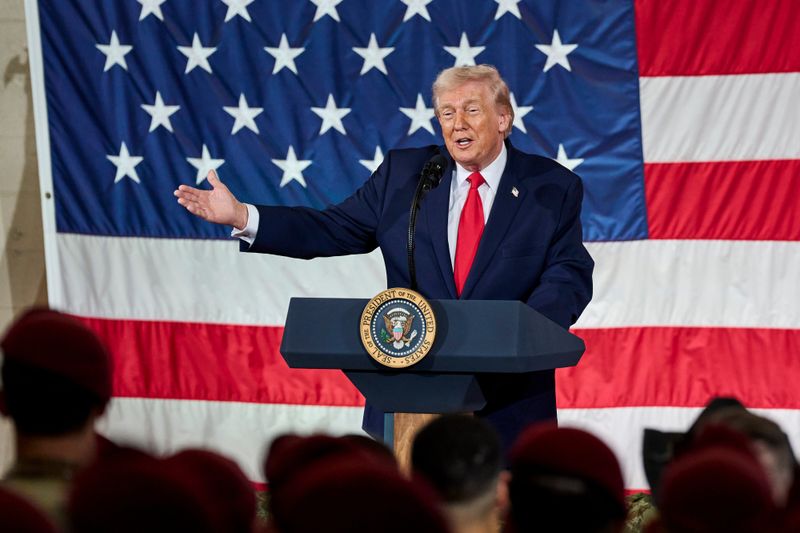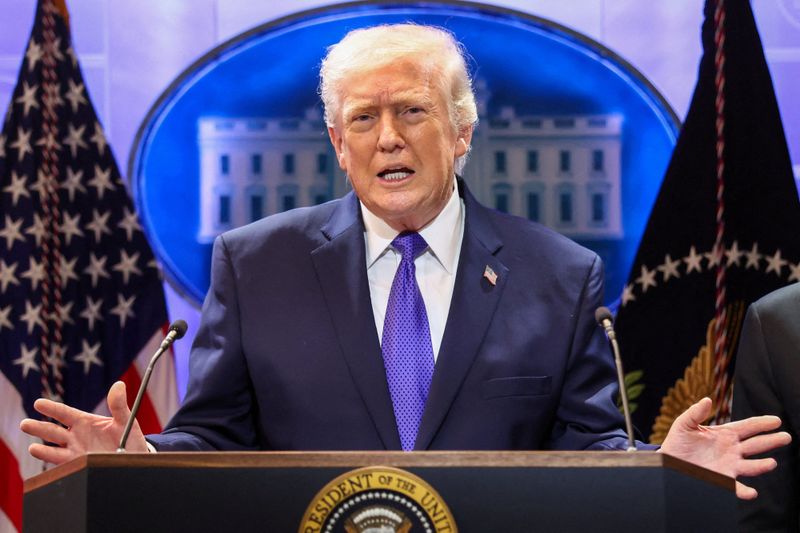
In the wake of a judicial setback to his earlier trade measures, US President Donald Trump has moved to an alternative legal mechanism to impose import duties, first announcing a 10 per cent global tariff and, in less than 24 hours, raising it to 15 per cent.The move followed the ruling by the Supreme Court of the United States, which had struck down sweeping tariffs imposed under emergency economic powers, holding that the statute cited by the administration did not authorise broad-based duties of that nature.Within hours of the judgement, Trump invoked Section 122 of the Trade Act of 1974 to impose a temporary 10 per cent ad valorem duty on most imports for 150 days, effective February 24, describing it as a legally permissible interim measure while a longer-term tariff structure is worked out.In less than 24 hours, the US President posted on social media that the rate would be increased to 15 per cent. “I, as President of the United States of America, will be, effective immediately, raising the 10% Worldwide Tariff on Countries, many of which have been “ripping” the U.S. off for decades, without retribution (until I came along!), to the fully allowed, and legally tested, 15% level,” Trump said.He further said that during the next short number of months, his administration will determine and issue the new and legally permissible tariffs.India reacted earlier in the day to the initial 10 per cent announcement, saying it was examining the implications. “We have noted the US Supreme Court judgement on tariffs yesterday. President Trump has also addressed a press conference in that regard. Some steps have been announced by the US Administration. We are studying all these developments for their implications,” the Ministry of Commerce and Industry said.India will now face a uniform 15 per cent import duty on most goods entering the US (once an Executive Order is signed by Trump), down from the recently agreed reciprocal tariffs of 18 per cent under the earlier framework.Notably, India and US had recently announced a framework for an interim trade agreement under which India had agreed to eliminate or reduce tariffs on all US industrial goods and a wide range of food and agricultural products while the US side had agreed to bring down the reciprocal tariff rate from 50% to 18%.The US administration has argued the temporary duty is intended to address persistent external imbalances, citing a widening US goods trade deficit and broader balance-of-payments concerns, while also encouraging domestic manufacturing.Certain categories are expected to remain exempt, including critical minerals, energy products, select agricultural commodities, pharmaceuticals, specific electronics, aerospace goods and informational materials.Officials indicated that the Office of the United States Trade Representative would simultaneously pursue fresh investigations under Section 301 of the Trade Act of 1974 to frame a more durable tariff framework, suggesting the current rate may serve as a transitional measure pending further trade actions.For trading partners such as India, the rapidly evolving tariff structure introduces uncertainty over applicable duty levels, product-level exemptions and the direction of future bilateral trade negotiations.