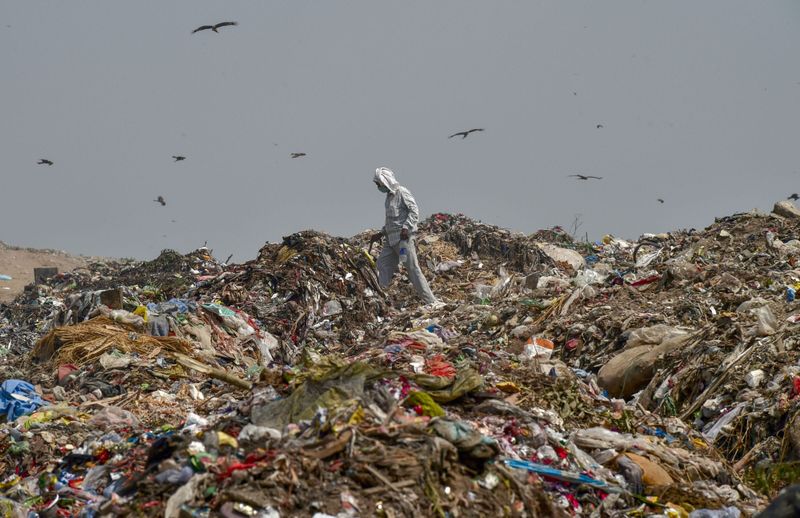
As massive dump sites active in metropolitan areas adversely impacted the right to a clean and healthy environment of citizens, the Supreme Court has issued pan-India directions for implementation of the Solid Waste Management (SWM) Rules, 2026, which will come into effect from April 1.Taking note of uneven compliance with the SWM Rules, a Bench led by Justice Pankaj Mithal said the present generation couldn’t afford to wait for further legislative refinement while existing implementation gaps persist. “The neglect of municipal solid waste will affect health as much as the economy,” said the Bench, which also included Justice SVN Bhatti.“It is now or never. Expecting high results without fundamental spadework of source segregation and infrastructure would be unreasonable. Every stakeholder is duty-bound to ensure the realisation of a waste-free India,” it said.“A challenge of this magnitude requires a synchronised effort between the appointed officers of the local bodies and elected representatives, including the respective mayors, chairpersons, members of wards in corporations, municipalities and gram panchayats. Responsible representatives are responsive representatives also, as per the need of the hour,” the top court said.Tackling legacy waste, contamination of groundwater and air required immediate adherence to current mandates effective from April 1, 2026, it said while hearing two appeals arising from two separate National Green Tribunal orders concerning environmental compliances by the Bhopal Municipal Corporation under the SWM Rules, 2016.The Bench designated councillor/mayors and their chairpersons, corporator, or ward member as the lead facilitators for source-segregation education, saying it’s their statutory duty to enrol every citizen within their ward in the implementation of the 2026 rules.The Bench asked the Ministry of Environment, Forest and Climate Change (MoEFCC) to issue directions under the powers conferred by Section 5 of the EP Act to Chief Secretaries of all states and union territories for due implementation of the SWM Rules, 2026.In its February 19 order, the top court also directed that infrastructure audits of solid waste management be conducted through the District Collectors. “The District Collectors shall communicate the identified problems and the steps taken by the stakeholders to the Chief Secretary in a time-bound manner,” it said, adding, “Every local body must establish and communicate an outer time limit within which 100% compliance will be achieved.”The District Collectors shall oversee the establishment, execution and handling of municipal solid waste by the corporations/municipalities/gram panchayats within their jurisdiction and the non-compliance report by any of the local bodies/areas shall be communicated to the parent department in the state and at the central levels, it ordered.The Bench directed local bodies to email photographic evidence alongside their compliance reports to the office of the respective district collector to verify actual progress in waste removal and infrastructure readiness.