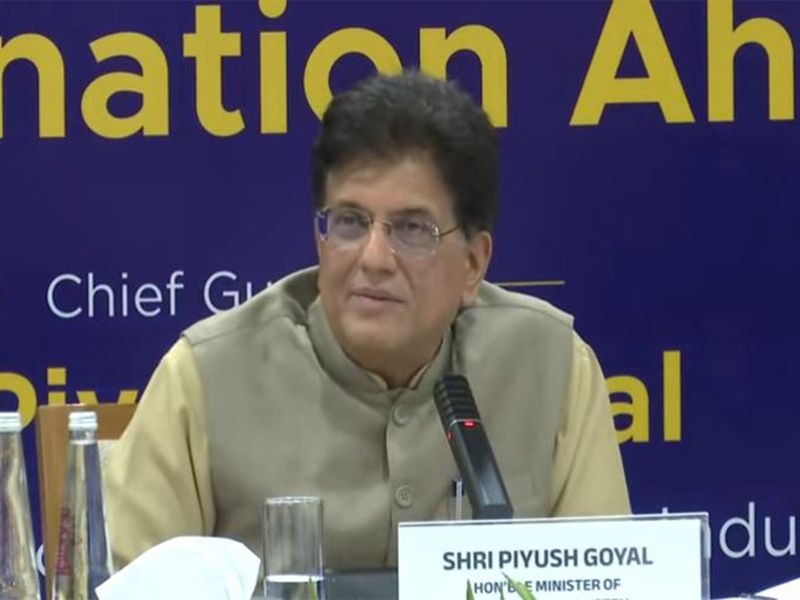
Union Minister for Commerce and Industry Piyush Goyal on Monday said India’s ambition to become a $30-35 trillion economy by 2047 rests on three pillars — zero defect (quality), zero effect (sustainability), and equitable opportunity (inclusivity).Addressing the first National Quality Conclave virtually, organised by the Department for Promotion of Industry and Internal Trade (DPIIT) in partnership with the Quality Council of India (QCI), Goyal said PM Modi’s vision of “zero defect, zero effect” would serve as the cornerstone of India’s growth story in the ‘Amrit Kaal’ and help realise the dream of Viksit Bharat-2047.He said quality must become the defining mantra of India’s manufacturing and export ecosystem if the country wanted to achieve its long-term economic goals.Noting that India had been the world’s fastest-growing large economy for the past four years, and was poised to boast the third-largest GDP in the next two years, Goyal said: “India’s $2 trillion export target — comprising $1 trillion in merchandise and $1 trillion in services within the next six to seven years — can only be achieved through uncompromising quality standards.”Goyal said nine Free Trade Agreements (FTAs) finalised in the past three to three-and-a-half years with 38 developed countries now covered nearly two-thirds of the global GDP and trade, expanding India’s trade outreach.“These agreements open new opportunities in sectors such as textiles, leather, footwear and pharmaceuticals, provided Indian products consistently meet the highest global benchmarks,” he added.Talking about a time when consumers sought “export quality” products, Goyal said the country must end the dual-quality system and adopt uniform standards for domestic and international markets.Outlining a five-pillar action agenda to institutionalise quality, Goyal emphasised the need for clearly defined standard operating processes with strict compliance and continuous inspection, from raw material to finished product stage; skilling and re-skilling of the workforce to reduce wastage; and productivity enhancement, particularly in sectors such as textiles.