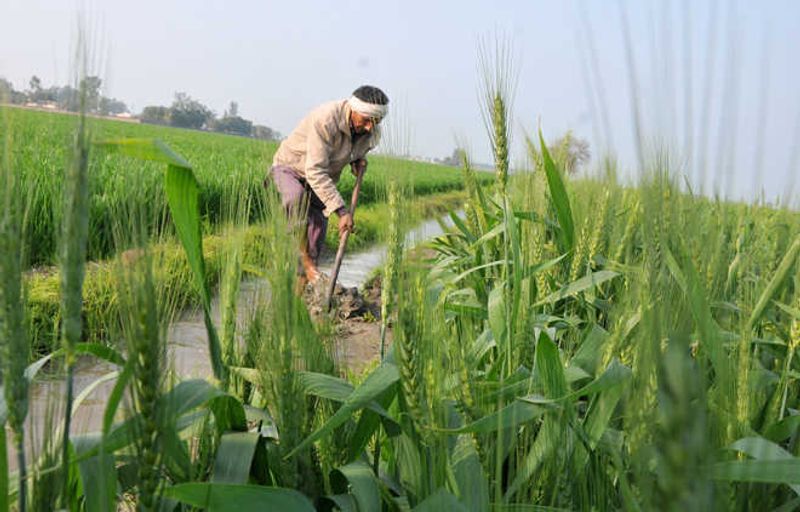
With temperatures rising across the state, Punjab Agricultural University (PAU), Ludhiana, has advised farmers to take special care of their growing wheat crop to prevent possible losses.Dr Makhan Singh Bhullar, Director of Extension Education at Punjab Agricultural University (PAU), Ludhiana, said nearly 95 per cent of the wheat area in the state was sown between October 25 and November 15 this season, which is considered the optimal period. However, changing weather conditions have now become a cause for concern, he said.Dr Bhullar explained that the wheat crop, particularly at the grain formation stage, is highly sensitive to high temperatures. “A spike in temperature during this period can reduce grain weight, adversely affecting both yield and quality. The impact is more pronounced in early-sown wheat grown on light to medium soils, as the crop matures faster and the grains may not develop fully,” he said.He added that during the second week of February, temperatures were recorded 2 to 4 degrees Celsius higher than during the corresponding period last year. Under the prevailing conditions, farmers have been advised to apply light irrigation to minimise the impact of heat stress. While irrigating, they should keep wind speed in mind to prevent lodging of the crop.Dr Hari Ram, Head of the Department of Agronomy, said timely light irrigation and recommended sprays can significantly reduce the adverse effects of high temperatures and help maintain yield and grain quality.