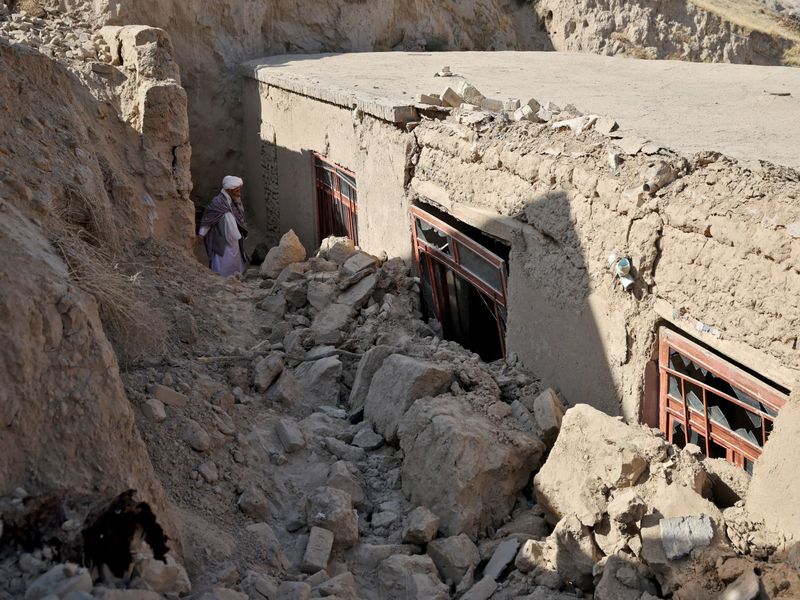

New Delhi [India], February 24 (ANI): Amnesty International South Asia has expressed deep concern over reports of civilian casualties following Pakistan airstrikes in Afghanistan’s Nangarhar province on February 21 and 22, calling for a “thorough, independent, and impartial investigation” into the alleged harm.In a post on X by Amnesty International South Asia, the organisation said it was “deeply concerned by the reports of civilian casualties caused by Pakistan’s airstrike in Nangarhar province of Afghanistan on 21 and 22 February.”https://x.com/amnestysasia/status/2026188280556028241″These reports of harm to civilians must be subjected to a thorough, independent, and impartial investigation,” Amnesty said.The organisation noted, “This is not the first time civilians have borne the brunt of the use of force. Previously, the United Nations Assistance Mission in Afghanistan attributed 70 civilians killed and 478 others wounded to the Pakistan military forces between October and December 2025, when border tensions and clashes intensified between the Afghanistan Taliban forces and the Pakistan Military.”According to UNAMA, the casualties occurred as border tensions and confrontations increased between Afghanistan’s Taliban forces and the Pakistan military.Amnesty International reiterated its appeal to all parties involved in the hostilities to take necessary steps to prevent civilian harm, stressing their obligations under international law.More than 80 people were killed in Pakistan’s airstrikes at the seven locations in Afghanistan’s Nangarhar, Paktika and Khost provinces, Geo News reported on Monday, citing Islamabad’s security sources.Pakistan has conducted multiple strikes in the region in response to recent suicide attacks for which they have blamed Afghanistan.The targeted locations reportedly included “New Centre No. 1 and New Centre No. 2 in Nangarhar, Khwariji Maulvi Abbas Centre in Khost, Khwariji Islam Centre and Khwariji Ibrahim Centre in Nangarhar, and Khwariji Mullah Rahbar and Khwariji Mukhlis Yar in Paktika.”Earlier, Pakistan’s State Minister for Interior, Talal Chaudhry, said nearly 70 militants had been “neutralised” in the cross-border operation.The government stated that the strikes targeted camps belonging to Fitna al-Khawarij, a term used by Pakistani authorities for the banned Tehreek-e-Taliban Pakistan, its affiliates and Islamic State – Khorasan Province (Daesh-Khorasan).Speaking to Geo News programme “Geo Pakistan,” Chaudhry alleged that Afghanistan had become a source of cross-border militancy. He said Pakistan was taking necessary measures to safeguard its citizens and highlighted that around 70,000 intelligence-based operations had been conducted domestically, resulting in multiple arrests.Pakistan’s Ministry of Information and Broadcasting described the strikes as “precise and accurate,” calling them a retaliatory response to recent suicide bombings in Islamabad, Bajaur and Bannu. Islamabad claimed that the attacks were orchestrated by handlers based in Afghanistan and linked to the TTP and Daesh elements.The strikes reportedly targeted hideouts in the Barmal area of Paktika province, Khogyani district of Nangarhar province, as well as Ghani Khel, Behsud and Argoon areas.Chaudhry also referred to the 2020 Doha Agreement, stating that the Afghan Taliban had pledged not to allow Afghan soil to be used for terrorism. He alleged that Kabul’s interim administration had failed to curb militant activity.He added that Pakistan had made diplomatic and military-level efforts to address its security concerns and urged political parties to unite against terrorism.The latest strikes follow a surge in violence in Pakistan’s Khyber Pakhtunkhwa and Balochistan provinces. Tensions between Islamabad and Kabul have escalated in recent years, particularly since the Taliban returned to power in Afghanistan in 2021. (ANI)(This content is sourced from a syndicated feed and is published as received. The Tribune assumes no responsibility or liability for its accuracy, completeness, or content.)