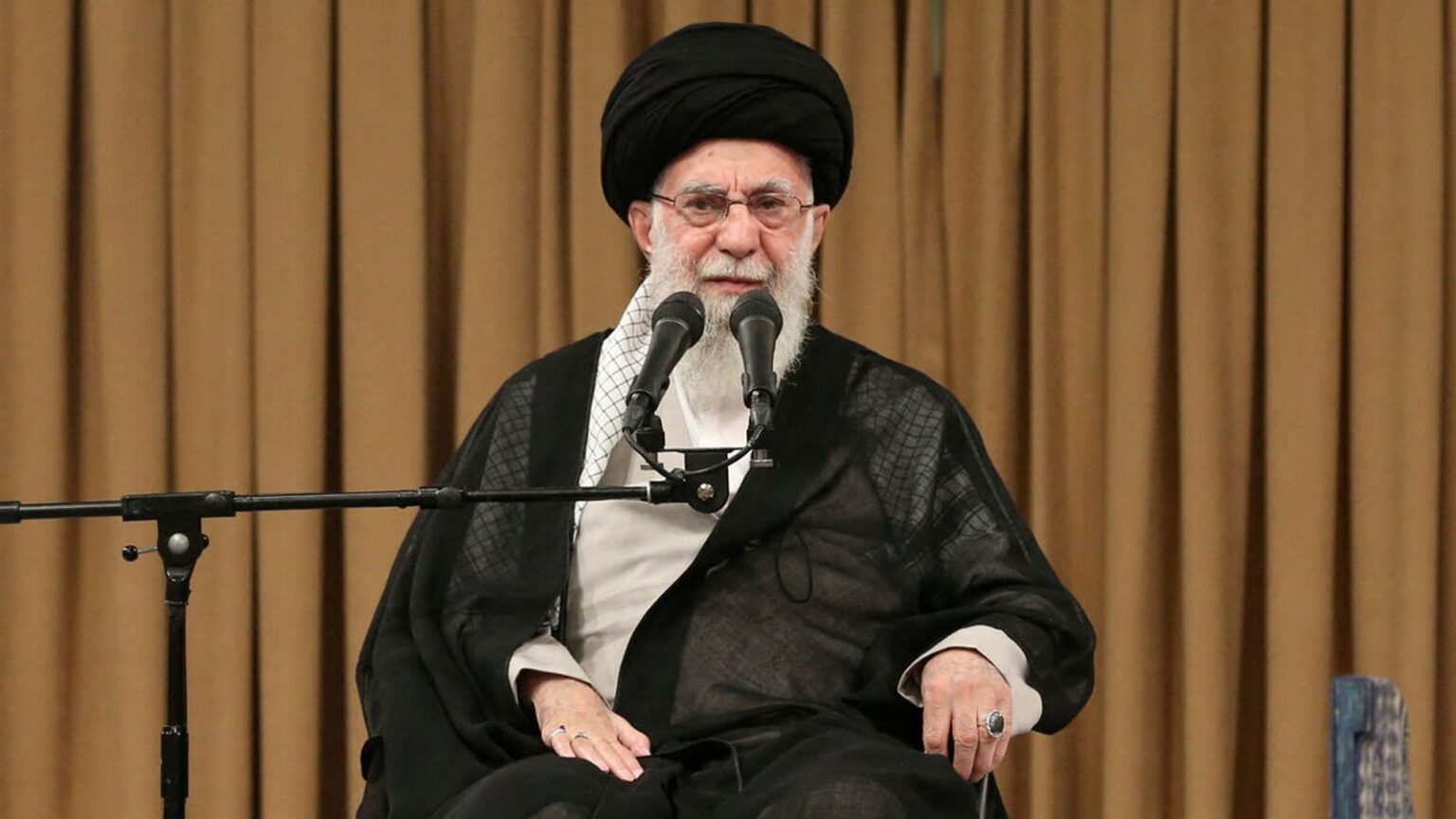

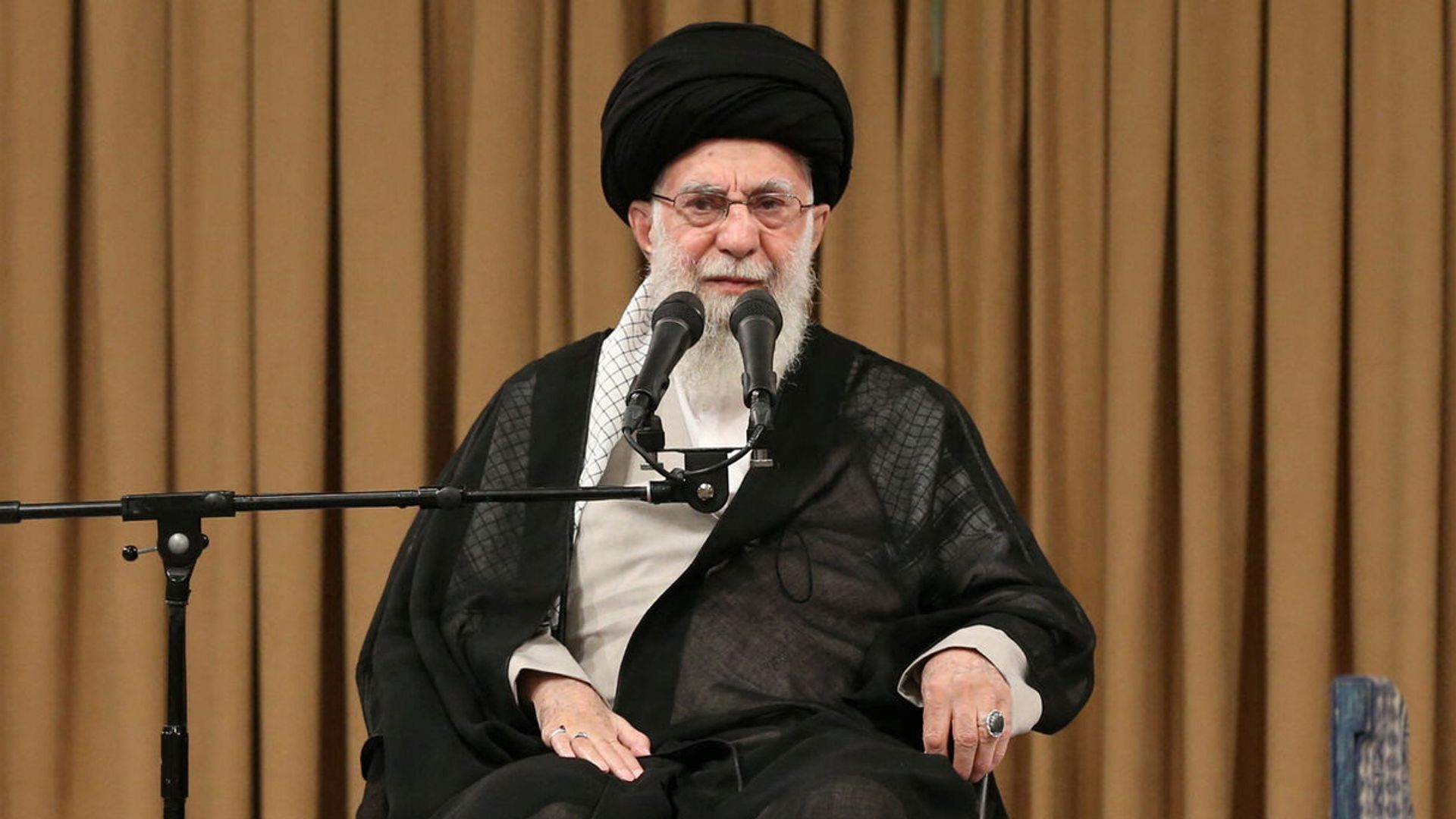
Iran’s supreme leader Ayatollah Ali Khamenei has the final say on all major policies, serves as commander-in-chief of the armed forces and controls the Revolutionary Guard.But after Saturday’s co-ordinated attacks from the US and Israel, he faces possibly his gravest threat yet.The threat is greater, even, than when thousands of his own citizens rose up against his regime in the winter just past.Iran claims Mr Khamenei was not in Tehran when the US and Israel struck his compound overnight, and that he has been transferred to a secure location.
Image:
A satellite image shows black smoke and extensive damage at the compound of Iran’s supreme leader Ayatollah Ali Khamenei in Tehran.
But, who is the supreme leader?Mr Khamenei was born into a clerical family in 1939 in Iran’s second-largest city Mashhad.He received a religious education there before turning his attention to political activities against the Shah – the country’s royal ruler until the 1979 Iranian Revolution.Mr Khamenei eventually went into exile in the 1960s, only re-emerging after the Shah was overthrown.He was a close confidante of the leader who emerged after the revolution – Ayatollah Ruhollah Khomeini – and Mr Khamenei quickly rose through the ranks of government.After other key political figures were assassinated – with Mr Khamenei himself targeted in a separate attempt, leaving him paralysed in his right arm – he became president of Iran in an uncontested election.US and Israel strike Iran – follow live
Image:
Khamenei as president giving a press interview in 1982. Pic: AP
He eventually succeeded Mr Khomeini after his death in 1989, becoming supreme leader.Mr Khamenei was appointed by the 88-person Assembly of Experts, whose members are elected but vetted by the 12-person Guardian Council – of which Mr Khamenei appoints six members.The Guardian Council, a clerical body, also vets candidates for presidential and parliamentary elections.In theory, the council oversees the republic to ensure it complies with Islamic law.In reality, the supreme leader carefully manages the existing system to balance competing interests, advance his own priorities and ensure that no one challenges the Islamic Republic or his leadership.Read more:Trump’s Iran attack is a gamble – and the outcome is unclearTrump: ‘Take over your government when we have finished’Watch: Iran retaliates by striking US military base in BahrainHis 35-year reign over Iran also means his influence extends across the Middle East, given Iran’s backing of Hamas and Hezbollah.The death of Ebrahim Raisi, Iran’s president, in a helicopter crash in May 2024 posed a major issue for the supreme leader.Mr Raisi was replaced by Masoud Pezeshkian as Iran’s president following his death.Mr Raisi had been seen as the main candidate to succeed the 86-year-old Mr Khamenei.His death meant that Mr Khamenei’s son, Mojtaba Khamenei, was more likely to become the successor.
Follow Jattvibe on WhatsApp
Keep up with all the latest news from the UK and around the world by following Jattvibe
Tap here
The Republic was founded as an alternative to a monarchy after the 1979 Revolution, with leaders portraying their system as superior to both Western democracies and military dictatorships and monarchies across the Middle East.However, many Iranians already view the state as a corrupt and dictatorial regime.This isn’t the only reason some Iranians are unhappy with his leadership. Western sanctions linked to the country’s nuclear programme have devastated its economy.Iranians responded in the shape of the mass protests which erupted across the country in December 2025 and January this year.
Image:
A still from a video circulating on social media shows protesters dancing and cheering around a bonfire as they take to the streets in Tehran in January. Pic: UGC via AP
Demonstrations, which had begun over grievances of economic hardship and political disenfranchisement, quickly grew into widespread anti-government unrest.Iranian security forces responded with a brutal crackdown, killing thousands of protesters.Estimates from human rights organisations and doctors ranged from more than 5,000 at the conservative end to 33,000 by one count, and even as high as 50,000, according to one unverified claim.