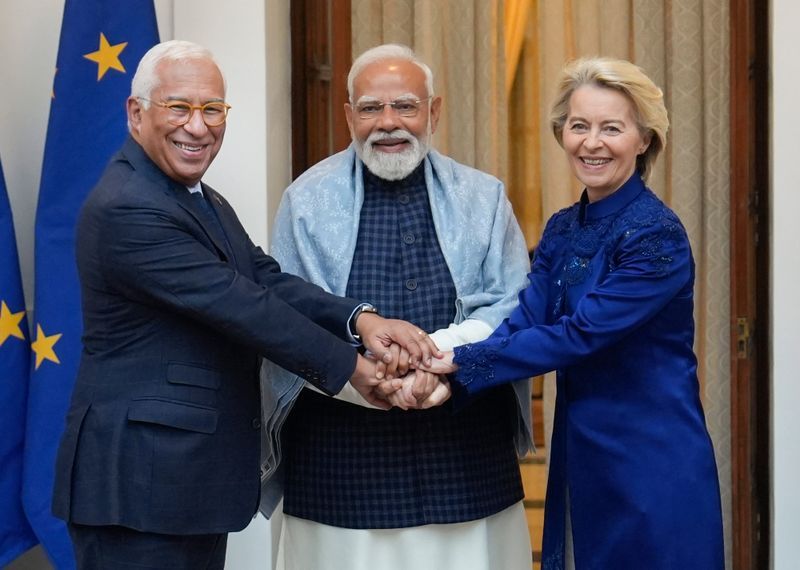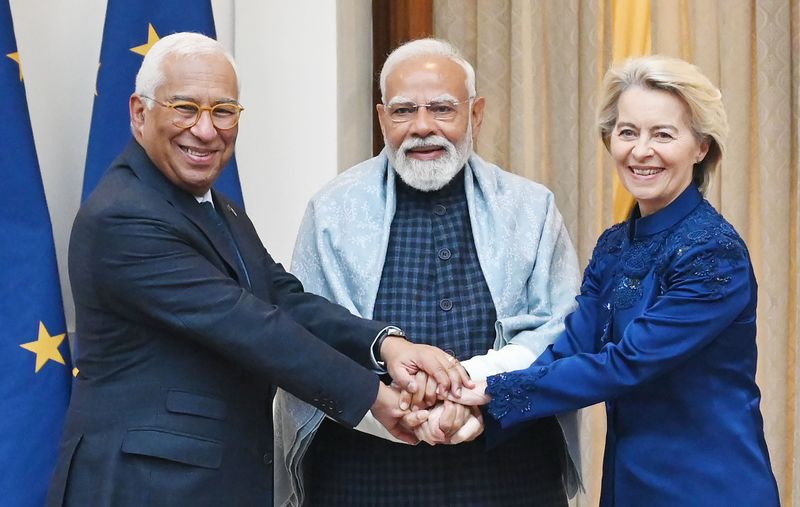

India and the European Union (EU) have agreed to grant each other ‘Most Favoured Nation’ (MFN) status for five years from the date their Free Trade Agreement (FTA) comes into effect, according to the draft text of the pact released on Friday.Under the proposed agreement, both sides will extend to each other the same trade benefits, including reduced tariffs, improved market access and favourable regulatory treatment, which they offer to their most favoured trading partners. The move aims to create a more balanced and predictable trade framework.The development comes nearly a month after European Commission President Ursula von der Leyen and European Council President António Costa met Prime Minister Narendra Modi in New Delhi to finalise the draft.Hailed by many as the “mother of all deals”, the FTA marks a significant milestone in one of India’s most strategic economic partnerships. Once implemented, at least 93 per cent of Indian exports will enter the 27-nation bloc duty-free, while tariffs on EU luxury cars and wines will be reduced.Jaishankar briefs MPs on India-EU tiesNew Delhi: External Affairs Minister S Jaishankar on Saturday held the first Consultative Committee meeting of 2026 on India-EU relations. He briefed members of the committee including Manish Tewari, Vikramjit Sahney, Priyanka Chaturvedi, Mukul Wasnik and Jaya Bachchan on the recently concluded India EU FTA. “Discussed the strong momentum of India – EU partnership and its mutually beneficial aspects across a range of sectors including trade, technology, security and mobility. Thank all MPs for their active participation,” Jaishankar said.Additionally, tariffs on 96.6 per cent of the value of EU goods exported to India will either be eliminated or lowered. However, several sensitive agricultural products, including soy, cattle, sugar, rice and dairy, have been excluded by both sides.The draft also commits both parties to strengthening customs cooperation, expediting product clearances and ensuring greater transparency for traders, subject to final approval.India and the EU have further agreed to reduce unjustified barriers to digital trade, promote a secure and open online environment, encourage paperless trade and recognise electronic signatures and digital authentication methods.On the politically sensitive and economically significant issue of digital regulation, the proposal supports digital trade liberalisation in principle while preserving regulatory space for domestic laws.