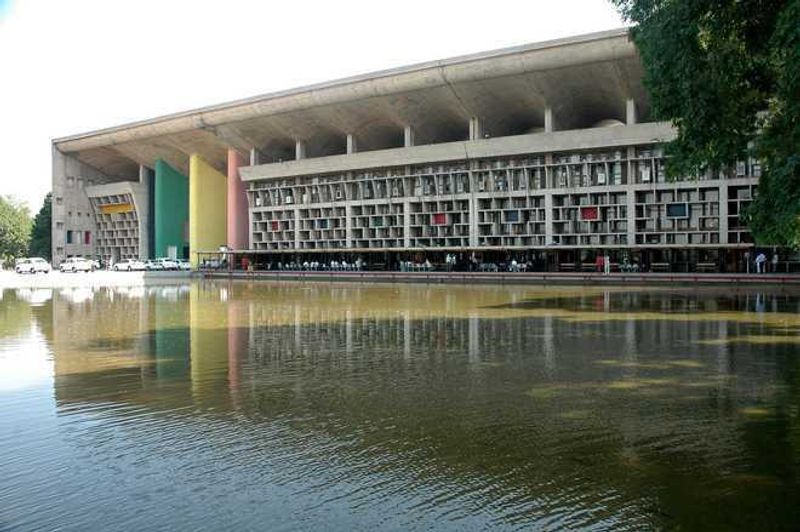

The Punjab and Haryana High Court has made it clear that refusing relaxation in qualifying criteria to persons with disabilities defeats the very idea of real equality, and has directed Punjab, Haryana and the Union Territory of Chandigarh to frame clear and comprehensive instructions to ensure implementation of relaxations in all future recruitments. Justice Harpreet Singh Brar also called for compliance affidavits within three months.The Bench also directed Haryana Chief Secretary to constitute a committee within two weeks to determine the extent of relaxation to be granted in selection standards while deciding three related petitions. The question before Justice Brar’s Bench was “whether relaxation in the selection criteria with respect to persons with disabilities is constitutionally jurisprudentially justified and warranted?”Answering the question in the affirmative, Justice Brar asserted that implementing relaxation in selection standards for persons with disabilities to provide them “reasonable accommodations” in accordance with the Rights of Persons with Disabilities (RPWD) did not violate Articles 14 and 16 of the Constitution.“Providing differential treatment to the persons with disabilities to remove disadvantage does not violate Articles 14 and 16 of the Constitution. The State bears the responsibility to remove barriers that obstruct genuine opportunities for persons with disabilities and such relaxation ensures that equality becomes real, meaningful and transformative rather than merely formal and illusory,” he asserted.The Bench added that the relaxation in selection criteria for persons with disabilities was not a concession but a constitutional obligation to achieve substantive equality in furtherance of Article 14, 16, 21 of the Constitution and the statutory framework of the RPWD Act.Allowing the petitions, Justice Brar asserted that the panel — to be set up by Haryana Chief Secretary within two weeks — would finalize the relaxed norms within four weeks of its constitution in accordance with the notifications dated August 15, 2018, and May 17, 2022, issued by Union Department of Personnel and Training, the Supreme Court judgments.Its report was directed to be sent to Haryana Public Service Commission within two weeks, which in turn would reconsider the case of the petitioners-candidates, who moved the court after posts under physically handicapped category for recruitment in Haryana State Pollution Control Board (HSPCB) were not provided in the advertisements.“In case they are found successful on the relaxed norms, they be recommended for appointment to the respondent-HSPCB within two weeks from receiving the committee report,” Justice Brar directed.The court observed that the disadvantages faced by persons with disabilities extended beyond physical or mental impairment. “This court is of the considered opinion that the disadvantages faced by persons with disabilities are not limited to existence of physical or mental impairments, but are also rooted in social and institutional barriers that restrict their equal participation in everyday life.”Justice Brar also referred to the notion of ableism privileges able-bodiedness and often results in exclusion from education and employment. “Even if one completes their educational training, persons with disabilities often struggle with finding opportunities of employment as they are viewed as inefficient workers and a liability to the employer. Such a primitive approach is antithetical to the constitutional guarantees.”Placing reliance on Articles 14, 16, 21 and 41 of the Constitution, Justice Brar asserted that equality did not mandate identical treatment of unequals. “Tritely, equal treatment to unequals does not always yield equitable results… all classes of candidates cannot be judged against the same scale, when their circumstances are not identical.”Justice Brar asserted that equality did not mean uniform treatment of all, regardless of their circumstances. To achieve substantive equality, the State was required to make an endeavor to dismantle the social and economic barriers that impeded persons with disabilities from realizing their full potential. Only then, could genuine opportunities become truly accessible to them.The Bench held that relaxations by way of age concessions and modified selection criteria were justified as “reasonable accommodations” under the Rights of Persons with Disabilities Act, 2016, warning that without such measures, “the promise of a fulfilling life made to the disabled citizens would ring hollow”.