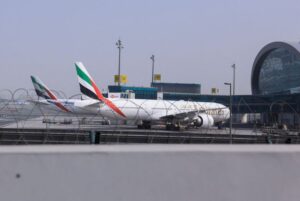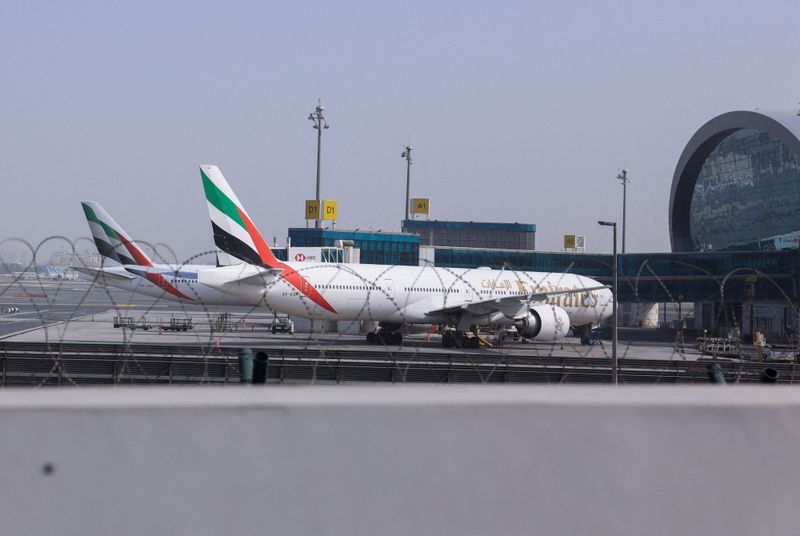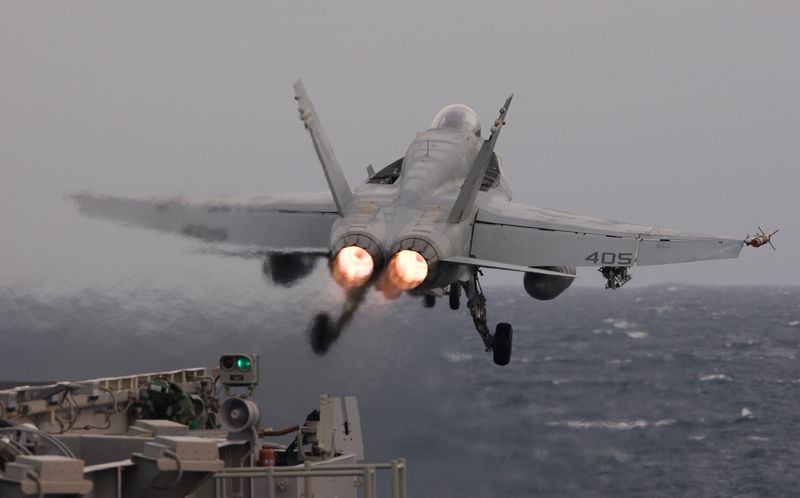

British Prime Minister Sir Keir Starmer faced immediate fallout after granting the US permission to use British military bases for strikes linked to the escalating confrontation with Iran — a move critics have described as a political U-turn.Within hours of his announcement, a drone struck the British military base at Akrotiri in Cyprus. In London, the Ministry of Defence said damage was minimal and that the aircraft was likely launched before the Prime Minister’s public statement. Families of service personnel are being evacuated as a precaution.Confirming his decision, Starmer said: “The only way to stop the threat is to destroy the missiles at source — in their storage depots or the launchers which are used to fire the missiles. The US has requested permission to use British bases for that specific and limited defensive purpose.”He added: “We have taken the decision to accept this request to prevent Iran from firing missiles across the region, killing innocent civilians, putting British lives at risk and hitting countries that have not been involved.”Starmer said the move was grounded in: “The collective self-defence of longstanding friends and allies, and protecting British lives. This is in line with international law and we are publishing a summary of our legal advice.”The British Prime Minister confirmed that the US would be permitted to operate from facilities, including Diego Garcia and RAF Fairford in Gloucestershire. His Defence Secretary John Healey emphasised that Britain had not taken part in the original US-Israeli strikes, telling the BBC: “Britain played no part in the strikes on Iran.”Pressed repeatedly on whether the UK backed the initial action, Healey said: “The straight answer to the question of ‘is the US action legal?’ That is for the US to set out and explain. It’s not for me as defence secretary of the UK.”While UK politicians debate the political implications, the broader consequences are being felt across the Gulf, particularly in the United Arab Emirates, where Iranian missiles and drones have been intercepted over urban areas, including Dubai.The UAE alone is home to more than three million Indians. Across the Gulf — including Saudi Arabia, Qatar, Kuwait, Oman and Bahrain — the Indian expatriate population exceeds eight million. Remittances from these countries account for a significant share of India’s annual inward flows, which have topped $100 billion in recent years, making India the world’s largest recipient of remittances.India’s exposure, however, is not only demographic, it is energy structural.India imports roughly 85 per cent of its crude oil requirements. Of that imported crude, around 55 to 60 per cent typically comes from Middle Eastern suppliers, including Saudi Arabia, Iraq, the UAE and Kuwait. Iraq and Saudi Arabia are regularly among India’s top two oil sources. The UAE is also an important supplier of both crude and liquefied natural gas.About 20 per cent of global oil consumption passes through the Strait of Hormuz, the narrow maritime corridor between Iran and Oman. A significant share of India’s imported crude transits that chokepoint. Any disruption — whether through direct military escalation, threats to tankers or sharply higher insurance premiums — would immediately affect Indian refiners and fuel markets.India is the world’s third-largest oil importer and consumer. Even modest spikes in Brent crude prices have historically translated into higher domestic fuel costs, upward pressure on inflation and strain on the current account deficit.Emirati political scientist Abdulkhaleq Abdulla told British media: “More than 700 Iranian drones and missiles have come our way in the last 24 hours; some 95 per cent have been intercepted successfully by the country’s state-of-the-art defence system. The UAE is well protected. This is a difficult time but the UAE stays stable and safe.”Despite official reassurances, flight disruptions, intercepted projectiles and visible smoke over parts of Dubai have heightened unease among expatriate communities.For Indian families across the Gulf, the concern is immediate: safety, flight access and employment continuity. For policymakers in New Delhi, contingency planning must now account for evacuation logistics, maritime security and oil supply continuity.Starmer insists the decision to grant US base access is narrowly defined and legally justified. Whether it proves to be calibrated deterrence or deeper entanglement will depend on how the conflict evolves — and whether the Gulf, on which India depends so heavily for both energy and employment, remains stable.