
For years, geopolitical analysts warned us that among the scariest of all scenarios for the world economy was the closure of the Strait of Hormuz.Well, now, in practice, that is precisely what has happened. Shipping through this narrow channel, the gateway to the Persian Gulf, has dwindled to close to zero. The worst nightmare has materialised.
And yet the funny thing is that in certain respects the world seems no different to how it was before. The S&P 500, the benchmark share index in America, has barely budged. The FTSE 100 is down a bit, but is still a bit higher than it was a month ago. All of which raises the question: might this not be quite as bad as everyone was fearing?Money blog: change in cheapest day of the week to fly has changedHowever, talk to those who understand energy markets and the economic geography of the Gulf and its customers, and a very different story emerges. True, the impact of the closure might take some time to be felt, but it could be totally destabilising, both for the Gulf countries and the wider world.
A harbinger of higher inflationStarting with the wider world, the sharp increase in gas prices is a harbinger of higher inflation in the coming months. For a long time, countries like the UK had assumed that Qatar would be among the most reliable of all suppliers of natural gas. Now, not only are the LNG tankers that once took Qatari gas out and into the world unable to access the Gulf, but the Qatari gas fields are no longer operational.
For many Asian countries, from India and Pakistan to South Korea and Taiwan, this is a disastrous prospect. Most of them have little if any stockpiles of gas, so in the coming months they will scramble to secure enough methane to keep their power stations running and heating systems working. That, in turn, will chase up prices around the world, including in Europe, which is also dependent on LNG to fill some of the gap left by Russian gas following the shutdown of some of its pipeline supply following the invasion of Ukraine. The longer the straits are closed and the longer Qatar doesn’t pump gas, the deeper this crisis will be.Every day items rely on Gulf production
And it’s not just gas. Qatar is also responsible for a third of the world’s helium. Without helium, MRI scanners cannot function and certain quantum computers cannot work, since they depend on the gas to cool their magnets and circuits. The Gulf provides around half of the world’s sulphuric acid, without which you cannot make explosives or refine copper. In short, you can expect the disruption in the Gulf to fan out in the broader world with every day that goes by.
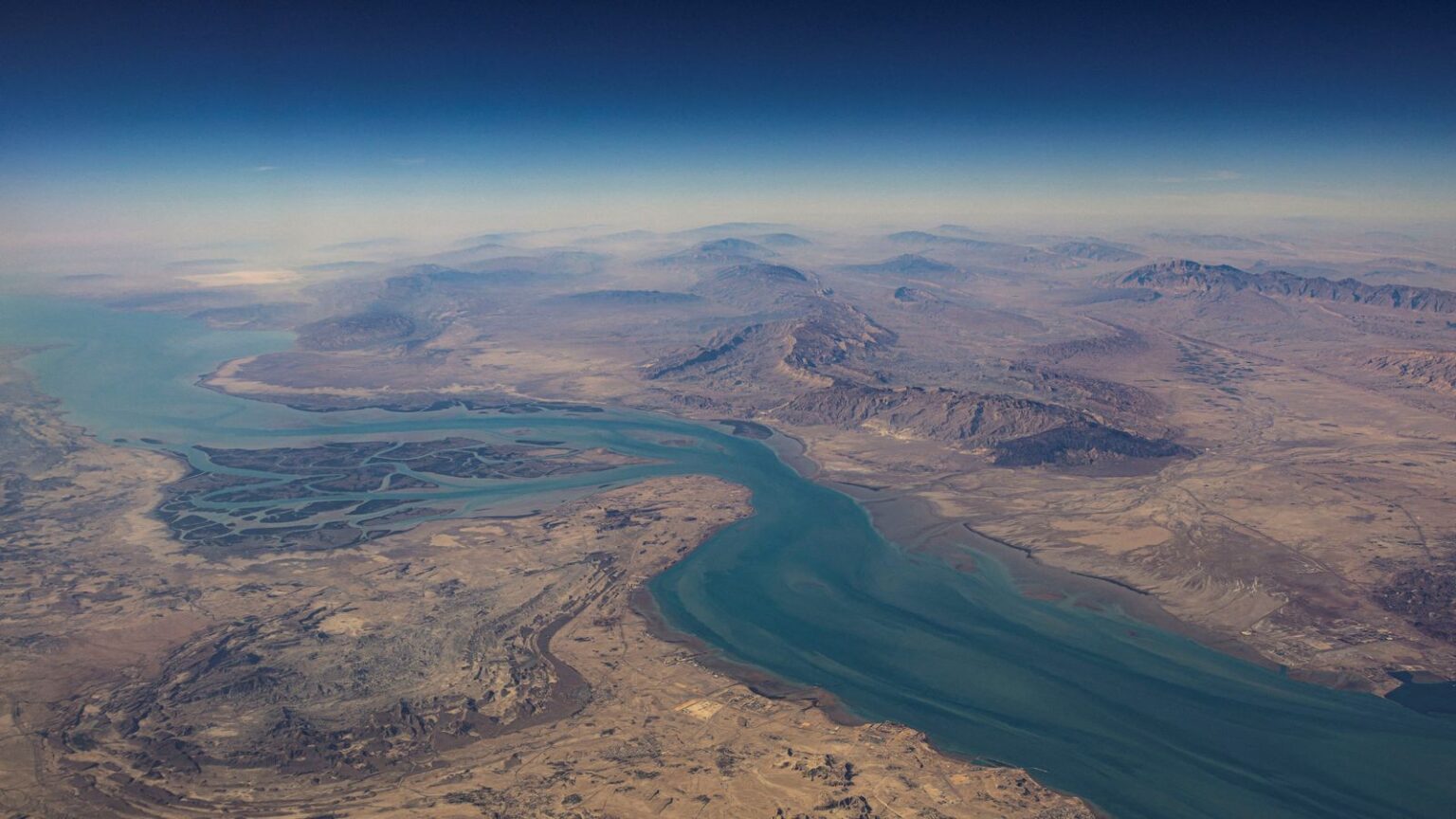
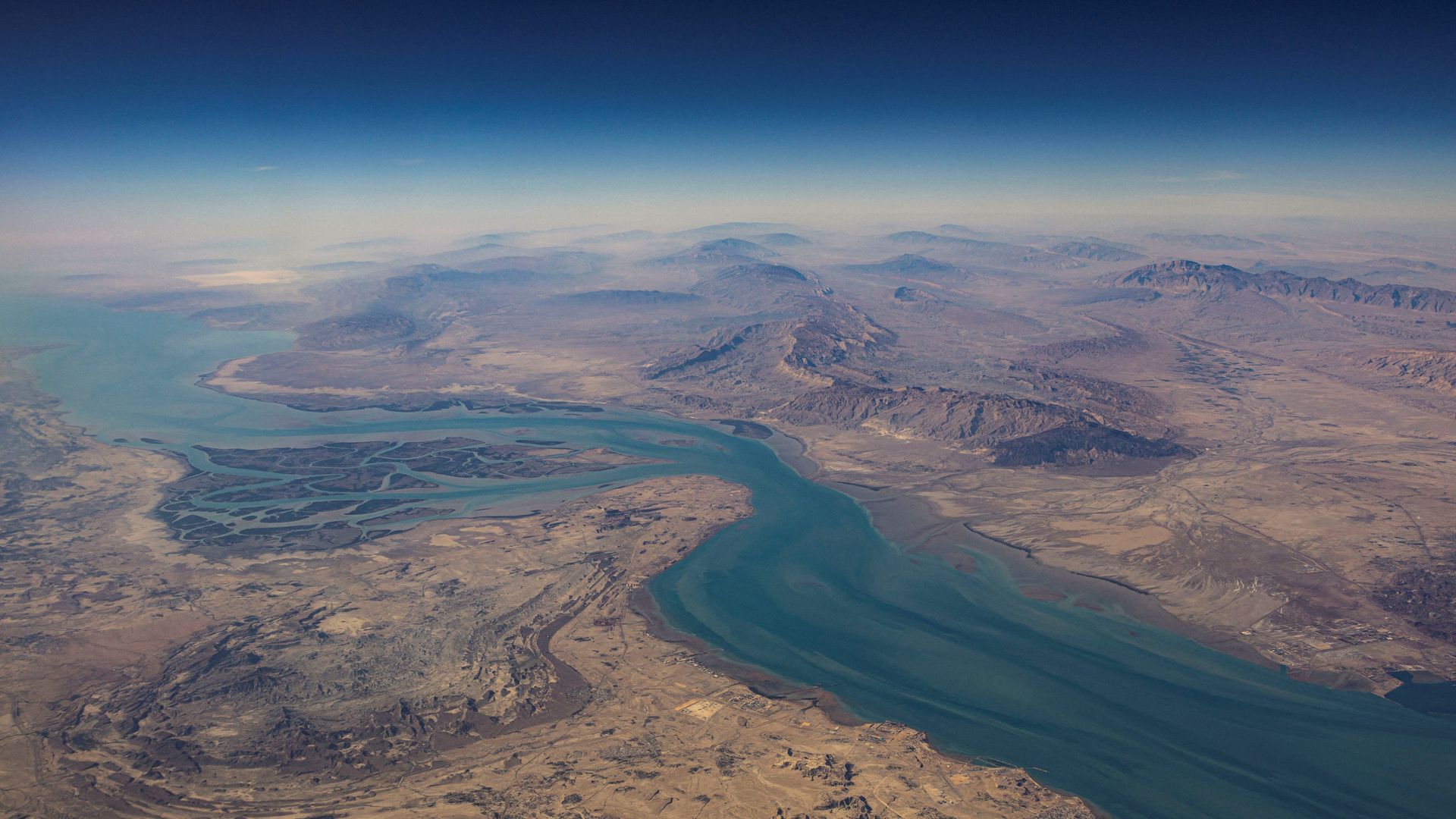
Image:
An aerial view of the Iranian shores and the island of Qeshm in the strait of Hormuz in 2023. File pic: Reuters
But the consequences are even more severe for those trapped inside the Gulf. In a perfect world, they would have enough pipelines to get their oil out of the Gulf, but in practice, there is nowhere near enough pipeline capacity. The upshot is that without tankers to ship their oil, the crude coursing up from under the ground in Saudi, Kuwait, Iraq and Abu Dhabi will have nowhere to go.
Share
Ed Conway on what happens when oil doesn’t get out of the Strait of Hormuz.
Big questions for people and the environmentThese nations have only a limited amount of storage for that oil, raising the question: what happens in a matter of days when that storage is exhausted? The short answer is either they will have to shut down their oil fields – something that could damage them permanently – or burn or spill the oil as it emerges.Then there are the deeper questions for what this implies for a region dependent on immigrants. What happens if and when those immigrants, most of whom never anticipated having to live under threat of aerial bombardment, leave the country? What does that do to the Gulf model?
None of the answers to any of the questions posed above are particularly pretty. None are especially encouraging for the global economy. They are, not to put too fine a point on it, all quite scary. Which is why we should all hope the Straits of Hormuz are not closed for long. Because the longer it stays closed, the more of a nightmare this is likely to be.