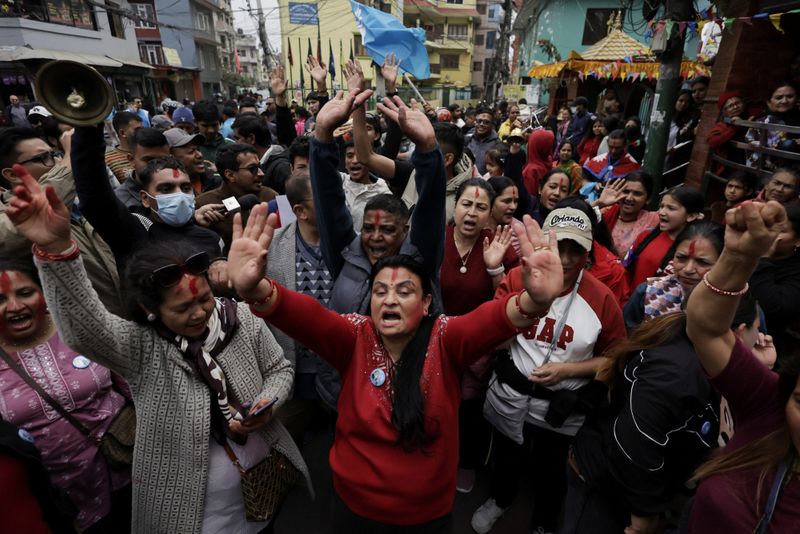

In Gorkhali, there’s a word that is both feared and respected — ‘pairo’, or landslide, which can lead to entire hills to slip away and whole forests to vanish. Nepal was in the grips of a countrywide ‘pairo’, the only way to describe the Rashtra Swatantra Party (RSP)’s astounding victory; the most optimistic estimate rated their seat tally at 110 for a party which made its electoral debut in 2022 with 21 seats. RSP has crossed the First Past the Post (FPTP) number alone to 110 and Proportional Representation (PR) seats will be 80, taking the aggregate to nearly 200. That’s more than two thirds seats in a 275-member legislature. The US, China and India are all watching with shock and awe. The result will have a profound effect on emerging geo-politics.How did this happen? People were determined to punish old parties and reward RSP especially after rapper and former mayor of Kathmandu, Balen Shah, joined the party. The only other time Nepal saw this kind of electoral outcome was in 2008 when CPN Maoist came to power after a 10-year civil war securing a near two thirds majority. This time, the transformation was triggered by the 36-hour GenZ protests last year. RSP’s strength in the House will be more than Nepali Congress, CPN UML and CPN Maoist (now rechristened as Nepal Communist Party) all put together.The traditional parties discredited for their record of corruption and misgovernance did attempt an image makeover. NC’s youthful Gagan Thapa executed a bloodless coup overthrowing the old guard but it was too little too late. UML’s ousted PM KP Oli had bitterly criticised the GenZ protests and learnt no lesson from the students’ revolt. In an attempt to dislodge Oli from the party failed, Maoist supremo Prachanda regrouped the Left parties to form NCP. These cosmetic changes by NC and NCP could not arrest the declining fortunes of the mainstream parties. Gagan Thapa and four-time PM Oli were both defeated. So was another prime minister, Madhav Nepal, by first-time RSP candidates. RSP’s sputnik rise is also attributed to the young and charismatic leaders, a fearless party, and a smart campaign – and also due to the wholesale rejection of the old parties by the electorate. Further, Nepalese abroad were urged to advise their friends and relatives to vote for RSP.From my vantage points in Pokhara and Kathmandu, I witnessed the campaigning programmes of different parties, establishment of voting booths and the 2 per cent drop in voter turnout to 58 per cent compared to the 2022 election. Meeting party candidates one could discern the differences in style and substance between the ageing and tired candidates of the traditional parties from the young, energetic and enthused RSP hopefuls, many first-timers. Surprisingly, not many GenZ members joined the political party or former their own party except one prominent leader, Sudan Gurung, who joined RSP. It was Sudan Gurung who used to meet President Sushila Karki and had negotiated several agreements with her, many of which have not seen closure. The most prominent and weighty is the ten-point agreement which encompasses GenZ’s reform agenda. While NC and RSP have incorporated its essence in their manifesto its implementation will be eagerly awaited. Some reforms like changing the mixed electoral system will require constitutional amendments. With RSP, achieving a two-thirds majority, their implementation will not be difficult provided there is some consensus in the House.Since 2008, the profile of the legislature has been dominated by Left parties, the Communists – Marxists, Leninists and Maoists. That will change now. Their strength in the House of 60 per cent of the members will reduce to 35 per cent, a significant drop in their influence. This will not please China which has strived to form a united Left party of all communists under NCP banner which had a short life-span in 2017-18. China was conspicuously silent during this election – no rallying call for Left parties but only good wishes for a successful election. Beijing is heavily invested in Pokhara and Kathmandu even as the Lhasa-Kirung-Katthmandu railway line is back on the radar. The long-delayed BRI was signed by Oli last year when he attended the victory parade in Beijing.The US is a significant third player in Nepal after China and India. The USD 500-million MCC programme is on pause; but embedded in the Indo Pacific strategy. Adm Samuel Paparo, Indo Pacific Theatre Commander, was in Kathmandu last month reportedly persuading Nepal to join State Partnership Programme (SPP) – a mil-to-mil programme run by the US National Guard. US is trying to rope in Nepal Army in various programmes like disaster relief, peacekeeping, mountain and high altitude rescue, US has been trying since 2022 to get Nepal Army to join SPP but like the initial hurdles it encountered with MCC, there is considerable resistance and Nepal Army has refused to join it. I was informed by a retired Nepali General that US wants to establish a training school in the high Mustang region which is close to the Chinese border. Thanks to strategic geography, India is Nepal’s most active political, military and economic partner. The decline of the Communist majority in parliament could encourage the new RSP government to clear the Agniveer scheme which has been in suspended animation for five years and resulted in not a single Nepal Domiciled Gorkha being recruited in the Indian Army.The RSP government will be politically inexperienced and PM Balen Shah, quite inscrutable. It can form a national government incorporating talent and experience from other parties. This is a real opportunity for RSP to meet the aspirations of the people and change the quality of their lives. A real new Nepal could be in the offing.