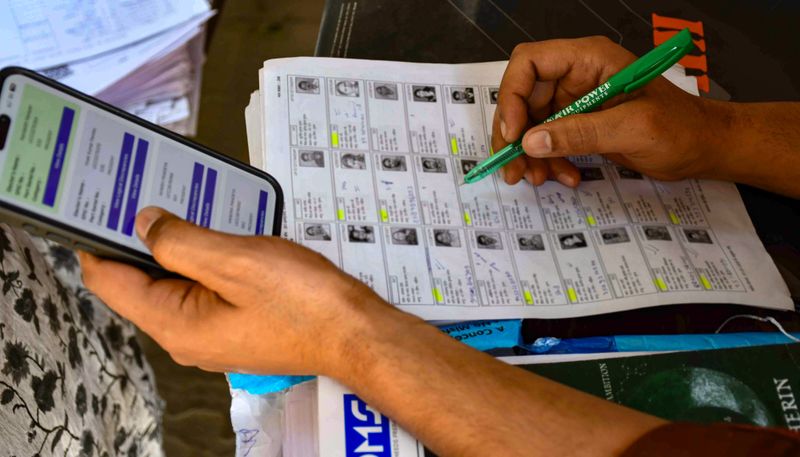

Come April and Punjab will see the rollout of the Special Intensive Revision (SIR) of electoral rolls across the state. With elections to the Punjab Vidhan Sabha due early next year, the exercise of conducting SIR by the Election Commission of India is being looked at with anxiety by most political parties, barring the state unit of the BJP.The ruling Aam Aadmi Party has cautioned its MLAs to closely monitor the SIR process, while the Congress and the Shiromani Akali Dal remain “highly sceptical” of the exercise. The Congress has been holding a nationwide protest against the SIR, calling it a “vote chori gimmick”. The SAD claims the exercise is aimed at disenfranchising voters not suitable to the ruling dispensation in both the state and the Centre.What is intensive revision?The last time the Special Intensive Revision of electoral rolls was conducted in Punjab was in 2003. Since then, a summary revision of voter lists is done by the Election Commission of India from time to time, where voters submit forms for any changes. But, in SIR, government officials (booth level officer or BLO) conduct house-to-house verification.SIR is a revalidation of the entire voter list, where ghost voters are removed, duplication of votes is checked, corrections are made and new voters are registered.Why it is being doneOfficials say the intensive revision is required because the standard summary revision of rolls is insufficient to factor in the large-scale migration of voters from Punjab. SIR would identify voters who have permanently left to delete their names and prevent any malpractices during elections.Over the past 23 years, there has also been a duplication of votes — those who are registered as voters in their ancestral villages as well as in cities where they now reside.Since a number of residents of other states too move to Punjab for work, the SIR, officials stress, would also help in deleting the names from electoral rolls of those who are registered as voters in Punjab as well as in their native states.The exercise in the stateThe first step is the collection of data by the BLO, which will be followed by a draft publication of the electoral rolls. Eligible citizens whose names do not appear in the list can then file objections and challenge deletions.Voters will know of their name not being in the voters’ list if the BLO does not visit their houses during the enumeration period. Before the final list, a draft roll is published. In case a voter’s name is not there, he/she needs to contact the BLO.In case of any discrepancies in mapping the voters by BLOs with the previous SIR electoral rolls, the Election Returning Officer (ERO) will issue notices to the voters, who can then approach the ERO with documents to establish their eligibility as voters. Their claims will be examined before the final electoral rolls are published.The BLOs have to upload data on a realtime basis on a mobile application, which also includes sharing of GPS coordinates of the houses visited by them. Residents are required to share their proof of date of birth and proof of residence when the BLOs visit them.Documents to be shownFor those whose names exist on rolls: Voter card, Aadhaar card and telephone number.For new voters: Proof of identity and age (Aadhaar card, PAN card, passport, licence, Class X or XII certificate).Proof of residence: Water or electricity bill, bank passbook, sale deed or rent deed.A recent photograph.Pre-revision surveyThe mapping exercise of all eligible voters in Punjab — a pre-SIR survey — is currently underway across all districts. This exercise is being conducted by BLOs. In certain districts, the mapping is being done at a fast pace (like in Moga), while the process is slow in districts like Ludhiana.The pre-SIR exercise requires the BLOs to verify the current residents by comparing their listing in the 2003 electoral rolls, the last time that this intensive revision was done.In districts like Ludhiana, Jalandhar, Bathinda and Mohali, which have witnessed rapid urbanisation and migration of voters after 2003, some people are finding it difficult to prove their antecedents as rightful voters.“It is true that several people who were living in villages then have moved to cities now as these cities have expanded since 2003. Or children staying with parents then could have migrated to other states/cities/countries, or that some people had not participated in the SIR in 2003. That is why the pre-SIR exercise (pre-enumeration) is being done before the SIR is rolled out,” Chief Electoral Officer Anindita Mitra told The Tribune.She said doubts about the SIR were unfounded and a robust system was in place to address any apprehensions of the stakeholders.