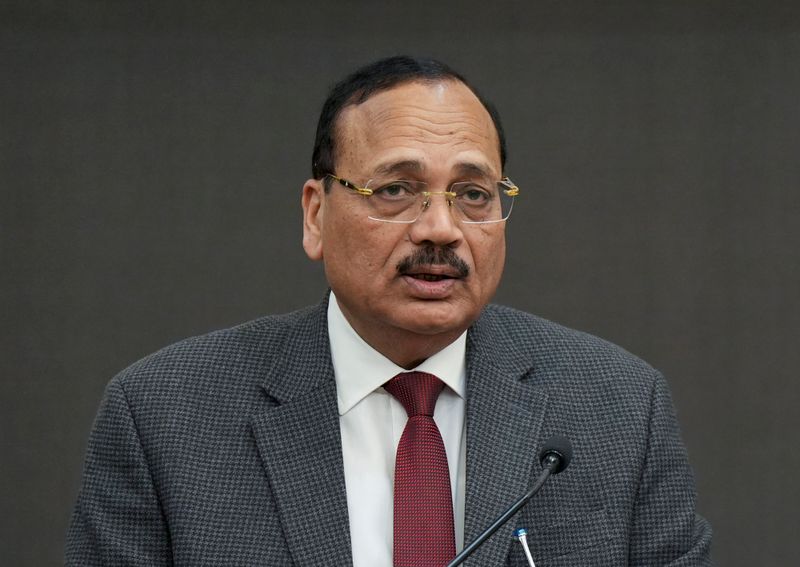

Observing that India’s expanding economic footprint across continents demands a robust and credible dispute resolution framework, Chief Justice of India, Justice Surya Kant, has said the country must position itself as a trusted jurisdiction on the global map for resolving commercial disputes.Delivering the inaugural address at the launch of the Chandigarh International Arbitration Centre during the first edition of the India International Arbitration Summit Week, CJI Surya Kant emphasised that India’s economic rise has been accompanied by increasingly complex cross-border commercial relationships that inevitably generate disputes requiring credible resolution mechanisms.Highlighting the global nature of modern commerce, CJI Surya Kant said India stood at a critical juncture where it must strengthen its litigation, mediation and arbitration systems together if it seeks to inspire confidence among global investors and businesses.”The first quarter of the twenty-first century is already behind us, and in that span India’s economic presence has expanded with remarkable speed,” the CJI observed.Pointing to the cross-border nature of contemporary business transactions, CJI Surya Kant said: “Indian enterprises are venturing abroad. Foreign capital is flowing inward. Digital transactions traverse borders in seconds. Supply chains no longer extend merely within a country; they now run across continents and time zones.”Illustrating the new realities of global commerce, the CJI added: “A contract negotiated in Chandigarh may be executed in Dubai, financed in Singapore and enforced in London.”CJI Surya Kant said this internationalisation of commerce brought with it complex legal questions and disputes that must be resolved swiftly and reliably.“Such reach is a mark of confidence, but it is also a source of complexity,” the CJI said, adding that investors and entrepreneurs ask a decisive question when disputes arise: where will they obtain effective and dependable dispute resolution.CJI Surya Kant said the theme of the conference—India’s course for dispute services in 2026-2030 across litigation, mediation and arbitration—was not merely an academic discussion but a call for institutional transformation.The CJI observed that India must move beyond isolated reforms and instead develop structural coherence across courts and alternative dispute resolution systems if it intends to serve as a credible destination for global dispute resolution.Referring to the choice of Chandigarh as the venue, the CJI Surya Kant said the planned city symbolised the value of thoughtful institutional design.“Institutions do not arise by accident. They are imagined, built and sustained with foresight,” the CJI said, adding that the creation of the Chandigarh International Arbitration Centre represented a similar effort to build durable dispute resolution architecture for the future.CJI Surya Kant also described the initiative as an exercise in “institutional imagination”, aimed at preparing India for the next phase of global economic integration.Delegates from the United States, United Kingdom, Canada, France and other jurisdictions participated in the conference along with judges, senior advocates, arbitrators and legal scholars from across India.