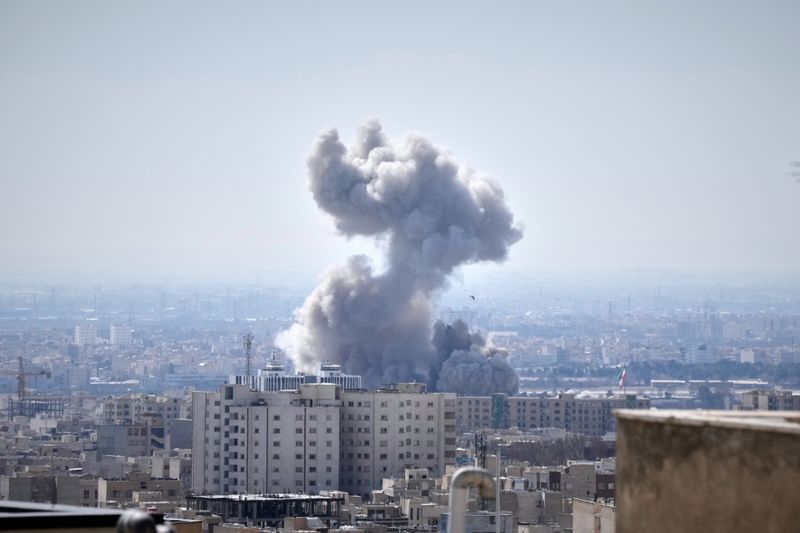

War no longer comes to us first as testimony, dispatch, or the delayed stillness of a newspaper photograph. It comes as a video. Missiles streak across the night in luminous arcs. Interceptors rise to meet them. Screens fill with light. Experts discuss range, payload, and deterrence. We watch. We scroll. And somewhere, almost beneath notice, the moral fibres begin to fray.The Dalai Lama begins elsewhere. Not with strategy, borders, or the language of enemies, but with something simpler and harder to evade: every human being wants happiness and does not want suffering. So do the soldier, the civilian, the refugee, the prime minister. Forget that, and war becomes easier to narrate than to feel.What modern warfare has perfected is not only reach but remoteness from ordinary experience. The more precise it becomes, the less bodily it seems. A missile launched hundreds of kilometres away, guided by algorithms, appears on screen almost as an abstraction. One sees light, velocity, and impact. One does not smell burning concrete. One does not hear the silence after the blast. One does not sit beside the mother who cannot wake her child. Destruction expands. Felt encounter recedes.The Dalai Lama’s language of compassion speaks directly to this condition. He does not use the word to mean softness or sentiment. He means training the mind: the effort required to keep another’s suffering in view when modern life invites us to look away, simplify, or move on.War now reaches us through several filters: first as spectacle, then as analysis, then as market signal. A strike lands and, before the dead are counted, attention shifts to oil prices, shipping lanes, inflation, and defence stocks. Human suffering arrives late, often as a number. And numbers do not bleed.His Holiness has long put the obscenity in plain view. Nations, he says, spend trillions on armaments in the name of security, when the same money could fund hospital beds, schools, and homes. Such waste does not merely prolong poverty and disease. It squanders human intelligence itself. War, in his words, is not glamorous but monstrous, like a fire in the human community whose fuel is living beings. Peace, then, cannot mean only the absence of conflict. It must mean a world in which people are fed, cared for, and free.We watch interceptors rise into the night in clean arcs of light, and the eye adjusts too easily to the beauty of the image. Each interceptor can cost around Rs 50 lakh, enough to provide hundreds of thousands of school meals in India. Some of the most advanced interceptors cost well over Rs 100 crore each, at more than the cost of building a new Kendriya Vidyalaya.None of this means states have no right to defend themselves. The Dalai Lama himself has never taken refuge in easy innocence. He has opposed violence in all its forms consistently, yet he has also acknowledged the tragic complexity of life.I was present at an Amnesty International event on capital punishment during his visit to Oslo for the Nobel Peace Prize. He firmly rejected capital punishment. But he also introduced a demanding Buddhist nuance. He recounted a traditional story of a caravan crossing the Tibetan plateau, where it is discovered that thieves intend to murder the travellers. A compassionate monk decides to kill them rather than allow many others to die, fully prepared to take upon himself the negative karma of the act.The point was not to carve out an easy exception. It was to illuminate the moral seriousness of intention in Buddhist thought. Because karma is shaped above all by motivation, an act undertaken in complete altruism and without hatred would not carry the same moral weight as ordinary violence. Yet that very possibility sets an almost-impossibly-high bar. It is no doctrine for states or armies, all of whom can too easily claim necessity while acting from fear, self-interest, or delusion. The story is less a justification of violence than a warning: how easily human beings mistake self-deception for compassion.Language of warThat nuance has largely vanished from the public language of war. Wars are announced as necessary, righteous, existential. Every escalation is regrettable but unavoidable. Every civilian death is tragic but collateral. The moral burden disappears beneath rhetoric.What drives wars in the first place? We speak of nations, but wars are often shaped by the ambitions and insecurities of particular leaders: the need for legitimacy, the urge to appear strong, the temptation to distract from domestic failure or legal jeopardy. Private motives are dressed up as national interest. Ordinary people are then asked to die inside narratives they did not author.We ask who won when we ought to ask what winning did to the winner. Militarised budgets entrench themselves. Security-state habits deepen. Public scrutiny contracts. Violence coarsens political culture. And defeat? Humiliation settles into memory. It seeds the next cycle.The Dalai Lama’s response to history is instructive. Tibet was independent before 1950, yet it does not demand the restoration of a lost empire. He asks for genuine autonomy, human rights and authentic preservation of its rich civilisational heritage. He understands that memory can dignify a people, but when used as a weapon, it keeps resentment alive. One cannot build a future by sacralising grievance.For more than six decades, he has led Tibetan resistance through non-violence despite the genocide of its people, Chinese occupation and exile. Tibet remains unfree. He has won no territory and freed no prisoners. Yet he has preserved what conquest seeks to erase: a people’s moral identity, civilisational continuity, and the legitimacy of their cause.I remember being with him in the Kullu valley decades ago when news reached us of a brutal Chinese assault on Tibetans inside Tibet. This was before the age of instant video. Reports arrived in fragments. I saw how deeply shaken he was, moved to tears for his people. What stayed with me was the revelation that spiritual realisation had not made him less vulnerable to suffering, but more open to it, and yet more inwardly composed: as responsive to the beauty of a bud unfolding as to the anguish of his people, and to the suffering woven through the lives of all sentient beings. Enlightenment is not anaesthesia. It is tenderness disciplined by wisdom.He did not turn Tibetan suffering into political theatre. He did not use it to consolidate personal power. The Chinese state tried to frame Tibet as merely “the Dalai Lama issue”. His response moved in the opposite direction. He had already begun democratising the Tibetan polity in exile, and in 2011, he voluntarily relinquished his formal political authority, transferring leadership to democratically elected institutions.He has never ceased to oppose the policies that devastated Tibet. Yet he has refused to cultivate hatred towards the Chinese people. Refusing to collapse a whole people into the actions of a state is not weakness. It is moral clarity.His teaching on compassion is often misunderstood because the word itself has been trivialised. In his tradition, compassion is not simply feeling sorry for someone. It is a disciplined training of the heart and mind: the capacity to remain in the presence of suffering without collapsing into despair or retreating into numbness. It asks that suffering be seen clearly and that the humanity of others not be erased when they are reduced to abstractions such as casualty figures or collateral damage. And from that recognition must come a readiness to act: to protect life where one can, to resist indifference, to speak when silence shades into complicity.That task becomes harder under the ceaseless assault of violent imagery, which can produce distress, helplessness, numbness, and inner dysregulation. We are overwhelmed, then detached. Shocked, then drained. The danger is not only that we stop caring, but that we lose the faculties by which we judge and resist. A public deprived of moral discrimination and emotional ballast becomes easier to frighten, inflame, and manipulate.The Dalai Lama’s phrase for the deeper work required is “inner disarmament”. He does not mean abandoning defence or pretending threats do not exist. He means dismantling the emotional ordnance within the mind: fear, hatred, vindictiveness, tribal intoxication. External disarmament without inner disarmament merely postpones the next cycle.War may sometimes prove unavoidable. But the real question is whether such decisions are made from clarity or from dysregulated anxiety; whether costs are reckoned in generations, not only in missiles; whether we still possess the moral imagination to see a human being before the screen turns him into a target.In exile since 1959, without territory or an army, the Dalai Lama has kept alive a question that armed powers would rather bury: is the true measure of a civilisation its capacity for violence, or its capacity to remain human in the face of it?In an age when destruction travels faster than empathy, that question may be one of the last defences we have against losing our humanity before the war is even over.— The writer is Managing Trustee of the Foundation for Universal Responsibility of the Dalai Lama. His views are personal