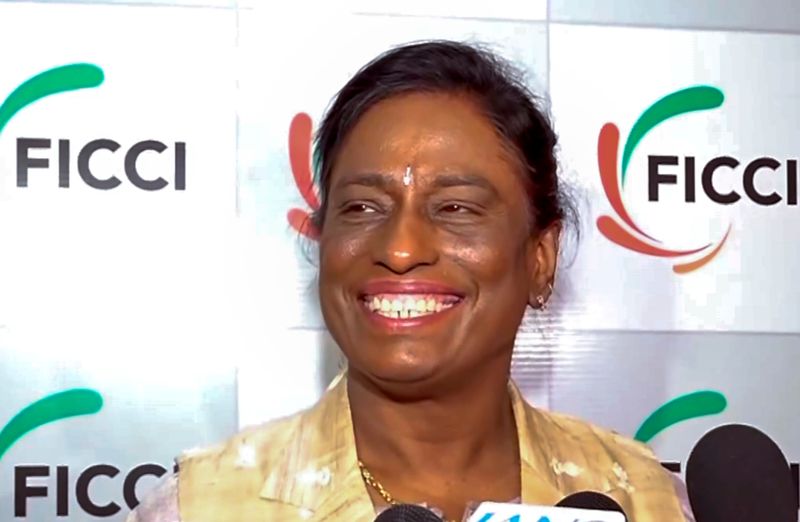

Between possibility and reality, intent and action falls a shadow, of doubt, conditioning and even fear. In the long chain of human history and existence, there are as many things to celebrate as there are to regret. As I reflect on the meaning and significance of Women’s Day, I realise how sportspersons like PT Usha, Mary Kom, Sakshi Malik, Vinesh Phogat and many others disrupted my “male gaze” that was “tutored” to see them in a particular way.The four — Usha the super athlete, Mary Kom the legendary boxer, Sakshi Malik the Olympic medal winning wrestler and Vinesh Phogat, the face of resistance against exploitation in wrestling — have much in common. They have fought and succeeded against all odds in a system that is rigged against women, the vulnerable, poor and the minorities. And despite having achieved much, they are still struggling to find unconditional acceptance in a society that sees women more as a threat than equal partners in the workplace and the sporting arena.Boxer Mary Kom belongs to the Kom tribe from the poverty-ridden, violence-infested Manipur and her story is the very essence of what it means to be a woman in India. Photo: Manas Ranjan BhuiLife is a learning experience, a journey that challenges one’s perceived, fixed notions. The mirror on the wall may reflect the exact image of what is in front of it, but you choose to see what you want to. I, like millions of male youth of the country, was fed on Hindi cinema’s image of a woman whose main vocation in life was to be loyal, selfless, even servile, and help their male counterparts succeed in life. They were fair, delicate, tender-hearted, helpless and needed a chivalrous male to rescue them from the “evil designs” of the world.I joined the journalistic fraternity in 1979 where sports reporting was a male preserve. I had heard of how Kiran Peshawaria, who we know today as a former police officer-turned-politician Kiran Bedi, was an aspiring tennis player, known as much for her skill as for her short-tempered, angry outbursts on the courts. It was attributed to her being a “spoilt” woman with an “elite” upbringing.(Above) Sakshi Malik’s story, much like that of Vinesh Phogat (below), is that of courage, resilience, success against all odds and yet a sense of betrayal shadows their present lives. They feel like victims of a system that rewards obedience and punishes dissent. ANIThe more living example for me was that of Kanwal Thakar Singh, the national badminton champion from Chandigarh, and her sister Kirron, partnering with whom she won the national doubles championship. Today we know Kirron Kher as a filmstar and a former Member of Parliament. Again, what was talked about more were their on-court tantrums that were seen as a reflection of their “privileged” background.The year 1984 saw a more rooted athlete to Indian reality emerge on the horizon, PT Usha. The ‘Payyoli Express’ missed winning a bronze in the 400m hurdles event of the Olympics by a whisker and was to later win four gold medals in the 1986 Asian Games. Usha was the precursor to breaking all the stereotypes that cinema and a patriarchal society had built for us. She was lean, dark, drenched in the soil of India’s struggling working classes and didn’t know how to speak in English, not even Hindi.As the years rolled on and women in sports was now no longer a rare phenomenon and they even overtook men in their march to international glory, one image from 2012 is embedded in my mind. It was the year of the London Olympics, where women’s boxing was to make its debut and the five-time world champion Mary Kom had decided to make a comeback. At 29, she did not want to miss out on an Olympic medal. I tagged along for a trip to the National Institute of Sports (NIS), Patiala, with writer-novelist Rahul Bhattacharya, who had been assigned to do a full-length feature on her for an international magazine. Watching Mary’s fragile, small frame unleash explosive energy through her piston-like arm movements in the training ring left me breathless. Rahul’s perceptive, sensitive observations, guided by intuitive insights and lyrical prose — qualities that illuminate his portrayal of an indomitable woman in his acclaimed book ‘Railsong’ — appeared in the shape of an article later.Mary, who went on to win a bronze in London, belongs to the Kom tribe from the poverty-ridden, violence-infested Manipur and her story is the very essence of what it means to be a woman in India and only those with iron will and a lot of luck can negotiate the unimaginable hazards strewn in the path that leads to the summit.I marvel at Mary’s achievements and feel disturbed at the present accounts of her bitter divorce and financial troubles. Her story in many ways echoes Sakshi Malik’s story of success and disillusionment detailed in her memoir, ‘Witness’. Sakshi records with feeling and restraint her hurt, body-shaming, fruitless protests against the wrestling federation president over sexual harassment in the book written with flair and deep understanding by Jonathan Selvaraj. To read it is to comprehend how difficult it is to be a woman and succeed, given the complexities and inherent gender biases of a society controlled by men.Sakshi’s story, much like Vinesh Phogat’s, is that of courage, resilience, success against all odds and yet a sense of betrayal shadows their present lives. They feel like victims of a system that rewards obedience and punishes dissent.Both gave up wrestling, announcing their quitting in anguish, frustration and tears. Vinesh had second thoughts and changed her mind. She believes she can still compete and win, seeking inspiration, perhaps, from all that she has achieved and endured. While we celebrate the glory they and many others have achieved and rejoice at India’s triumph in cricket’s World Cup last year, we need to sensitise ourselves to what it means to be a woman in a world seen through the male lens.— The writer is the author of ‘Not Quite Cricket’ and ‘Not Just Cricket’