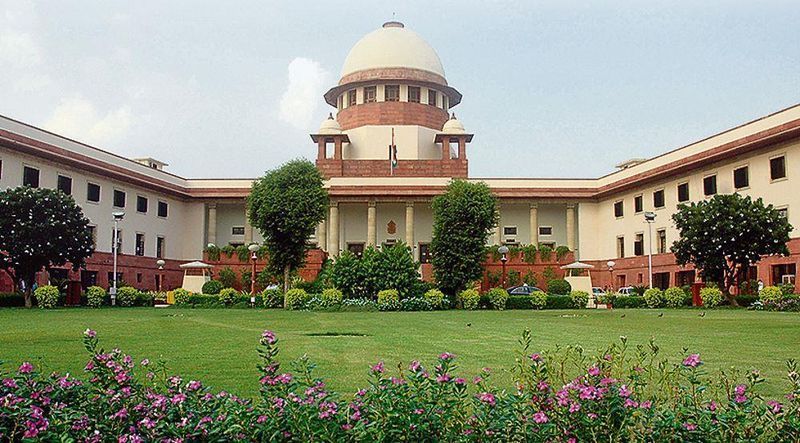

As India celebrated the International Women’s Day on Sunday, the fair sex continues to be grossly under-represented in the judiciary.Out of 33 judges in the Supreme Court only one (3 per cent) is a woman, while there are only 116 women judges (14.85 per cent) out of a total working strength of 781 judges in 25 high courts across India, official figures (as on February 2, 2026) revealed.The lone woman judge in the Supreme Court is Justice BV Nagarathna, who is expected to become the 54th Chief Justice of India on September 24, 2027, after the retirement of her possible predecessor Justice Vikram Nath. She will hold the top post for only 36 days.It was in September 2021 that three women judges (Justice Hima Kohli, Justice Bela Trivedi and BV Nagarathna) were elevated to the top court by the Collegium headed by then CJI NV Ramana. Justice Kohli and Justice Trivedi retired on September 1, 2024, and June 9, 2025, respectively.Since September 2021, no woman judge has been appointed to the SC as Collegiums led by four successive CJIs — Justice UU Lalit, Justice DY Chandrachud, Sanjiv Khanna and BR Gavai — chose not to recommend elevation of women judge to the top court which remains a male bastion.It has to be seen if the Collegium under current CJI Surya Kant bucks the trend and recommends women candidates (women high court judges and/or women lawyers) for elevation to the top courtAs on February 28, 2025, there were 7,852 women judges (38 per cent) working in district and subordinate courts. The total sanctioned strength of judges in the subordinate courts stands at 25,886.The Punjab and Haryana High Court has the highest 18 women judges out of a working strength of 61 (29.51 per cent), followed by the Delhi High Court and the Madras High Court — 10 women judges each (22.73 per cent and 18.87 per cent against working strength of 44 and 53, respectively).At least three high courts (Manipur, Tripura and Uttarakhand) currently have no women judges, while the Allahabad HC has only seven judges against a working strength of 110.The CJI on Sunday said High Court collegiums should consider meritorious women members of the Bar for judgeship as a norm and not as an exception.“I earnestly request the High Court collegiums to widen the zone of their consideration and include women advocates practising in the Supreme Court who belong to that state for elevation,” the CJI said.Speaking at the inaugural session of the first National Conference of Indian Women in Law themed “Half the Nation – Half the Bench”, at the Supreme Court on the International Women’s Day, the CJI favoured greater institutional reforms in the judiciary to bring more women into the legal field.CJI Kant said institutional intent alone was not sufficient to improve women’s representation in the higher judiciary and that it must be accompanied by concrete action.“They (women lawyers) are seeking fair and appropriate representation, which has long been due. Only when the profession itself internalises this truth, will the pathway to the Bench become clearer,” the CJI said.However, Supreme Court Bar Association President and senior advocate Vikas Singh said it’s simply because the appointment of judges in the Supreme Court and high courts was not based on merit.“Look at the appointment of judges in the subordinate courts. There, the representation of women is almost 40 per cent. That’s due to the fact that the selection is based on merit and through competitive examinations,” Singh told The Tribune.“There is no dearth of talented women lawyers for appointment as judges. But they don’t lobby for their elevation to the Bench. Second, women lawyers assisting senior advocates are very intelligent and competent. They need to be picked up for elevation,” Singh said.