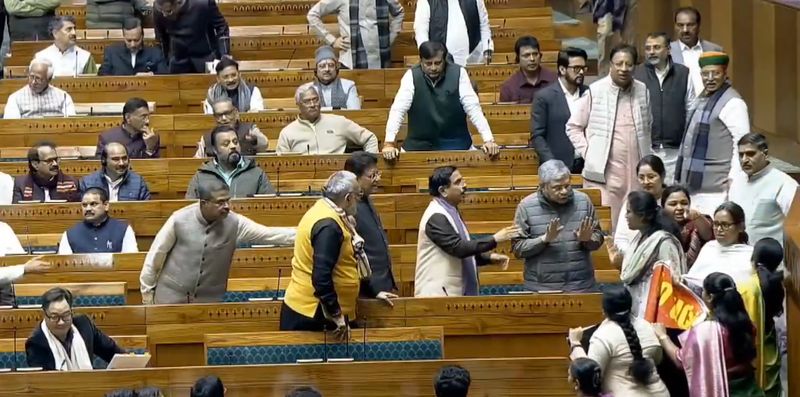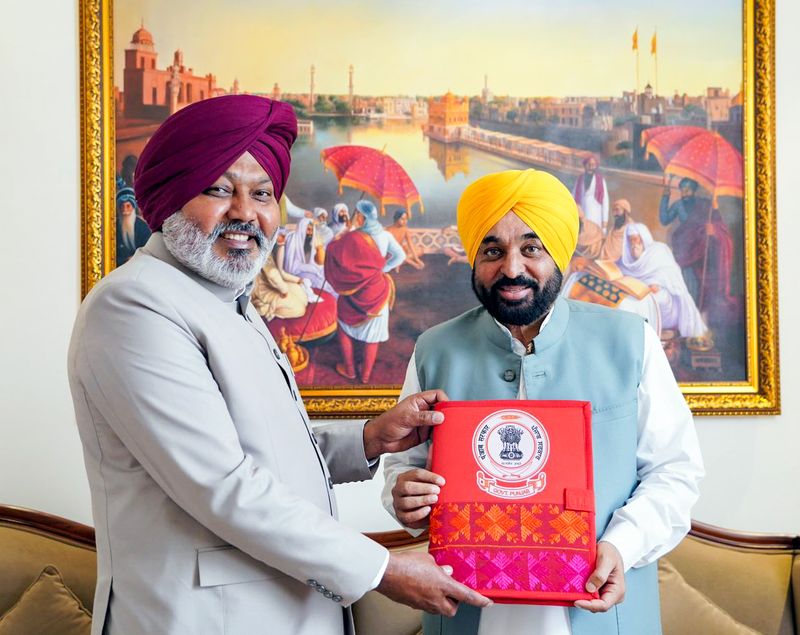

The Aam Aadmi Party government in Punjab today announced a bonanza for women in the state, offering a financial assistance of Rs 1,000 per month under the Mukh Mantri Mawan Dhiyan Satkar Yojana from April onwards.While women from the general category will get Rs 1,000 per month, those belonging to the Dalit community will get Rs 1,500.The announcement was made by Finance Minister Harpal Cheema while presenting the state’s Rs 2,60,437-crore Budget, the AAP government’s fifth. Calling it as a “sari guarantiyan poori karan wala budget”, Cheema said it fulfilled the last of the pre-poll promises made by AAP ahead the 2022 Assembly elections.As has been the trend in Punjab, no new taxes have been imposed in this Budget. Apart from women and Dalits, the focus remained on health, education, sports and crop diversification. To boost infrastructure development, each MLA will be given Rs 10 crore for works in their constituencies as the state heads towards the next Assembly elections in a few months. A sum of Rs 1,170 crore has been earmarked for the purpose.Presenting the Budget on the International Women’s Day, Cheema said he was dedicating it to the women of the state, who “make up about 48 per cent of the total voters”. The financial assistance scheme was announced towards the end of his speech amid thumping of desks and slogans from treasury bench members.“Almost 97 per cent of women will be covered under the current eligibility criteria. An outlay of Rs 9,300 crore has been made for this purpose. The registration for eligible adult women (excluding serving and retired government employees, income tax assessees and sitting or former MLAs and MPs) will begin on Baisakhi (April 13), and assistance will be given prospectively,” Cheema later told The Tribune.Women already receiving other social security pensions would also be eligible, he said, adding this would be the largest direct cash transfer scheme for women in the state.The free bus service for women will continue, as will welfare schemes under ICDS for toddlers, pregnant and nursing mothers. Free sanitary pads will be distributed among adolescent girls under the Navi Disha Scheme. “The total outlay for women empowerment and social welfare will be Rs 18,304 crore, the highest ever in Punjab’s history and an increase of 96 per cent over last year,” Cheema said.For the coming fiscal, the state’s revenue receipts are estimated at Rs 1,26,190.43 crore, mainly from the state’s own tax revenue, non-tax revenue, share from central taxes (which has increased by Rs 5,293 crore due to higher horizontal devolution by the 16th Finance Commission), market loans, and loans from NABARD and the Centre. The state government will raise market loans worth Rs 43,798.38 crore, while loans from NABARD and the Centre will add Rs 8,398.65 crore, taking total debt receipts to Rs 52,197.03 crore. As a result, Punjab’s debt is expected to rise to Rs 4,47,754.78 crore by March 2027.The state’s revenue expenditure for 2026-27 is estimated at Rs 1,48,145.61 crore, of which 71.4 per cent will go towards interest payments on loans (Rs 28,755.07 crore), salaries (Rs 39,115.04 crore), pensions (Rs 22,465.29 crore) and power subsidy (Rs 15,550 crore). The total revenue deficit is projected at Rs 21,955.18 crore, lower than the deficit in the current fiscal.For the health sector, Rs 2,000 crore has been earmarked for the Mukh Mantri Sehat Bima Yojana, which will provide free health insurance of up to Rs 10 lakh to 65 lakh families. In addition, 143 new Aam Aadmi Clinics will be set up across the state and 308 subsidiary health centres will be upgraded to Aam Aadmi Clinics. The government also plans to establish a modern trauma centre along with a dedicated mother and childcare hospital at Anandpur Sahib.In the education sector, an outlay of Rs 19,279 crore, an increase of 7 per cent over last year, has been made. The state will launch the Sikhiya Kranti 2.0 initiative with an outlay of Rs 3,500 crore over the next six years, in collaboration with the World Bank, to transform school education. The government has also given in-principle approval for establishing a world-class university in the name of Sri Guru Tegh Bahadur at Anandpur Sahib. For higher education, Rs 569 crore has been allocated for initiatives under technical education in 2026-27.Agriculture, the mainstay of Punjab’s economy, has been allocated Rs 15,377 crore, up 6 per cent from last year. Power subsidy to the agriculture sector is estimated at Rs 7,715 crore. In rural areas, 11,901 km of link roads will be upgraded with NABARD assistance at a cost of Rs 2,597 crore. The government also proposes to complete the remaining 19,876 km of rural roads through the Mandi Board and the Public Works Department at an estimated cost of Rs 7,606 crore.For urban areas, allocation to the Municipal Development Fund has been increased fourfold to Rs 1,000 crore in 2026-27. A sum of Rs 500 crore has been set aside for the Punjab Municipal Services Improvement Project to strengthen long-term urban water security in Amritsar and Ludhiana. A provision of Rs 665 crore has been proposed for 149 urban local bodies to accelerate urban infrastructure improvements. The government will also procure 1,279 buses to improve public transport.The government also plans to establish the Sant Attar Singh Maharaj Armed Forces Preparatory Institute for Boys along with a degree college at Cheema. The Sardar Bahadur Amin Chand Soni Armed Forces Preparatory Institute at Bajwara, Hoshiarpur, which is nearing completion, will commence training in 2026-27.Under the state government’s Yudh Nasheyan Virudh campaign, Rs 100 crore has been earmarked for the effective implementation of a caste and drug census this year, which Cheema said would help strengthen the state’s fight against drugs.The Punjab Government will also build 6,000 additional village playgrounds and 5,000 indoor gyms across the state. Adventure sports camps in the sub-mountainous region will be developed under the PPP mode. A budgetary allocation of Rs 1,791 crore for 2026-27, up by 83 per cent from last year, has been made for sports, the Finance Minister said.