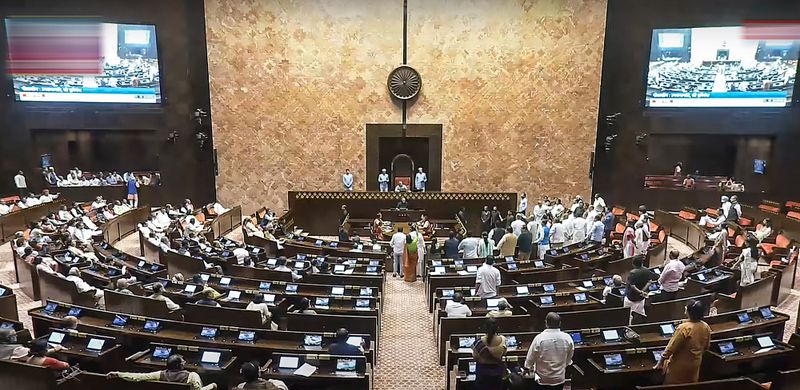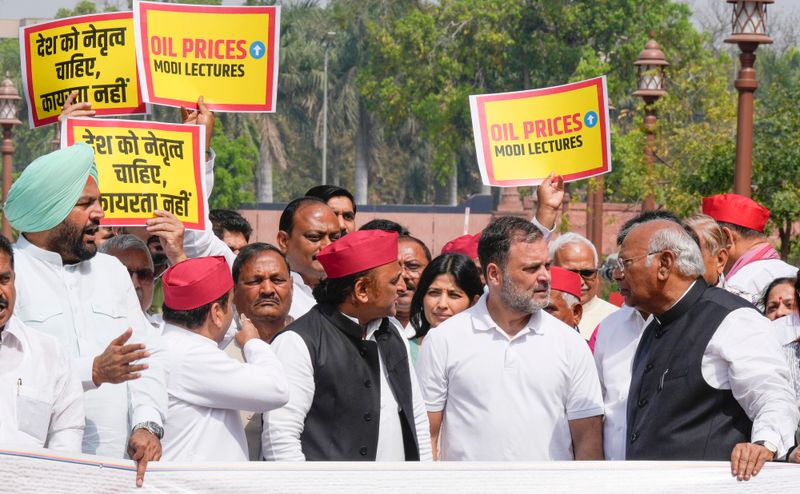

Iran had sought India’s permission for three of its naval ships to dock at Indian ports amid the escalating West Asia conflict, and New Delhi approved the request a day later, External Affairs Minister S Jaishankar informed Parliament on Monday while outlining the government’s response to the regional crisis.Making identical suo motu statements in the Rajya Sabha and the Lok Sabha, Jaishankar said the Iranian side had requested permission on February 28 for three ships sailing in the region to dock at Indian ports. The approval was granted on March 1 and one of the vessels — IRIS Lavan — docked at Kochi on March 4, with its crew currently accommodated at Indian naval facilities.“We believe this was the right thing to do,” the minister said, adding that the Iranian Foreign Minister had conveyed appreciation for the “humane gesture”.However, a couple of days ago, the EAM had, during a session at Raisina Dialogue, stated that the Iranian side had approached India seeking help for only one ship and not three as informed in Parliament.“We got a message from the Iranian side that one of the ships, presumably closest to our borders at that point, wanted to come into our port… On March 1, we said you can come in. It took them a few days to sail in and then they docked in Kochi,” the minister had said then, denying reports that India refused aid to Iranian ships, especially to the one which was sunk by US strikes in the Indian Ocean. In Parliament, Jaishankar’s statement came amid repeated disruptions as Opposition members created a ruckus demanding a detailed discussion on the escalating war in West Asia and accusing the government of maintaining “silence” on key developments.Briefing MPs on the situation, the minister said the current round of hostilities began on February 28 and involved direct military confrontation between Israel and the US on one side and Iran on the other, with the conflict spreading to several Gulf countries and causing casualties and large-scale destruction of infrastructure.He said the government had expressed deep concern soon after the outbreak of the conflict and called on all sides to exercise restraint, stressing that dialogue and diplomacy remained the only viable path to de-escalation.Given the seriousness of the crisis, the Cabinet Committee on Security, chaired by Prime Minister Narendra Modi, met on March 1 to review the situation, particularly the safety of Indians living in the region and the impact of the conflict on trade and economic activity.Jaishankar said the developments were of particular concern to India as nearly one crore Indians lived and worked in the Gulf countries, while thousands of students and professionals were currently in Iran. The region also remained critical for India’s energy security and accounted for nearly $200 billion in annual trade.He informed the Houses that the government had issued travel advisories as early as January asking Indian nationals to avoid non-essential travel to Iran and urging those present there to register with the Indian Embassy and leave the country using commercial flights.After the conflict began, the Embassy in Tehran facilitated relocation of several Indian students to safer areas and helped some citizens cross into neighbouring countries, including Armenia, to return home.Indian missions across the Gulf region have also issued regular advisories and assisted stranded travellers in transit hubs such as Dubai, Doha and Abu Dhabi. “As of yesterday, almost 67,000 of our nationals have returned home,” Jaishankar said, adding that dozens of inbound flights were being operated daily to facilitate the movement of passengers stranded in the region.The minister also noted that attacks on merchant shipping had already claimed the lives of two Indian mariners while another remained missing.On diplomatic outreach, Jaishankar said Prime Minister Narendra Modi had spoken to leaders of several countries in the region, including the UAE, Qatar, Saudi Arabia, Kuwait, Bahrain, Oman and Jordan, as well as Israel, seeking assurances regarding the safety of Indian nationals.While diplomatic channels with the US remained active, he acknowledged that leadership-level engagement with Iran had become difficult.