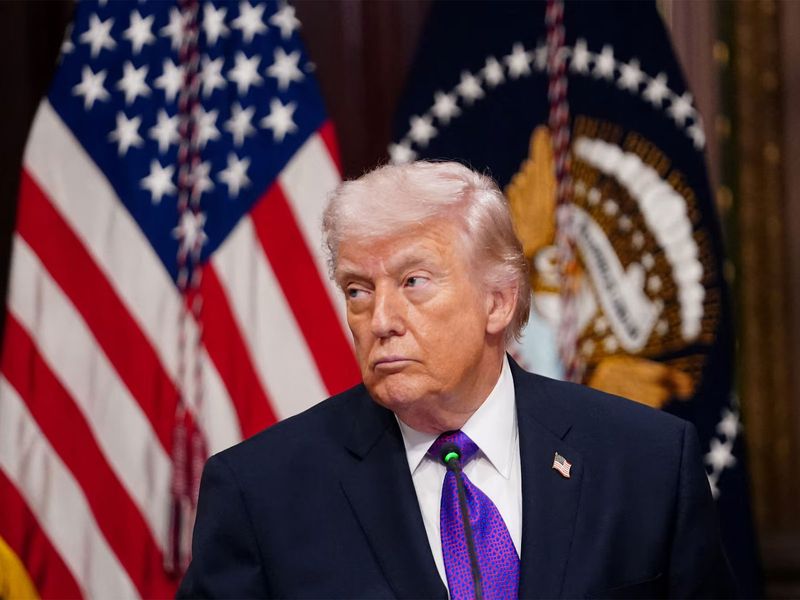

Washington, DC [US], March 10 (ANI): US President Donald Trump has indicated that Washington could implement temporary waivers on specific oil-related sanctions to mitigate the impact of surging global energy costs caused by the escalating conflict involving Iran.The president noted that his administration is exploring the short-term removal of certain economic restrictions until the regional situation reaches a point of stability.”We’re also waiving certain oil-related sanctions to reduce prices. So we have sanctions on some countries. We’re going to take those sanctions off until this straightens out,” Trump said.He further suggested that these adjustments might become permanent if the geopolitical climate improves, stating, “Then who knows, maybe we won’t have to put them on. There’ll be so much peace.”In addition to economic measures, the US president confirmed that the United States and its international partners are prepared to deploy military assets to protect commercial shipping routes in the Gulf should tensions rise.”But when the time comes, the US Navy and its partners will escort tankers through the strait if needed. I hope it’s not going to be needed, but if it’s needed, we’ll escort them right through,” he added.These remarks follow significant volatility in global energy markets due to the hostilities involving Tehran, which have driven crude prices higher and increased the political urgency in Washington to manage domestic fuel costs.A primary factor behind the recent price surge is the disruption of maritime traffic through the strategic Strait of Hormuz. As a critical chokepoint, approximately one-fifth of the world’s crude oil supply transits through this narrow waterway.Since the outbreak of the conflict on 28 February, sea traffic in the region has slowed considerably, triggering widespread concerns regarding global supply chains.The resulting price hikes are particularly sensitive in the US, where rising gasoline costs are a major concern for voters ahead of the midterm elections scheduled for later this year.The proposed easing of sanctions comes despite a recent move by Washington to increase economic pressure on Iran.On 25 February, just days before the conflict commenced, the US Treasury Department penalised over 30 individuals, entities, and vessels for facilitating Iran’s “illicit petroleum sales” and supporting its weapons programmes.The Treasury’s Office of Foreign Assets Control also moved against networks accused of helping Iran’s Ministry of Defence and the Islamic Revolutionary Guard Corps (IRGC) acquire materials for ballistic missile production.These measures specifically targeted 12 “shadow fleet” vessels used to transport hundreds of millions of dollars’ worth of Iranian products.The “shadow fleet” consists of older ships with unclear ownership that frequently lack the standard international insurance required by major oil firms and ports.US Treasury Secretary Scott Bessent highlighted that Tehran utilises such global financial channels to fund its military objectives.”Iran exploits financial systems to sell illicit oil, launder the proceeds, procure components for its nuclear and conventional weapons programs, and support its terrorist proxies,” Bessent said in a statement.Tehran has consistently maintained that its nuclear programme is intended solely for civilian energy requirements. (ANI)(This content is sourced from a syndicated feed and is published as received. The Tribune assumes no responsibility or liability for its accuracy, completeness, or content.)