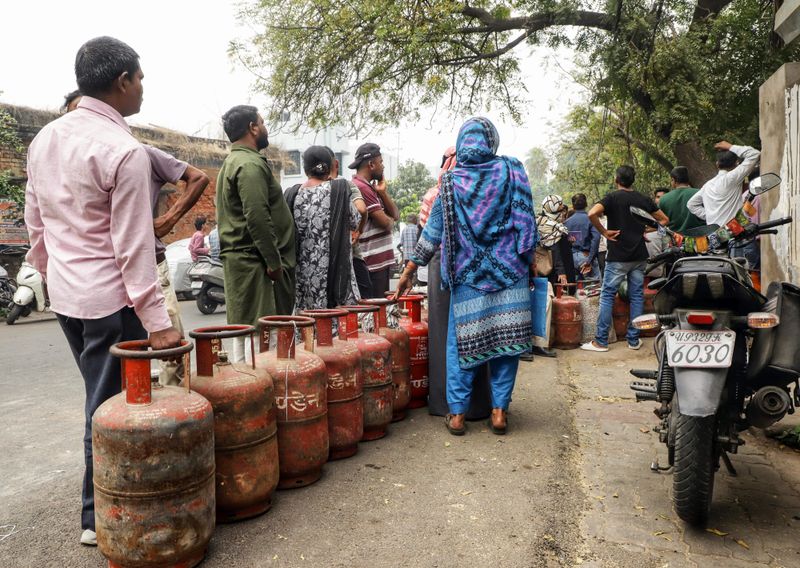

The government on Tuesday issued orders to rationalise the distribution of liquefied petroleum gas (LPG) amid continuing supply disruptions through the Strait of Hormuz which handles bulk Indian import consignments.Dismissing concerns around LPG and Liquefied Natural Gas (LNG) supplies in the country, top sources said there was no shortage and no cause for panic.They said no LPG distributor was running dry and all bookings (provided refill orders are made after 25 days) are still being honoured in the standard 2.5 days.”Local LPG production has increased. LPG and LNG consignments are arriving from sources other than those that need to transit the Strait of Hormuz. Every petrol pump is dispensing oil and cooking gas supply is being maintained,” said sources.They said crude oil prices had stabilised today at $87 a barrel and retail price of petroleum and diesel would not be raised.”Overall, India has entered this disruption better prepared than at any other time in history,” said top sources, adding that India was procuring crude from 40 countries and had 70-day LPG and LNG storage capacity, provided everyone stuck to the new rules. Further, where 55 per cent of India’s crude oil import was being routed through the Strait of Hormuz 10 days ago, today 70 per cent crude is being sourced from non-Hormuz routes, a senior source said.To address concerns of hotels associations across India, the ministry also set up a three-member committee of executive directors of IOC, BPCL and HPCL today to engage stakeholders.The broad LPG, LNG supply management exercise involves the Union Ministry of Petroleum and Natural Gas issuing Natural Gas (Supply Regulation) Order, 2026 “in view of disruptions in LNG shipments caused by the ongoing conflict in the Middle East.”The government said there was “no LPG crisis, only supply management.”The order stems from the Centre’s assessment of stalled LNG shipments through the Strait of Hormuz and several suppliers invoking force majeure clauses which excuse parties from fulfilling obligations due to unforeseen events.Issued under Section 3 of Essential Commodities Act, the order lists four priority categories for LPG, LNG allocation.Highest priority I sector will see 100 per cent of the average gas consumption during the previous six months being maintained. This will cover domestic piped natural gas (PNG), compressed natural gas (CNG) used in transport, LPG production including shrinkage requirements, and essential pipeline operational needs such as compressor fuel.For priority sector II, fertiliser plants will receive at least 70 per cent of their average gas consumption over the past six months. However, the gas must strictly be used for fertiliser production and the units concerned will be required to furnish certification to the Petroleum Planning and Analysis Cell (PPAC) through the Ministry of Fertilisers.Under priority sector III, industries such as tea manufacturing and other industrial consumers connected to the national gas grid will receive about 80 per cent of their average consumption over the previous six months, depending on operational availability.Similarly, priority sector IV covers industrial and commercial consumers supplied through City Gas Distribution (CGD) networks. These consumers will also receive around 80 per cent of their past average consumption, subject to availability.To ensure sufficient supply for priority sectors, the order provides for curtailment of gas supply to certain non-priority sectors. These are petrochemical units, including facilities such as ONGC Petro Additions Limited, GAIL’s Pata Petrochemical Complex, Reliance O2C and other high-pressure high-temperature gas consumers, which will face reductions first, followed by power plants if required.Oil refineries will also absorb part of the impact of LNG supply disruptions by reducing gas consumption to approximately 65 per cent of the average usage during the previous six months, depending on operational feasibility.The implementation mechanism will be coordinated by Gas Authority of India Limited (GAIL) in consultation with PPAC. GAIL will manage supply diversion and submit invoice prices of diverted gas volumes to PPAC, which will notify a pooled price for gas redirected from non-priority sectors.”Entities receiving pooled gas will have to provide an undertaking accepting the pooled price and ensure that the diverted gas is not resold,” officials said.The order directs stakeholders involved in natural gas production, import, marketing and transportation—including ONGC, Reliance Industries, Oil India Limited, Vedanta, GAIL, LNG terminal operators, pipeline operators and city gas distribution entities to immediately comply with the revised supply schedules and allocation mechanisms.The government has also clarified that the provisions of the order would override existing gas sale agreements and other commercial contracts if there is any inconsistency.In addition, all entities dealing with natural gas, LNG or re-gasified LNG will be required to furnish detailed information on production, imports, stocks, allocation, supply and consumption to the Centre through PPAC, which has been designated as the nodal agency.