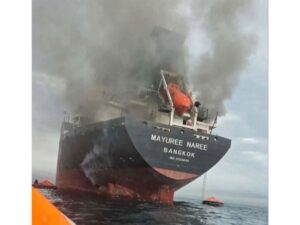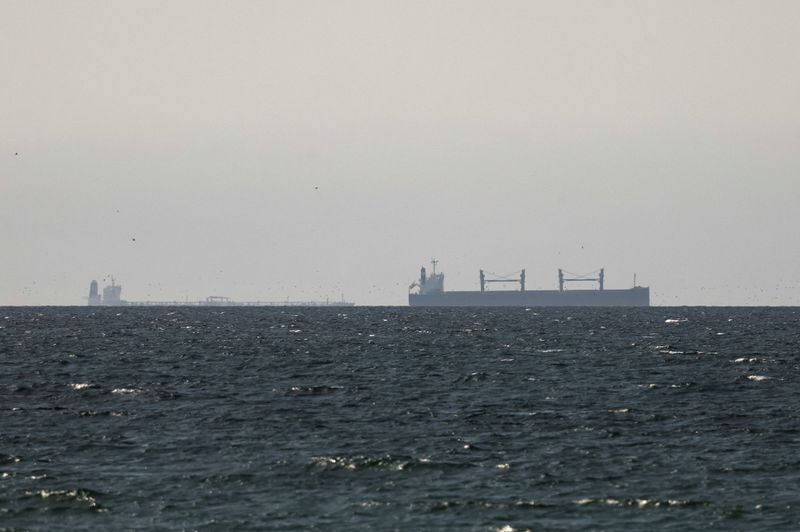

Amid escalating tensions in West Asia, the government on Wednesday said that 778 Indian seafarers are currently aboard 28 Indian-flagged vessels operating in the Persian Gulf region, even as New Delhi stepped up monitoring and security measures to safeguard maritime personnel and trade.Addressing a special inter-ministerial briefing, Rajesh Kumar Sinha, Special Secretary in the Ministry of Ports, Shipping and Waterways, said 24 of the vessels are operating west of the Strait of Hormuz with 677 Indian seafarers on board, while four vessels east of the strategic chokepoint carry 101 Indian crew members.Security agencies, ship managers and recruitment firms are coordinating closely with Indian embassies and local authorities to ensure the safety of the seafarers and provide medical assistance if required, he said.Advisories issued by the Directorate General of Shipping on February 28 have directed Indian-flagged vessels and seafarers to adopt enhanced security protocols and strict reporting procedures, including submission of crew details to authorities.Sinha said that port operations across India remain stable despite the regional tensions. Ports have been asked to extend all assistance to exporters and shipping operators to ensure continuity of external trade. Major ports are conducting round-the-clock monitoring of vessel movements, real-time assessment of developments in the region and regular reporting on cargo and ship status.Dedicated 24-hour control rooms have also been set up both in the ministry and in the Directorate General of Shipping to coordinate responses and maintain contact with ship owners, operators and families of seafarers.At the same briefing, External Affairs Ministry spokesperson Randhir Jaiswal said the safety of the nearly 10 million-strong Indian diaspora in the Gulf and wider West Asian region remains the government’s top priority.He said that Prime Minister Narendra Modi has spoken with several regional leaders, including those of United Arab Emirates, Qatar, Saudi Arabia, Oman, Bahrain, Kuwait, Jordan and Israel, while External Affairs Minister Subrahmanyam Jaishankar has remained in regular contact with counterparts in the region, including Iran.Jaiswal said the Ministry of External Affairs has established a 24×7 control room to respond to queries from families of Indians in the region. On Tuesday alone, the ministry received 75 phone calls and 11 emails, all of which were addressed, he added.Providing an update on casualties, the spokesperson said two Indian nationals have died and one remains missing after a merchant vessel they were on came under attack. A few Indians injured in the Gulf region are receiving treatment, while one Indian injured in Israel is recuperating in hospital. Another Indian national injured in Dubai is also being treated, with consular officials in touch with him.Officials also said around 9,000 Indians remain in Iran, including students. Several have returned home following government advisories, while others have been relocated within the country to safer locations.India’s embassy in Tehran is also assisting nationals who wish to leave via land border crossings into Armenia and Azerbaijan, from where they can board commercial flights back to India.Additional Secretary (Gulf) Aseem R Mahajan said Indian missions across West Asia are maintaining constant contact with host governments and community organisations to ensure real-time dissemination of advisories and assistance to stranded passengers and residents.He added that in countries where airspace restrictions have disrupted travel, Indian missions are coordinating transit arrangements through neighbouring hubs, including cities in Saudi Arabia and the United Arab Emirates, to facilitate the movement of stranded travellers.Officials said the government will continue to monitor the rapidly evolving situation in West Asia while maintaining close inter-ministerial coordination to ensure the safety of Indian nationals and the smooth functioning of maritime and trade operations.