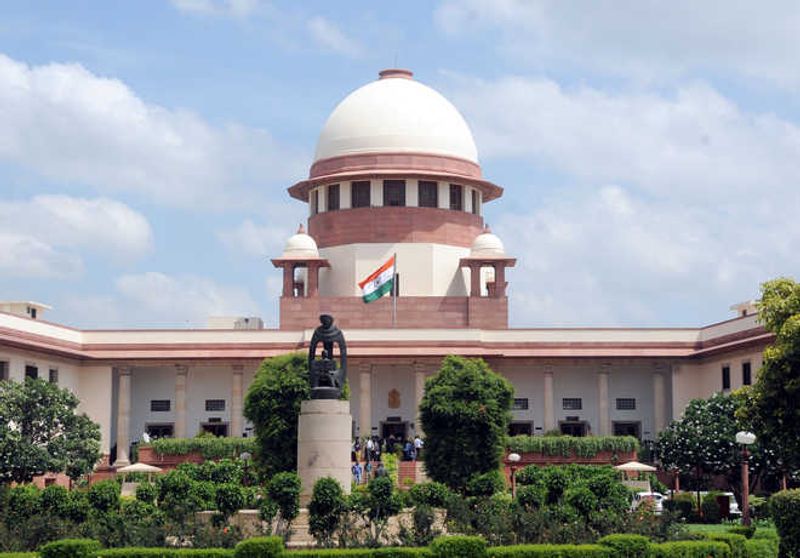

The Supreme Court on Friday junked a PIL seeking an all-India policy for paid menstrual leave for women, saying no one would give them jobs and that it would unintentionally reinforce gender stereotypes.“You don’t know the mindset of employers. They will not hire women if we make such a law,” a Bench of Chief Justice of India Surya Kant and Justice Joymalya Bagchi told senior advocate MR Shamshad who represented petitioner Shailendra Mani Tripathi.As Shamshad said the Karnataka Government had formulated a policy to allow menstrual leave for women and that the Kerala Government in 2013 granted menstrual leave for women students in all state-run universities, the Bench said such a decision could prove to be counter-productive.In RS, Chadha calls for ‘end to stigma’Rajya Sabha MP and Aam Aadmi Party (AAP) leader Raghav Chadha on Friday highlighted the urgent issue of menstrual hygiene in Parliament, urging the government and society to end the stigma surrounding periods. Chadha emphasised that menstruation is a natural biological process, and the challenges faced by millions of women and girls in India reflect a” collective societal failure rather than an individual problem”.“Look at the practical reality in the job market. The more unattractive the human resource, the less is the possibility of assumption in the market. Will any employer be happy with the competing claims of other genders?” it asked.The petitioner wanted the top court to ensure that women students and working professionals were allowed period leave. Shamshad contended that many private organisations were voluntarily allowing period leave.“If they are giving (it) voluntarily, then it’s excellent. That’s a very good thing. But the moment you introduce it as a compulsory condition in law, you do not know the damage it will do to the career of women. They (employers) will say you should sit at home…nobody will give them responsibilities, even in judicial services, a normal trial will not be assigned to them,” CJI Kant said.Questioning the petitioner’s locus standi, the Bench said no woman had approached it on the issue of period leave, the Bench said, “These petitions are deeply rooted…designed PILs…you are not a bona fide petitioner. This is basically only to create a type of impression in young women that you (women) still have some natural issues and you are not at par with male persons and you cannot work like them during a particular time.”The Bench, however, asked the Centre and competent authorities to consider the petitioner’s representation and examine the possibility of framing a policy on menstrual leave after consulting all relevant stakeholders.It was the third petition filed by Tripathi on the same issue. Disposing of his first petition in 2023, the top court had allowed him to submit a representation to the Union Ministry of Women and Children. He moved the top court again in 2024, complaining that the Ministry did not respond to his representation. The Supreme Court disposed of his second petition in July 2024, asking the Centre to take a policy decision on the issue.Tripathi’s third petition on period leave came after the Supreme Court in a landmark verdict on January 30 declared that the right to menstrual health is a part of the right to live with dignity under Article 21 of the Constitution and ordered states and union territories to provide free oxo-biodegradable sanitary napkins to girl students across India.