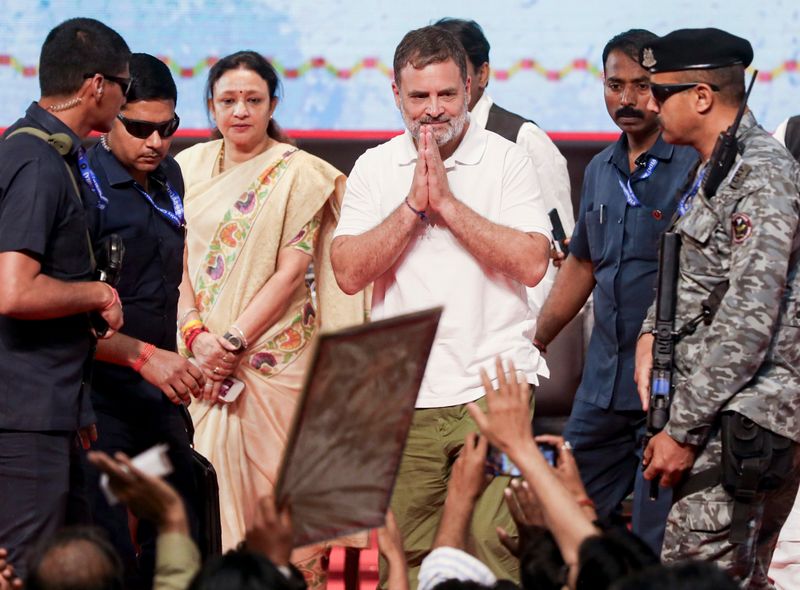

Congress leader Rahul Gandhi on Friday made a retrospective claim about what his great-grandfather and India’s first Prime Minister Jawaharlal Nehru might have done for caste justice had he been alive during the political rise of Dalit leader Kanshi Ram.Addressing the Samvidhan Sammelan in Lucknow ahead of Kanshi Ram’s birth anniversary, Gandhi said Nehru would have ensured that the Dalit leader rose to the position of Chief Minister within the Congress. Gandhi said if Nehru had been alive during Kanshi Ram’s political emergence, the Congress would have elevated him to lead a state government.According to the Leader of Opposition in the Lok Sabha, such leadership would have been recognised within the party structure itself.Nehru passed away in 1964, long before Kanshi Ram emerged as a key figure in Dalit politics.Kanshi Ram began mobilising backward and marginalised communities with the creation of the Backward and Minority Communities Employees Federation (BAMCEF) in 1978, and later founded the Bahujan Samaj Party in 1984.The party later rose to prominence in Uttar Pradesh under Kanshi Ram’s protégé, Mayawati, who served multiple terms as Chief Minister.The BSP currently shares a strained political relationship with the Congress, and has faced allegations from rivals of maintaining a tacit understanding with the Bharatiya Janata Party, led by Prime Minister Narendra Modi.Kanshi Ram, who died in 2006 at the age of 72, rarely sought executive office himself and instead focused on building the party, eventually positioning Mayawati as its principal leader.Paying tributes to the Dalit icon, Gandhi said Kanshi Ram remained firm on his principles and never compromised on his political convictions. He placed Kanshi Ram alongside figures such as Mahatma Gandhi and BR Ambedkar, describing them as leaders who stayed committed to their ideals despite immense pressure.Gandhi said the Congress could have advanced the cause of social justice more quickly. Reflecting on the party’s past, he said the pace of progress had been slower than it should have been, and admitted that the organisation had its share of shortcomings in pushing forward the agenda.He criticised the ideological approach of the Rashtriya Swayamsevak Sangh (RSS), saying its leadership structure lacked Dalit, OBC and Adivasi representation.He described the current political struggle as a contest between the “85 per cent and 15 per cent”, saying marginalised communities were verbally told they belonged to India, but were denied access to resources and power.