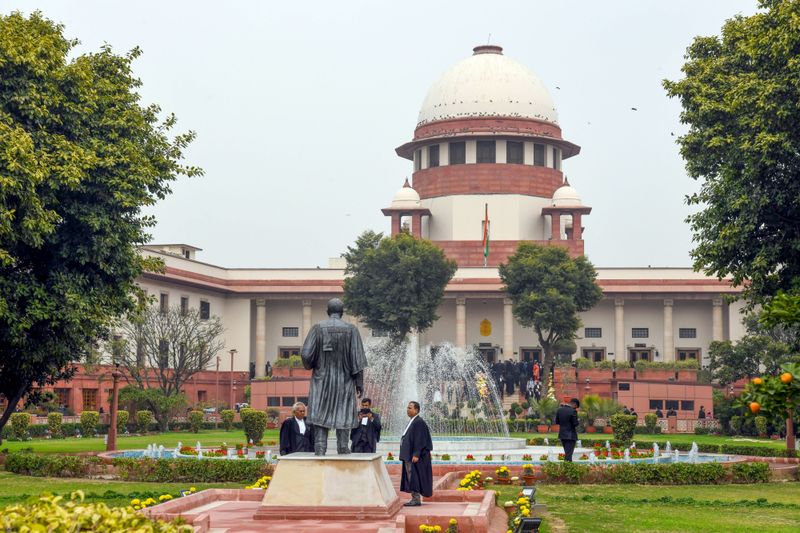

THE stench of censorship hangs heavy over Delhi these days, enveloping two books, one for perhaps containing official secrets, the other for calling a spade a spade. It’s a theatre of the absurd, and brings to mind that well-worn World War II anecdote: a man, who publicly called Winston Churchill a fool, was promptly arrested. Opposition MPs in Parliament protested that England was becoming a police state where free speech was being curbed. Churchill clarified that the man was being proceeded against not because he had called the Prime Minister a fool, but for revealing a state secret! Unfortunately, this sense of humour is missing in our institutions, having been replaced long ago by a sense of righteousness and entitlement.We will probably never know what official secrets Gen Naravane’s book contains that prompted this government to disallow its publication. But it’s the furore over the other book, a Class VIII textbook on Social Sciences published by NCERT, that is more interesting and warrants a deeper reflection. Does Churchill’s quip about revealing a state secret apply to it?I, for one, was shocked at the sheer ferocity of the Supreme Court’s reaction when the book was brought to its notice. The CJI instantly dubbed it “a calculated move to undermine and overawe the judiciary”, to “demean the dignity of the judiciary”, a “deep-rooted conspiracy”. He called for a “deeper probe”, adding for good measure that no one would be spared and that “heads must roll”.He refused to accept the Centre’s or the NCERT’s apologies. The book was banned instantly and a Sidney Sheldon type investigation launched to trace all of the 38 copies of the book sold so far — I believe about 20 of them have been retrieved, the remaining continue to pose a grave threat to our democracy, like a hidden time bomb.From material in the public domain, one has been able to glean that this was a new book on Social Sciences for Class VIII. It contained a chapter titled ‘The Role of the Judiciary in our Society’. The offending part, it is reported, was a sub-chapter called ‘Corruption in the Judiciary’. It attributes delays in the dispensation of justice to factors such as an inadequate number of judges, complex legal procedures, poor infrastructure and corruption. It is this latter part which appears to have invited the court’s ire, even though nine out of 10 Indians would agree with these conclusions.Moreover, the book is certainly not targeting the judiciary, as the court appears to believe. It also criticises other organs of the state. As The Hindu writes in an editorial: the problem with the SC ban “is not that the textbook selectively targets the judiciary, it is that the judiciary selectively targets certain portions”.Let’s not gloss over the reality — corruption has been part of our culture since time immemorial, regularly reinforced by every element of our establishment. It would be a fantasy to expect the judiciary to be an outlier on this. Data presented in Parliament in February shows that between 2016 and 2025, 8,600 complaints were filed against sitting judges. In 2011, Justice Soumitra Sen of the Calcutta High Court resigned before he could be impeached, but was never prosecuted. In 2019, Justice RK Mittal, a tribunal judge, was sacked in a corruption case. The case of Justice Yashwant Varma, in whose official house crores of unexplained cash were allegedly found just last year, is nowhere near resolution.More instances can be found in the book ‘A Controversial Judge’ (2025) by Paranjoy Guha Thakurta and Ayaskant Das. India ranks 79th out of 143 countries in the Rule of Law Index (2024); that is, we are in the bottom half. Surely, the factors listed in the NCERT book have something to do with this?An issue which strikes at the very root of judicial probity should be confronted head-on if we wish to resolve it, and not brushed under the carpet. As Prashant Bhushan says: “Judiciary is not above scrutiny and is accountable to the people… Reference to judicial corruption and delays in the NCERT curriculum is in keeping with the constitutional values of transparency and accountability.” In fact, advocate and eminent legal scholar Gautam Bhatia has questioned whether Article 19 even empowers the Supreme Court to ban a book.It is unfortunate that the court has decided to take this route; the CJI’s assurance that this “is not meant to stifle any criticism” sadly does not inspire much confidence. There has already been much redacting and sanitisation of NCERT textbooks by this government and we could do without more.Education should prepare our youth to enter this harsh and imperfect world, not hide its defects under a coat of judicial enamel paint. We cannot have a whole generation growing up shielded from reality, ignorant of the ills which plague our society and institutions.A celebrated poet had said this centuries ago:“Umr bhar Ghalib yehi bhool karta rahaDhool chehre pe thi, aina saaf karta raha”(Your entire life Ghalib you repeated this errorThe dust was on your face, but you kept wiping the mirror)— The writer is a retired IAS officer